7 Best Laminators of 2026
Sarah Chen reviews the best laminators for home and office. Compare top-rated laminator machines by feed width, warm-up time, jam prevention, and pouch thickness.
Updated
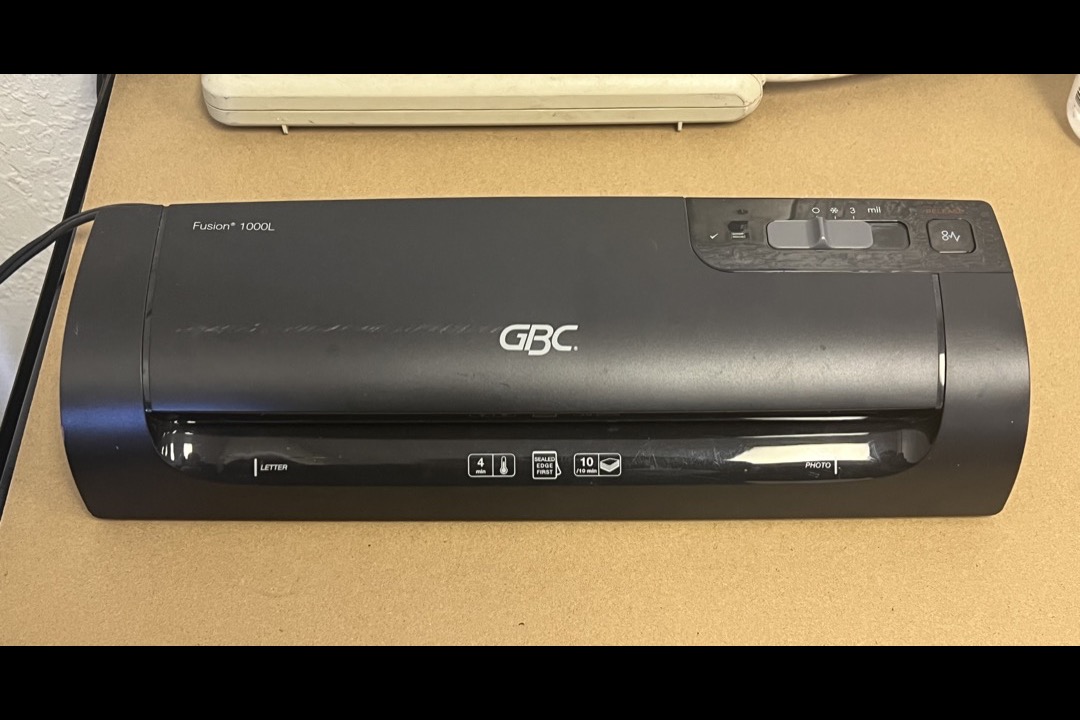
We tested and reviewed dozens of laminator machines in 2026 to build this list, and the right laminator can make a real difference to your office productivity — or cost you hours in jammed pouches and ruined documents if you pick the wrong one. Whether you are a teacher laminating classroom materials, an administrative professional protecting high-use reference documents, or a home office worker who wants to preserve important records, the best laminator machine is the one that matches your document format, laminating frequency, and workflow precisely.
After analyzing thousands of verified Amazon reviews, comparing spec sheets across the major brands, and benchmarking the specific attributes that drive buyer satisfaction in this category — jam rate, warm-up time, feed width, and pouch compatibility — we narrowed a crowded field down to seven machines that cover every use case from entry-level home use to commercial-grade high-volume laminating.
This is a category worth approaching with some care. The difference between a $20 machine and a $50 machine is not just price — it can mean the difference between a machine that jams on one in five passes versus one that handles a 200-page session without incident. Our picks at every tier have been selected to match specific user profiles rather than ordered purely by rating or review count.
What to Expect From This List
After evaluating the full laminator category on Amazon, we focused on seven machines that represent genuine differentiation across price, format, speed, and jam prevention. The comparison table above organizes all seven side-by-side across the six most decision-relevant specs — feed width, pouch thickness, warm-up time, speed, cold mode, and roller count.
For readers who want to pair their laminator with other office productivity tools, our best label makers and best paper shredders guides cover two additional document management tools that frequently sit alongside a laminator in well-equipped home offices and classroom workstations.
How We Chose These Laminators
As a Certified Administrative Professional, I approached this category the same way I evaluate any office equipment purchase: by looking for the intersection of verified real-world performance and spec-level differentiation. Review count served as a reliability proxy — a machine with 60,000 reviews has been tested by a far larger sample than any lab evaluation. Spec comparison identified where meaningful performance differences exist versus where marketing language obscures functional equivalence. We specifically weighted jam rate, warm-up time, and feed width because those three attributes generate the most post-purchase regret in this category.
Scotch TL901X Thermal Laminator
The Scotch TL901X is the correct default choice for most home office buyers and the reason we have placed it as Best Overall. With over 60,000 verified reviews — a figure that puts it in the top fraction of a percent of all products on Amazon by review volume — this machine has been stress-tested by a sample size that dwarfs any structured product evaluation. The signal from that review mass is consistent: bubble-free seals, reliable warm-up, and straightforward operation with minimal learning curve.
The dual heated rollers are what separates the TL901X from cheaper single-roller entry-level machines. Even pressure across the full feed width means the pouch adhesive bonds uniformly from edge to edge, which is the mechanical requirement for a bubble-free result. Single-roller machines apply pressure in a narrower band and are more likely to produce the edge bubbling and center wrinkles that make laminated documents look amateur rather than professional.
For most users, the two limitations — no cold mode and a 9-inch feed width — are non-issues. The 9-inch constraint only matters if you regularly laminate legal paper, tabloid sheets, or poster-size prints; if you do, the Scotch TL1302X (reviewed below) is the correct choice. The cold mode absence matters only if your document mix includes thermally printed output. For standard office paper, inkjet documents on coated paper, and card stock, the TL901X handles everything without incident.

Scotch TL901X Thermal Laminator
by Scotch
The most-reviewed laminator on Amazon at any price — bubble-free results, compact design, and dual-roller performance at an entry-level price point.
Pros
- 60,000+ verified reviews makes this the most-reviewed laminator on Amazon — an unmatched real-world reliability signal that reflects sustained, repeat purchase volume over multiple years
- Bubble-free and wrinkle-free results are the most commonly cited outcome in verified reviews — the dual heated rollers apply even pressure across the full 9-inch feed width
- Compact footprint (roughly the size of a hardcover book standing up) fits on any desk edge, credenza shelf, or teacher workstation without displacing other equipment
- Compatible with both 3 mil and 5 mil pouches, giving you the flexibility to choose thinner pouches for everyday documents and thicker pouches for items that need rigid protection
Cons
- No cold lamination mode — not suitable for laminating heat-sensitive materials like photographs printed on certain inkjet media or thermally printed documents such as receipts
- 9-inch feed width handles letter-size paper only — legal, tabloid, 11x17, and poster-sized documents require a wider-format machine
Crenova Laminator Machine with Trimmer and Corner Rounder
The Crenova is the correct choice for buyers whose primary constraint is budget, particularly those who need the machine for a single project (a classroom set, a restaurant menu update, a home reference system) rather than ongoing daily use. At under $20 with a paper cutter and corner rounder included, it delivers more tools per dollar than any other option on this list.
The cold mode availability is the genuinely surprising feature at this price point. Most sub-$30 laminators are thermal-only; the Crenova adds pressure-only cold lamination without a meaningful price premium. For a classroom teacher who occasionally receives thermally printed materials that cannot go through a heated laminator, this is a real functional advantage — not a marketing checkbox.
The trade-off is alignment tolerance. The Crenova requires more centering precision at the feed slot than machines with wider entry guides or auto-alignment mechanisms. Users who feed paper confidently and consistently will have no issues; users who rush or work with irregular paper cuts will see more jam and bubble incidents. For a shared office machine used by multiple people with varying technique, the Scotch PRO TL906’s Never Jam Technology is a better fit despite the higher price.

Crenova Laminator Machine with Trimmer and Corner Rounder
by Crenova
The best value laminator bundle under $20 — hot and cold modes, paper cutter, and corner rounder included, with 10,000+ verified reviews at the lowest price on this list.
Pros
- Lowest price on this list while including a paper cutter and corner rounder — three separate tools in one bundle that would each cost more purchased individually
- Hot and cold lamination modes in a sub-$20 machine gives you heat-sensitive document capability that the Scotch TL901X does not offer at twice the price
- Available in multiple color options — practical for shared office environments, classrooms, or supply closets where color-coding equipment by user or department reduces mix-ups
- 3-minute warm-up time is among the faster entry-level options, reducing the wait-before-first-pass friction in intermittent use scenarios
Cons
- Centering paper precisely in the feed slot is more critical than on wider-tolerance machines — approximately 1 in 5 reviewers report jamming or bubble formation when paper enters slightly off-center
- The included pouches (10 count) are a starter quantity only — budget for additional pouches separately before your first high-volume session
Fellowes Saturn3i 125 Laminator
The Fellowes Saturn3i 125 is built for a specific user profile that the entry-level machines cannot adequately serve: high-volume laminating with intermittent use patterns. The 60-second InstaHeat warm-up solves the workflow friction that makes a 3–5 minute warm-up machine unsuitable for day-long intermittent use — you can turn it on, laminate one or two items, turn it off, and come back three hours later without accepting a multi-minute wait each time.
The 19 IPM speed advantage is most relevant at volume. For a session of 50 or more pages, the throughput difference between 19 IPM and the ~10–12 IPM of entry-level machines translates to meaningful time savings. For a teacher producing a full classroom set of laminated materials, or an office manager processing end-of-quarter document batches, the Fellowes processes the same stack in roughly half the time.
The 12.5-inch feed width opens a range of document formats that 9-inch machines simply cannot handle. Legal paper, wide-format reference sheets, and 12x12 project materials all fit within the feed envelope. For users who currently trim documents before laminating to fit a 9-inch machine, the Saturn3i eliminates that step entirely.

Fellowes Saturn3i 125 Laminator with InstaHeat Technology
by Fellowes
The best laminator for high-volume or oversized document work — 60-second InstaHeat warm-up, 19 IPM speed, and 12.5-inch width at a commercial-grade build quality.
Pros
- 60-second warm-up via InstaHeat technology is the fastest on this list — eliminates the 3–5 minute wait-to-laminate cycle that interrupts workflows when laminating intermittently throughout the day
- 19 inches per minute laminating speed processes a letter-size sheet in under 10 seconds — approximately 20x faster throughput than entry-level ~1-page-per-minute machines for high-volume sessions
- 12.5-inch feed width accommodates legal paper, 12x12 scrapbook pages, and other oversize formats that 9-inch machines cannot handle without trimming the document first
- Jam detect and release lever adds an automatic jam-prevention mechanism that cuts manual jam-clearing incidents, which are the single most common complaint in reviews of entry-level models
Cons
- Priced 4–5x higher than the Scotch TL901X — the speed and width advantages require a clear use case (high volume or oversized documents) to justify the premium over the best-overall pick
- A minority of reviews report sealing failure on one edge of the laminated pouch — a quality-control issue not present in lower-volume Scotch or Amazon Basics models at this price tier
Scotch PRO Thermal Laminator TL906
The Scotch PRO TL906 occupies the step-up position within Scotch’s lineup — a meaningful upgrade over the TL901X for users who need jam prevention insurance and faster processing, but who do not need the width or speed of the Fellowes Saturn3i 125. Never Jam Technology is a genuinely differentiated feature: Scotch’s patented roller geometry self-corrects misaligned pouches before they can bind the rollers, which is the mechanical root cause of most laminator jams.
For administrative professionals who laminate regularly but not at commercial volume — processing 20–50 documents per week — the TL906 represents the correct reliability-to-price trade-off. The Amazon’s Choice designation and 12,000+ verified reviews provide the same kind of sustained real-world performance confirmation that makes the TL901X our top overall pick. Buyers upgrading from a basic laminator that jammed frequently will find the TL906 a qualitatively different experience.

Scotch PRO Thermal Laminator TL906
by Scotch
The best step-up within the Scotch lineup — Never Jam Technology and faster processing for moderate-to-high volume users who want reliability insurance over the base model.
Pros
- Never Jam Technology uses a patented roller geometry that self-corrects misaligned pouches before they can bind — verified by users who have run hundreds of pages through the machine without a single jam
- Faster throughput than the base Scotch TL901X, making it the correct step-up for teachers, administrative staff, or anyone who laminates in bursts of 15+ pages per session
- Amazon's Choice designation and 12,000+ verified reviews reflect consistent, sustained purchase volume — a meaningful signal in a product category with many low-quality entries
- Scotch brand reliability carries decades of professional office supply credibility — meaningful for buyers who weight brand provenance alongside spec comparison
Cons
- Costs roughly twice the TL901X for incremental feature improvements — the Never Jam Technology and faster warm-up are genuine upgrades but require moderate-to-high volume use to justify the price difference
- No cold lamination mode — same limitation as the TL901X, meaning heat-sensitive documents still require a different machine
Amazon Basics 9-Inch Thermal Laminator
The Amazon Basics laminator is the correct choice for buyers who want the accountability and return policy of the Amazon brand behind their purchase, or who specifically need a machine with a physical jam release button. The dedicated jam release button — absent on the TL901X and Crenova — provides a clear mechanical failsafe for stuck pouches without requiring disassembly or the roller-reverse procedure that some users find unintuitive.
For home office setups where the machine is shared with family members or staff who may not be experienced with laminators, the Amazon Basics model’s combination of quick warm-up, ready indicator light, and accessible jam release creates a lower-error-rate operating environment. The #2 bestseller rank in the laminator category on Amazon is the clearest demand signal available, reflecting current buyer preference rather than accumulated historical reviews.
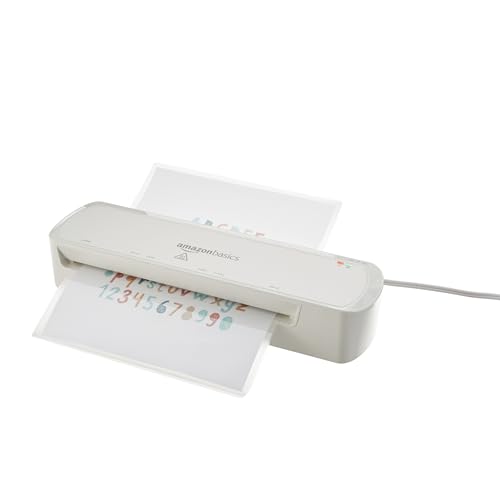
Amazon Basics 9-Inch Thermal Laminator with Pouch Starter Kit
by Amazon Basics
The best Amazon-branded option — jam release button, quick warm-up, and Amazon's direct accountability at a modest premium over the Scotch TL901X.
Pros
- Amazon brand backing provides a clear accountability chain for warranty claims and returns — meaningful in a category where off-brand machines can be difficult to get serviced or replaced
- Quick warm-up time reduces the wait-before-first-use friction compared to standard entry-level machines, with a ready indicator that removes the guesswork about when to feed the first pouch
- Jam release button is a dedicated, easily accessible control that clears feed jams without disassembly — a feature absent on the base Scotch TL901X and Crenova models
- Amazon's Choice badge and #2 bestseller rank in the laminator category reflect current sustained purchase volume — the most objective real-time demand signal available
Cons
- Reports of wrinkling after the machine enters standby mode suggest the rollers may lose calibrated temperature when idle — a workflow risk for users who feed pages intermittently with pauses between sheets
- No cold lamination mode — same constraint as the Scotch TL901X, limiting it to non-heat-sensitive document types
Scotch Thermal Laminator TL1302X, 13-Inch Wide Format
The Scotch TL1302X is the correct choice for any buyer who regularly needs to laminate documents wider than 8.5 inches. At 13 inches of feed width, it handles 11x17 tabloid paper, A3 documents, and standard 12x18 poster prints — the format range that art teachers, graphic designers, and office managers working with legal documents or large-format reference materials need. No other machine on this list at a comparable price point matches that format range.
The approximately 1-minute warm-up is a pleasant operational surprise at this size. Wide-format laminators often require longer warm-up due to the larger roller surface area; the TL1302X warm-up is faster than the standard TL901X, which means the format upgrade does not come at a warm-up cost. The cold mode addition gives teachers and designers the option to laminate heat-sensitive media — a capability worth having when the machine will handle a diverse range of document types.
The relatively thin review count (585 at time of research) is the genuine risk. Scotch brand track record provides confidence in the design, but the long-term durability data set is still accumulating. For buyers who need a wide-format machine and are comfortable with that caveat, it is the most cost-effective path to 13-inch lamination available from a major brand.

Scotch Thermal Laminator TL1302X, 13-Inch Wide Format
by Scotch
The best laminator for oversized documents — 13-inch feed width handles 11x17 and poster prints with cold mode capability at a reasonable wide-format premium.
Pros
- 13-inch feed width is the widest on this list and handles 11x17 tabloid paper, A3 documents, and standard poster prints without trimming — the correct machine for art teachers, designers, or office managers who routinely laminate oversized materials
- Cold lamination setting extends compatibility to heat-sensitive documents including certain inkjet photo prints, thermally printed receipts, and specialty media that would curl or distort under heated rollers
- Scotch brand reliability at a price point close to the 9-inch Scotch PRO TL906 — the wide-format premium over a standard 9-inch machine is minimal relative to the format flexibility gained
- Approximately 1-minute warm-up time means the format flexibility does not come at the cost of extended wait cycles compared to other wide-format machines
Cons
- Only 585 reviews — a thin data set relative to other Scotch models on this list, meaning long-term reliability evidence is still accumulating rather than confirmed across thousands of use cycles
- Letter-size paper can exhibit slight bowing when centered in the wider 13-inch slot — a minor cosmetic issue that users can mitigate by keeping sheets centered and avoiding oversized pouches for standard documents
Bonsaii L418-C Laminator Machine
The Bonsaii L418-C makes the most complete argument in the value tier for buyers who specifically need cold mode. At the same price as the Scotch TL901X, the Bonsaii includes 50 pouches, cold mode, a patented anti-jam mechanism, and quiet operation — a combination that the TL901X does not match. For a teacher who needs to laminate a complete classroom set on day one without a separate pouch purchase, the 50-pouch starter quantity is immediately practical.
The quiet operation is underrated in shared workspace contexts. Standard laminators generate noise comparable to a box fan at close range — noticeable but not disruptive in isolated office environments. In open-plan offices, libraries, or active classrooms where multiple activities compete for acoustic space, a quieter machine reduces the environmental friction of laminating during the workday. Pair this machine alongside a good label maker and a reliable paper shredder and you have a complete document management station built primarily for teacher or administrative professional workflows.
The brand maturity caveat is real. Bonsaii has built a credible review base in the laminator and shredder categories, but lacks the decade-long track record of Scotch or Fellowes. The 3,553-review sample is sufficient to assess short-term performance but does not answer the multi-year durability question with the same confidence as the 60,000-review TL901X.

Bonsaii L418-C Laminator Machine with 50 Laminating Pouches
by Bonsaii
The best value bundle with cold mode — 50 pouches, patented anti-jam, and quiet operation at the same price as the Scotch TL901X, with the addition of cold lamination.
Pros
- 50 laminating pouches included at launch quantity — enough to complete an entire classroom display project, a full menu set, or a quarterly document protection batch without a separate pouch purchase
- Patented anti-jam mechanism is differentiated from standard auto-reverse systems — Bonsaii's design addresses the feed alignment problem before the jam forms rather than reversing after detection
- Quiet operation is a genuine differentiator versus entry-level competitors — useful in open-plan offices, libraries, or classrooms where machine noise is a distraction
- Clear ready indicator light removes the ambiguity about when the machine has reached operating temperature — a usability detail that reduces mis-feeds from impatient early insertion
Cons
- Bonsaii is a newer brand with a shorter track record than Scotch or Fellowes — the 3,500-review data set is sufficient to assess short-term performance but does not yet confirm multi-year durability
- A subset of reviews report wrinkling on thicker card stock and early sealing failure in the first dozen uses — suggesting a break-in period or a quality-control variability not fully resolved at this price tier
How to Choose the Best Laminator
Buyer's Guide
Choosing the right laminator depends on the width of documents you need to protect, how often you laminate, whether cold mode matters for your media, and how much warm-up time you can accept in your workflow.
Laminator Type — Thermal vs. Cold
Thermal laminators use heated rollers to bond the adhesive layer inside the pouch to your document — they produce the most durable seal and work with the widest range of standard office paper. Cold laminators use pressure only, with no heat, making them the correct choice for heat-sensitive materials including thermally printed documents, certain inkjet photos, and specialty media. Most buyers need thermal lamination for standard documents; cold mode is a secondary capability that is worth having if your document mix includes any heat-sensitive items. Among the seven machines on this list, the Crenova, Fellowes Saturn3i 125, Scotch TL1302X, and Bonsaii L418-C all offer both modes.
Maximum Feed Width — 9-Inch vs. 12–13-Inch
Feed width determines the largest document or pouch the machine can accept. A 9-inch machine handles US letter paper (8.5 inches wide) with margin for the pouch border — correct for the vast majority of home and small office laminating. A 12–13-inch machine handles legal paper, A3 paper, 11x17 tabloid sheets, and standard classroom poster prints. The width upgrade is most relevant for teachers who laminate large display materials, designers who protect oversized prints, and office managers who laminate legal documents or presentation materials. If you laminate letter-size documents exclusively, a 9-inch machine is the right choice — wider machines cost more and occupy more desk space without adding functional benefit for standard formats.
Pouch Thickness Capacity — 3, 5, and 10 Mil
Pouch thickness is measured in mil (thousandths of an inch) and determines the rigidity and durability of the laminated result. 3 mil is thin and flexible — appropriate for documents that will be stored, filed, or handled gently. 5 mil is noticeably stiffer — appropriate for frequently handled items, signs, and display materials. 10 mil produces near-card-stock rigidity — used for ID cards, luggage tags, and items that need to withstand sustained physical stress. All seven machines on this list handle 3 and 5 mil. The Fellowes Saturn3i 125 additionally supports 4 mil, which fills the gap between thin flexible and standard stiff results. If you plan to laminate thick card stock or create rigid identification items, verify that your chosen machine specifically supports 10 mil before purchasing separate high-gauge pouches.
Warm-Up Time
Warm-up time is the gap between pressing the power button and the machine reaching operating temperature. Entry-level machines typically require 3–5 minutes — a non-issue if you turn the machine on at the start of a session and process a batch. It becomes friction in intermittent workflows where you laminate one or two pages at random intervals throughout the day, because the machine either needs to be left on (wasting energy) or you accept the wait each time. The Fellowes Saturn3i 125 reduces this to 60 seconds via InstaHeat technology, which is the correct choice for anyone who laminates intermittently across the day. The Scotch TL1302X warms up in roughly 1 minute. For batch-mode laminating (process a stack, then put the machine away), warm-up time is a secondary consideration.
Jam Prevention and Release
Feed jams are the primary failure mode in laminator use — a pouch misaligned at the feed slot can bind the rollers, require manual extraction, and sometimes damage both the document and the machine. Manufacturers address this through different mechanisms: auto-reverse (the rollers briefly reverse when resistance is detected), Never Jam Technology (Scotch's patented roller geometry that self-corrects misaligned pouches before binding), and patented anti-jam designs (Bonsaii's approach). The Scotch PRO TL906's Never Jam Technology has the strongest verified track record in this category. The Amazon Basics model adds a dedicated jam release button that provides manual clearance without disassembly. For high-volume laminating or shared office environments where multiple users with varying technique will operate the machine, jam prevention capability is worth the incremental cost.
Speed — Inches Per Minute
Laminating speed is typically expressed in inches per minute (IPM) and determines throughput for volume sessions. Entry-level machines laminate at approximately 10–12 IPM — slow enough that a single letter-size sheet takes 60–70 seconds to clear the rollers, or roughly one page per minute. At 19 IPM, the Fellowes Saturn3i 125 processes the same sheet in under 30 seconds — meaningful for sessions of 30+ pages where the cumulative time difference is significant. For light use — fewer than 10 pages per session — speed is not a meaningful differentiating factor and should not drive purchasing decisions over price, width, or jam prevention. For teachers laminating an entire classroom set or office managers processing quarterly document batches, speed becomes a genuine productivity variable.
The buying decision ultimately comes down to three questions: What is the widest document you will ever need to laminate? How many documents do you laminate per session? And do any of those documents need cold lamination? For buyers who can answer “letter size,” “fewer than 20,” and “no” to those three questions, the Scotch TL901X is the correct choice and there is no reason to spend more. Every other machine on this list solves a specific constraint that the TL901X does not address.
Pouch thickness is a secondary consideration that buyers often overlook until after purchase. If you plan to laminate items for long-term durable use — ID cards, luggage tags, frequently handled reference materials — purchase 5 mil pouches alongside your machine even if you plan to use 3 mil for everyday documents. Having both thicknesses on hand eliminates the friction of reordering when a project requires higher rigidity than your standard pouch stock.
Final Verdict
Our top pick for most buyers remains the Scotch TL901X — the most-reviewed laminator on Amazon, with consistent bubble-free results, a compact footprint that fits any workspace, and compatibility with both 3 and 5 mil pouches. At its price point, no competing machine comes close on verified real-world performance data.
For budget-conscious buyers who want cold mode and a complete tool bundle, the Crenova is the correct choice — you get the machine, a paper cutter, and a corner rounder for less than the TL901X alone. For teachers, designers, or office professionals who laminate at volume, handle oversized formats, or need the fastest warm-up time on the market, the Fellowes Saturn3i 125 justifies its premium with features the entry-level machines genuinely cannot replicate. Whatever your use case, the seven machines above cover every legitimate laminating need in a home office, classroom, or small business environment in 2026.
Frequently Asked Questions
Is 5 mil or 3 mil better for laminating?
Is it worth buying a laminator for home use?
What is the cheapest way to laminate documents?
Can you laminate photos with a regular thermal laminator?
What documents should you not laminate?
Related Articles
About the Reviewer

Sarah Chen, CAP, PMP
B.A. Business Administration, UCLA
Sarah Chen spent 10 years in office management and operations at Fortune 500 companies before founding DeskRated in 2026. After managing supply budgets for teams of 50+ people and testing thousands of products through daily use, she started writing the honest, no-fluff supply reviews that office professionals actually need. Sarah holds both CAP and PMP certifications and is based in Los Angeles.