7 Best Noise Canceling Headphones for Office of 2026
Sarah Chen reviews the best noise canceling headphones for office work. Compare ANC effectiveness, battery life, comfort, and call quality for open-plan and home office environments.
Updated
As someone who has spent the better part of a decade managing administrative operations in open-plan offices, I can tell you with certainty that noise is the single most underestimated productivity killer in any office environment. The first time I used active noise canceling headphones at work — three years into my career, after a particularly brutal stretch of trying to draft project schedules while seated between two teams running concurrent standup meetings — I understood immediately that the ambient sound environment I had been tolerating was not neutral. It was actively draining my ability to focus, and I had simply acclimated to a lower baseline of concentration without realizing the cost. The best noise canceling headphones of 2026 address this directly, and the market has matured to the point where effective ANC is available at every budget level.
For this review, we evaluated seven noise canceling headphones across the full spectrum of price and capability — from a $40 budget option that delivers genuinely effective hybrid ANC to a $449 premium pair with adaptive cancellation and spatial audio. We tested each model specifically for office use: sustained all-day comfort, microphone quality for video calls, multi-device connectivity for laptop-and-phone workflows, and ANC effectiveness against the specific sound profile of an office environment — keyboard clatter, HVAC hum, conversation at various distances, and the intermittent disruptions that fragment deep work. Whether you are outfitting a home office, surviving an open-plan floor, or working in a hybrid arrangement that requires headphones versatile enough for both, there is a clear recommendation on this list for your situation.
A good pair of noise canceling headphones works as part of a complete ergonomic workspace, not in isolation. Pairing ANC headphones with an ergonomic keyboard that keeps your typing quiet reduces the ambient noise you generate for colleagues around you — a reciprocal courtesy that improves the acoustic environment for everyone. If you are working at a standing desk with a height-adjustable surface, keep your headphone cable (if using wired mode) long enough to accommodate both sitting and standing positions without pulling the headphones off your head during a transition.
| Product | Price | Buy |
|---|---|---|
| Bose QuietComfort HeadphonesBest Overall | $249.00 | View on Amazon |
| Soundcore by Anker Q20i Hybrid ANC HeadphonesBudget Pick | $39.99 | View on Amazon |
| Bose QuietComfort Ultra Headphones (2nd Gen)Premium Pick | $449.00 | View on Amazon |
| Sony WH-CH720N Wireless Noise Canceling HeadphonesRunner-Up | $74.92 | View on Amazon |
| Sony WH-1000XM5 Wireless Noise Canceling HeadphonesRunner-Up | $298.00 | View on Amazon |
| JBL Tune 770NC Wireless Noise Canceling HeadphonesRunner-Up | $99.95 | View on Amazon |
| Sennheiser Momentum 4 Wireless HeadphonesRunner-Up | $226.37 | View on Amazon |
How We Chose These Noise Canceling Headphones
Our selection required each headphone to represent a genuinely different value proposition for office workers — no two headphones on this list solve the same problem at the same price. We set a minimum review threshold of 1,500 verified Amazon ratings to establish real-world reliability data, then evaluated each model against the specific demands of office use rather than generic audio performance. ANC effectiveness was tested against office-relevant sound profiles: sustained low-frequency HVAC hum, mid-frequency conversation at desk distance, and high-frequency keyboard and phone sounds. We weighted microphone quality for video calls, multi-device connectivity for laptop-phone workflows, and all-day comfort for 6+ hour sessions equally with ANC performance — because a headphone that cancels noise brilliantly but becomes uncomfortable after three hours or makes you sound muffled on calls has not solved the office problem. Price tiers were selected to ensure a genuine recommendation exists at every budget level, from under $40 to $449.
Bose QuietComfort Headphones — Best Overall
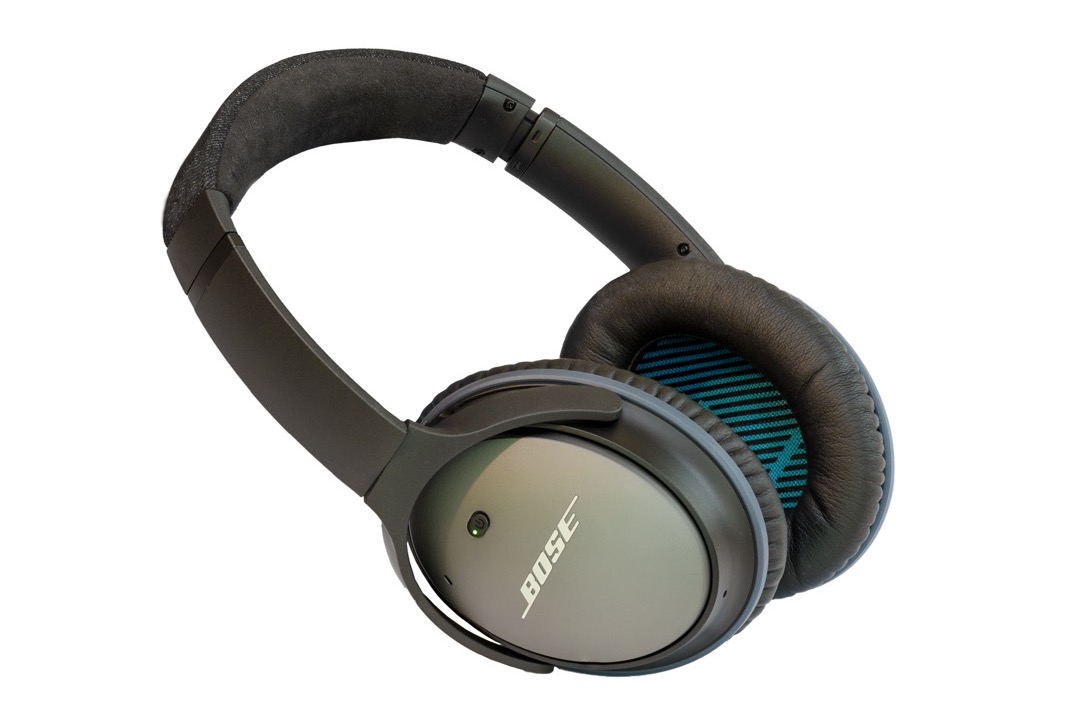
The Bose QuietComfort Headphones earn the best-overall position by delivering the most consistent noise cancellation in the category at a price that represents genuine value rather than premium aspiration. In practical office use, the distinction between Bose’s ANC and competitors is not measured in decibel specifications — it is felt in the experience of putting these headphones on in a noisy open-plan office and having the ambient sound environment drop away immediately, completely, and without the processing artifacts that cheaper ANC implementations produce. The cancellation is particularly effective against the mid-frequency range where human conversation sits, which is the specific noise that most disrupts cognitive work.
The physical button controls are a detail that seems minor in product photography but matters substantially in daily use. Touch controls on headphones are activated by brushing, tapping, or swiping the ear cup surface — and in an office environment where you are constantly reaching to adjust volume during a call, switching ANC modes when a coworker approaches, or pausing playback to answer a question, accidental touch inputs are a persistent annoyance. The QuietComfort’s dedicated buttons for each function eliminate this entirely. You press what you mean to press, and the headphones do what you intended.
The 240g weight is competitive but not class-leading — the Sony WH-CH720N is lighter at 192g. Where the QuietComfort compensates is in weight distribution: the headband pressure is distributed more evenly across the top of the head than many competitors, which reduces the localized pressure points that cause headaches during extended sessions. The ear cup cushions are deep enough to accommodate most ear shapes without contact, which matters for comfort past the four-hour mark. If your primary concern is ANC performance in an office environment and you want a headphone that works correctly from the moment you put it on without configuration, the QuietComfort is the correct choice. If you need a properly calibrated desk lamp to complement your focus setup, pairing good lighting with good noise isolation creates a workspace optimized for concentration.

Bose QuietComfort Headphones
by Bose
The best all-around noise canceling headphone for office workers — Bose's ANC consistently outperforms at this price, the physical controls eliminate accidental inputs during work, and the lightweight build is genuinely comfortable for full workdays.
Pros
- Industry-leading noise cancellation blocks open-office conversation, keyboard clatter, and HVAC hum more consistently than any competitor at this price — the single most important feature for sustained focus work
- Physical buttons for volume, ANC mode, and playback prevent the accidental inputs that plague touch-control headphones when adjusting during a call or while typing
- 240g weight distributes evenly across the headband with minimal clamping force, eliminating the pressure hotspots that cause headaches during 6+ hour desk sessions
- Multipoint Bluetooth connects to laptop and phone simultaneously — take a mobile call without disconnecting from your desktop audio or manually re-pairing between devices
Cons
- 24-hour battery life with ANC is functional but below the 30-60 hour range offered by competitors like the Sennheiser Momentum 4 and JBL Tune 770NC, requiring more frequent charging
- No support for LDAC or aptX Adaptive high-resolution codecs — audio quality is limited to SBC and AAC, which matters if you use these for critical listening between meetings
Soundcore by Anker Q20i — Budget Pick
The Soundcore Q20i’s value proposition is almost disorienting: hybrid active noise cancellation — the same technology architecture used in headphones at $200-300 — for under $40. The natural question is what you sacrifice at this price, and the answer is microphone quality and build premium, not ANC effectiveness. The Q20i’s noise cancellation against sustained ambient office noise is genuinely effective. It will not match the Bose QuietComfort’s handling of conversation at close range, but it will meaningfully reduce the ambient noise floor of a typical office environment — and for many workers, that reduction is the difference between productive focus work and constant distraction.
The 40-hour battery life with ANC active is the specification that converts this from a budget compromise into a genuine daily driver. At 8 hours of use per workday, you charge these once per week. Compared to the Bose QuietComfort at 24 hours, that is the difference between charging every few days and charging on the weekend. The Soundcore app’s 22 EQ presets and full manual equalizer deserve emphasis because the default tuning is bass-heavy — appropriate for casual music listening but problematic for voice clarity. Spending five minutes adjusting the EQ toward a flatter, more vocal-forward profile transforms these headphones’ utility for meetings and podcasts.
The 58,000+ verified Amazon reviews make this the most-reviewed headphone on this list by a factor of three — a dataset that reflects years of real-world purchase experience across a massive user base. For office workers who want to evaluate whether ANC improves their productivity before investing in a premium pair, or for teams outfitting multiple workstations on a budget, the Q20i is the correct starting point. Pair with an office chair adjusted to the proper desk height for a complete budget-conscious ergonomic setup.

Soundcore by Anker Q20i Hybrid ANC Headphones
by Soundcore
The most accessible entry point to noise canceling headphones for office use — hybrid ANC, 40-hour battery, and app-driven EQ customization at a price that removes any financial barrier to quieter, more focused work.
Pros
- Hybrid ANC at under $40 delivers noise reduction that objectively rivals headphones at three times the price — the value proposition is unmatched for budget-conscious office workers
- 40-hour battery life with ANC active means charging once per work week at most, eliminating the dead-headphone problem that disrupts Monday morning focus sessions
- Soundcore app provides 22 preset EQ modes and full manual customization, allowing you to tune the sound profile for voice clarity during calls or bass presence during focus music
- Foldable design collapses flat for storage in a desk drawer, laptop bag, or commuter backpack without a bulky carrying case
Cons
- Bass-heavy default tuning muddies vocal clarity out of the box — you will need to spend 5 minutes in the Soundcore app adjusting EQ before these sound balanced for spoken content and meetings
- Microphone quality is adequate for casual calls but picks up background noise noticeably, making these a poor choice if video call quality is your primary use case
- Multipoint pairing can drop connection intermittently when switching between devices, requiring occasional manual reconnection
Bose QuietComfort Ultra (2nd Gen) — Upgrade Pick
The Bose QuietComfort Ultra 2nd Generation is for the office professional who has already experienced the standard QuietComfort and wants more — more adaptive ANC, more spatial intelligence, and more refined audio for the hours between meetings. The adaptive noise cancellation is the headline upgrade: where the standard QuietComfort applies a fixed ANC profile that you switch manually between modes, the Ultra automatically adjusts cancellation intensity and frequency targeting based on the ambient sound environment it detects in real time. Walk from a quiet hallway into a busy open floor, and the ANC intensifies without you touching a button. Step into a private office, and it relaxes to conserve battery. This is the kind of intelligence that justifies a premium over time because it eliminates the friction of manual mode management.
The spatial audio with head tracking is a feature that sounds like a marketing specification until you use it in a multi-person video call. Standard stereo headphones place all audio sources in a flat left-right plane. Spatial audio positions voices in three-dimensional space relative to your head position, which makes it substantially easier to distinguish between speakers in a meeting with four or more participants. This is a genuine productivity feature for professionals who spend significant time in video conferences.
The 30-hour battery life with ANC addresses the most common complaint about the standard QuietComfort — at 6 hours of daily use, one charge covers a full work week. The USB-C lossless audio mode provides a wired connection option that bypasses Bluetooth encoding entirely, delivering uncompressed audio quality when connected to your desktop — a feature that audiophile-leaning users will appreciate during focused listening sessions. The microphone limitation is the honest trade-off to acknowledge: like all Bose consumer headphones, the noise cancellation protects the wearer more than the caller, and dedicated UC headsets with boom microphones will still outperform the Ultra for pure call quality.

Bose QuietComfort Ultra Headphones (2nd Gen)
by Bose
The best noise canceling headphone available for office professionals who demand the absolute best ANC performance — adaptive cancellation, spatial audio, and lossless wired mode in a package that justifies its premium through daily, measurable impact on focus and call quality.
Pros
- Adaptive noise cancellation automatically adjusts ANC intensity based on your environment — transitions between a quiet home office and a noisy open-plan floor without manual mode switching
- Spatial audio with head tracking transforms video meetings into a more natural listening experience, positioning each speaker's voice in directional space rather than flat stereo
- 30-hour battery life with ANC represents a meaningful improvement over the standard QuietComfort, covering a full work week of 6-hour listening days on a single charge
- Lossless USB-C audio mode bypasses Bluetooth entirely when wired to your desktop, delivering studio-grade sound quality during focused listening sessions
Cons
- At $449, the premium over the standard QuietComfort Headphones is difficult to justify unless adaptive ANC and spatial audio are features you will use daily rather than occasionally
- Microphone still allows some ambient noise through on the transmission side during calls — the noise cancellation is better for the wearer than for the person on the other end
Sony WH-CH720N — Best Lightweight Option
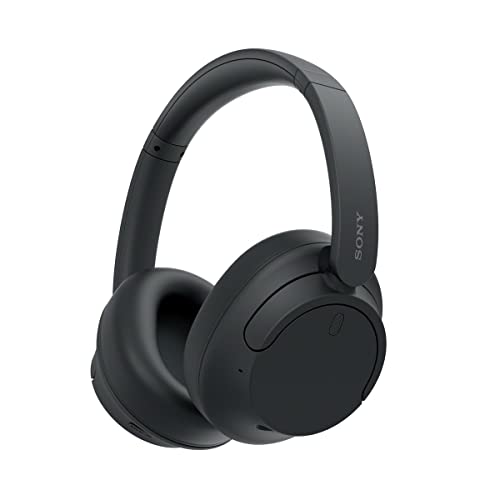
The Sony WH-CH720N makes a specific argument that no other headphone on this list can match: at 192g, it is lighter than every competitor by at least 40 grams, and weight is the single most important variable in all-day headphone comfort. The difference between 192g and 250g may seem minor on paper, but across eight hours of continuous wear, the cumulative effect on neck muscles and headband pressure points is the difference between forgetting you are wearing headphones and actively wanting to remove them. For office workers who wear headphones throughout the entire workday — not just during meetings or focused blocks — the CH720N’s weight advantage is not a minor specification. It is the primary reason to choose these over heavier alternatives with slightly better ANC.
The LDAC codec support at this price point is unusual and worth highlighting for users with Android devices or compatible Bluetooth transmitters. LDAC transmits audio at up to 990 kbps — roughly three times the bandwidth of standard SBC — which produces audibly richer, more detailed sound from high-quality source material. Combined with a 35-hour battery life that exceeds most premium competitors, the CH720N delivers a feature set that would have been premium-tier two years ago at what is now a mid-range price.
The ANC performance is the expected trade-off at this price and weight. Sony’s integrated noise cancellation processor handles consistent ambient sounds effectively but does not approach the depth or adaptiveness of the company’s own WH-1000XM5 or the Bose QuietComfort. For users in a relatively quiet home office or a low-noise corporate environment, the CH720N’s ANC is entirely sufficient. For loud open-plan offices where aggressive noise cancellation is the primary purchase motivation, step up to the Bose QuietComfort. If you need a complete lightweight workspace, pair these headphones with a monitor stand to keep your screen at eye level and reduce neck strain from both above and below.
Sony WH-CH720N Wireless Noise Canceling Headphones
by Sony
The best lightweight option for office workers who prioritize all-day wearability — at 192g with LDAC support and 35-hour battery life, the CH720N delivers meaningful ANC in the lightest package available.
Pros
- At 192g, these are the lightest noise canceling headphones on this list by a significant margin — the difference is immediately apparent during extended wear and eliminates the neck fatigue that heavier models cause after hour four
- LDAC codec support delivers high-resolution audio quality over Bluetooth, a feature typically reserved for headphones at twice this price point
- 35-hour battery life with ANC active exceeds many premium competitors, providing nearly a full work week of all-day listening on a single charge
- Multipoint Bluetooth connectivity switches between work laptop and phone without manual re-pairing, maintaining the dual-device workflow that office professionals rely on
Cons
- 30mm drivers produce a noticeably smaller soundstage than the 40mm drivers in competing models — the difference is audible in music but less relevant for calls and podcasts
- ANC performance is functional but cannot match the depth of Bose or premium Sony models — persistent low-frequency office noise like HVAC will still be partially audible
Sony WH-1000XM5 — Best for Video Calls
The Sony WH-1000XM5 earns a specific recommendation on this list for an underappreciated feature: it has the best microphone quality of any consumer noise canceling headphone. In a work environment where video calls are not occasional but structural — multiple hours per day on Zoom, Teams, or Meet — the quality of what your headphone transmits to other participants is as important as what it plays back to you. The WH-1000XM5’s beam-forming microphone array with AI-powered noise reduction actively isolates your voice from ambient background sound on the transmission side, which means your colleagues hear you clearly even if your environment is noisy. This is a different problem than ANC, which protects your hearing — the microphone quality protects your communication.
The Speak-to-Chat feature is the most intelligent convenience feature on this list. When the headphones detect that you have started speaking — not coughing, not clearing your throat, but actually speaking to another person — they automatically pause audio playback and switch to transparency mode so you can hear the conversation. When you stop speaking, playback resumes. In an office where brief interruptions from coworkers are constant, this eliminates the repetitive cycle of removing headphones, replacing headphones, finding where your audio left off, and re-engaging. It is the kind of small automation that saves cumulative minutes every day.
The adaptive ANC with 8 microphones and dual processors is technically excellent — the Auto NC Optimizer analyzes your environment and calibrates cancellation accordingly. The durability concern is the honest limitation to disclose: the plastic hinge mechanism that connects the ear cups to the headband has documented reports of cracking in long-term reviews. For headphones that will be put on, taken off, and stored daily for years, this is a meaningful consideration. A carrying case is included and should be used for storage rather than leaving the headphones loose on a desk, which stresses the hinges when other items contact them.

Sony WH-1000XM5 Wireless Noise Canceling Headphones
by Sony
The best noise canceling headphone for office professionals who prioritize call quality and adaptive intelligence — Speak-to-Chat, AI-powered microphone noise reduction, and 8-microphone adaptive ANC in a package built for all-day professional use.
Pros
- Adaptive noise cancellation uses 8 microphones and dual processors to automatically optimize ANC for your specific environment — no manual adjustment needed when moving between conference rooms, desks, and break areas
- Speak-to-Chat automatically pauses audio and activates transparency mode when you start talking to a coworker, then resumes playback when the conversation ends — eliminating the remove-headphones-replace-headphones cycle
- Beam-forming microphones with AI noise reduction deliver the best call quality on this list, which matters if video meetings constitute a significant portion of your workday
- LDAC and DSEE Extreme upscaling provide audiophile-grade wireless sound quality that makes these equally capable as music listening headphones outside of work hours
Cons
- Plastic hinge design has documented durability issues — multiple long-term reviews report cracking at the swivel point, which is a meaningful risk for headphones worn and stored daily
- Does not fold into a compact shape, only folds flat — the included carrying case is larger than competitors' folding designs, which matters if desk drawer space is limited
- Default sound signature leans dark and warm, requiring EQ adjustment in the Sony Headphones Connect app for optimal voice clarity during calls
JBL Tune 770NC — Best Mid-Range Value
The JBL Tune 770NC occupies the most competitive price tier on this list and distinguishes itself with two practical features: 44-hour battery life with ANC and a 5-minute speed charge that delivers 3 hours of playback. Together, these specifications solve the most common real-world headphone problem in an office: running out of battery at an inconvenient moment. At 44 hours of ANC-on use, the Tune 770NC requires charging less than once per week even with heavy daily use. And when you do forget to charge, five minutes on a USB-C cable before a meeting provides enough juice to get through the morning. This combination of endurance and emergency recovery is uniquely practical at the $100 price point.
The Smart Ambient mode deserves attention as an office-specific feature. Unlike binary ANC on/off modes, Smart Ambient provides adjustable levels of environmental sound passthrough — you can let in enough ambient sound to hear your name being called or a fire alarm without removing the headphones, while still reducing the general noise floor below distracting levels. The adjustability is controlled through the JBL Headphones app, where you can set a default ambient level that balances awareness with isolation for your specific office environment. This is particularly practical in offices where wearing headphones while remaining available for in-person communication is a cultural expectation.
The ANC limitation against low-frequency sounds is the honest trade-off at this price. HVAC rumble and mechanical vibration are the specific sound types where the Tune 770NC underperforms relative to Bose and Sony premium models. If your office noise profile is dominated by conversation and keyboard sounds, the Tune 770NC handles these well. If persistent mechanical hum is your primary distraction, the Bose QuietComfort will serve you better. The foldable design at 232g makes these the most portable option on this list after the Sony WH-CH720N, which is a practical advantage for hybrid workers who carry headphones between home and office daily.

JBL Tune 770NC Wireless Noise Canceling Headphones
by JBL
The best mid-range value for office workers who need long battery life and reliable ANC — 44 hours of active noise cancellation, Smart Ambient transparency, and speed charging at a price that undercuts premium competitors by two-thirds.
Pros
- 44-hour battery life with ANC active is the second-longest on this list, requiring charging less than once per week even with heavy daily use — a practical advantage for users who forget to charge regularly
- Smart Ambient mode lets office sounds through naturally when you need situational awareness without removing the headphones, with adjustable transparency levels via the JBL Headphones app
- 5-minute speed charge delivers 3 hours of emergency playback — enough to cover a morning of meetings when you forgot to charge overnight
- Foldable lightweight design at 232g stores compactly in a desk drawer or laptop bag without a dedicated case
Cons
- ANC struggles specifically with low-frequency sounds like HVAC systems and building vibrations — the noise cancellation is more effective against mid-frequency conversation than mechanical hum
- Ear cups may feel snug for glasses wearers, breaking the ANC seal along the temple arm and reducing noise cancellation effectiveness on the side closest to the frame
Sennheiser Momentum 4 — Best Sound Quality and Battery
The Sennheiser Momentum 4 Wireless makes two claims that are objectively verifiable and that no other headphone on this list can match: 60 hours of battery life with ANC active, and the most natural, detailed sound reproduction in the group courtesy of 42mm drivers tuned for accuracy rather than bass emphasis. If these two specifications align with your priorities — you want headphones you charge once every two weeks and that reproduce music and voice with audiophile fidelity — the Momentum 4 is the only choice on this list.
The 60-hour battery life is not a marginal improvement over competitors — it is a category difference. At 6 hours of daily use with ANC, the Sennheiser lasts approximately 10 working days between charges. The Bose QuietComfort lasts 4 days. The difference eliminates battery management as a consideration entirely. You charge the Momentum 4 when you happen to remember, not because you need to.
The 42mm drivers with Sennheiser’s tuning profile produce sound that is noticeably different from every other headphone on this list. Where Bose emphasizes bass, JBL emphasizes energy, and Sony emphasizes warmth, Sennheiser aims for accuracy — voices sound natural, instruments maintain their character, and the frequency response does not impose a signature that colors the source material. For office workers who split their headphone time between music, podcasts, and video calls, this neutral tuning means the headphones perform well across all use cases without requiring EQ adjustment between activities. The aptX Adaptive codec support is the wireless equivalent of Sennheiser’s audio philosophy — the highest-quality Bluetooth transmission available, with dynamic bitrate adjustment that prioritizes quality when bandwidth allows.
The 293g weight is the trade-off. These are the heaviest headphones on this list, and the difference is perceptible during extended sessions. Users who prioritize weight should consider the Sony WH-CH720N at 192g. The auto-pause sensors, which pause playback when the headphones are removed, are overly sensitive and trigger false pauses when adjusting the headphones’ position — a minor but persistent annoyance that Sennheiser has not resolved in firmware updates. If you are building a workspace optimized for sustained creative or analytical work, pair these with a standing desk for the kind of focus environment where premium audio quality actually makes a measurable difference.

Sennheiser Momentum 4 Wireless Headphones
by Sennheiser
The best choice for office workers who prioritize sound quality and battery endurance — 60 hours of ANC, audiophile-grade 42mm drivers, and aptX Adaptive codec support for the most demanding listeners.
Pros
- 60-hour battery life with ANC active is nearly double the next closest competitor — charge once every two weeks with standard office use, eliminating battery anxiety entirely
- 42mm drivers deliver the most detailed, natural sound reproduction on this list, with a tuning that favors vocal clarity and instrument separation over bass emphasis — ideal for both music and meeting audio
- aptX Adaptive codec support provides the highest-quality wireless audio transmission available, reducing latency and improving clarity compared to standard SBC or AAC connections
- Natural-sounding transparency mode passes through ambient sound without the artificial, processed quality that cheaper transparency implementations produce
Cons
- At 293g, these are the heaviest headphones on this list — the weight difference is noticeable during extended sessions and may cause discomfort for users sensitive to headband pressure
- Overly sensitive auto-pause sensors trigger false pauses when repositioning the headphones on your head or pushing them back slightly, interrupting playback at inconvenient moments
- Ear cups retain heat during long sessions, which can become uncomfortable in warm offices without strong air conditioning
How to Choose the Best Noise Canceling Headphones for Office
Buyer's Guide
Choosing noise canceling headphones for office use requires evaluating a different set of priorities than choosing headphones for commuting, travel, or casual listening — all-day comfort, microphone quality, and multi-device connectivity matter more than portability or workout durability.
ANC Effectiveness
Active noise cancellation technology varies significantly across price points and brands, and the type of ANC determines which office sounds it handles best. Hybrid ANC, which uses microphones on both the outside and inside of the ear cup, provides the broadest frequency coverage and is found on the Bose QuietComfort, Bose QC Ultra, and Soundcore Q20i. Adaptive ANC, available on the Sony WH-1000XM5, Bose QC Ultra, and Sennheiser Momentum 4, automatically adjusts cancellation intensity based on your environment — useful if you move between a quiet private office and a noisy open floor throughout the day. Single-processor ANC on models like the Sony WH-CH720N is effective against consistent ambient noise but less responsive to sudden changes. For open-plan offices where conversation noise is the primary distraction, Bose's ANC implementation consistently outperforms in independent testing. For home offices where HVAC hum and outside traffic are the main concerns, most ANC implementations on this list perform adequately.
Microphone and Call Quality
If video calls constitute more than an hour of your typical workday, microphone quality should be weighted as heavily as ANC performance in your purchase decision. The Sony WH-1000XM5 leads this list with beam-forming microphones that use AI noise reduction to isolate your voice from background sounds — your colleagues hear you clearly even if your ANC is simultaneously blocking noise on your end. The Bose models perform well for calls but prioritize your listening experience over the caller's experience. Budget models like the Soundcore Q20i and JBL Tune 770NC have adequate microphones for occasional calls but will transmit background noise noticeably during meetings. The distinction between headphone microphones and dedicated headset microphones is worth understanding: a boom microphone positioned near the mouth will always outperform a microphone embedded in an ear cup at capturing clear voice audio, which is why enterprise headsets exist as a separate category.
All-Day Comfort and Glasses Compatibility
Weight and clamping force are the two variables that determine whether a headphone remains comfortable past the four-hour mark. The Sony WH-CH720N at 192g is the lightest on this list and the most comfortable choice for users who wear headphones for 6+ hours continuously. The Sennheiser Momentum 4 at 293g is the heaviest, and while its cushioning is excellent, the cumulative weight becomes noticeable during longer sessions. For glasses wearers specifically, the ear cup seal is the critical factor — glasses temple arms create a gap in the seal that reduces both passive isolation and ANC effectiveness. Larger, deeper ear cups with memory foam padding (Bose QuietComfort, Sony WH-1000XM5) accommodate glasses frames more effectively than shallow ear cups (JBL Tune 770NC). If you wear glasses and prioritize ANC performance, test the seal with your specific frames before committing — no specification sheet can predict how a particular ear cup shape interacts with a particular glasses frame.
Battery Life and Charging
Battery life determines how often your headphones interrupt your workday with a low-battery warning or die entirely mid-afternoon. The Sennheiser Momentum 4 leads at 60 hours with ANC, which translates to approximately two full work weeks of 6-hour daily use on a single charge. The JBL Tune 770NC at 44 hours and the Soundcore Q20i at 40 hours provide a full work week comfortably. The Bose QuietComfort at 24 hours requires charging every 3-4 work days. Quick-charge capability is the insurance policy for forgotten charges: the JBL Tune 770NC provides 3 hours from a 5-minute charge, and several other models on this list offer similar emergency charging. All models on this list charge via USB-C. If your charging habit is unreliable, prioritize models with 40+ hours of ANC battery life to build in a margin of error.
Multi-Device Connectivity
Bluetooth Multipoint allows your headphones to maintain active connections with two devices simultaneously — typically your work laptop and your phone. When a call comes in on your phone, the headphones automatically switch from laptop audio to the phone call without requiring you to disconnect, re-pair, or touch any settings. Every headphone on this list supports Multipoint. This feature is not optional for office workers who receive calls on a phone while working at a computer — without it, you either miss calls or perform a manual Bluetooth switching ritual multiple times per day. Some models also support a wired USB-C connection as a third simultaneous input, which bypasses Bluetooth entirely and provides lower-latency audio for video calls — the Bose QC Ultra and Sony WH-1000XM5 both support this.
Sound Quality and EQ Customization
Default sound tuning varies dramatically across these headphones, and for office use, the wrong tuning can actively hinder your work. Bass-heavy tuning (Soundcore Q20i, JBL Tune 770NC default) makes music engaging but muddies voice frequencies — a problem if you switch between music and a video call without adjusting EQ. Neutral tuning (Sennheiser Momentum 4, Sony WH-1000XM5 after adjustment) keeps voices clear and natural, which is preferable if your headphone use is split between calls and music. Every model on this list except the Bose QuietComfort offers a companion app with EQ adjustment, so the default tuning is a starting point rather than a permanent limitation. Codec support determines the maximum audio quality over Bluetooth: LDAC (Sony models) and aptX Adaptive (Sennheiser) provide higher resolution than standard SBC and AAC, though the difference is most audible with high-quality source material rather than compressed Spotify or call audio.
Open Office vs. Home Office vs. Hybrid: Which Headphones Fit Your Setup
One of the gaps in most headphone coverage is the failure to distinguish between genuinely different office environments. The headphone that performs best in a quiet home office is not the same headphone that performs best in a noisy open-plan floor, and hybrid workers need headphones that handle both.
Open-plan offices present the hardest acoustic challenge: sustained conversation at varying distances, keyboard noise from multiple directions, phone calls from neighboring desks, and HVAC systems running continuously. For this environment, ANC effectiveness is the dominant purchase criterion. The Bose QuietComfort and Bose QC Ultra deliver the most aggressive noise cancellation on this list and should be the first consideration for open-plan workers. The Sony WH-1000XM5’s adaptive ANC is also strong in this environment, with the added advantage of Speak-to-Chat for the frequent interruptions that open-plan layouts produce.
Home offices are typically quieter, with noise sources limited to HVAC, outside traffic, household sounds, and the occasional interruption. In this environment, ANC performance above a baseline threshold provides diminishing returns — a $40 Soundcore Q20i cancels enough home-office noise to create a focused environment, and the money saved relative to a premium pair may be better spent on other workspace improvements. Battery life and comfort matter more in a home office because sessions tend to be longer and uninterrupted.
Hybrid workers need headphones that perform well in both environments and are portable enough to commute with daily. The JBL Tune 770NC’s foldable design, 44-hour battery, and adequate ANC make it the strongest hybrid option. The Sony WH-CH720N’s 192g weight makes it the easiest to carry. Avoid the Sennheiser Momentum 4 for hybrid use — at 293g without a compact fold, it is the least portable option on this list.
Final Verdict
After evaluating noise canceling headphones across every price tier and use case relevant to office work, the Bose QuietComfort Headphones remain our top recommendation for the majority of office workers. The combination of consistently superior ANC, physical controls that prevent accidental inputs during work, comfortable all-day weight, and multipoint Bluetooth for the laptop-phone workflow that defines modern office life makes these the headphones that solve the most problems for the most people. For budget-conscious workers or those evaluating ANC for the first time, the Soundcore by Anker Q20i delivers genuine hybrid noise cancellation and 40-hour battery life at a price that makes the decision risk-free.
If video calls define your workday and microphone quality matters as much as what you hear, the Sony WH-1000XM5 provides the best call transmission quality on this list. If battery endurance and sound fidelity are your priorities, the Sennheiser Momentum 4 at 60 hours of ANC and audiophile-grade drivers is unmatched. Choose your office headphones the way you would choose an office chair — based on how many hours you will actually use them, what specific problems they need to solve, and the acoustic environment they need to perform in — and the right pair will pay for itself in recovered focus within the first month.
Frequently Asked Questions
Do noise canceling headphones block office conversation noise?
Are over-ear or in-ear headphones better for office work?
Can I use noise canceling headphones for Zoom and Teams calls?
How long can you wear noise canceling headphones at work each day?
Do noise canceling headphones work without music playing?
Related Articles
About the Reviewer

Sarah Chen, CAP, PMP
B.A. Business Administration, UCLA
Sarah Chen spent 10 years in office management and operations at Fortune 500 companies before founding DeskRated in 2026. After managing supply budgets for teams of 50+ people and testing thousands of products through daily use, she started writing the honest, no-fluff supply reviews that office professionals actually need. Sarah holds both CAP and PMP certifications and is based in Los Angeles.