Cross-Cut vs Micro-Cut Shredders: Which Security Level Do You Actually Need?
Sarah Chen breaks down cross-cut vs micro-cut shredders — security levels, particle sizes, speed, maintenance, and which type fits your home office, business, or compliance requirements in 2026.
Updated
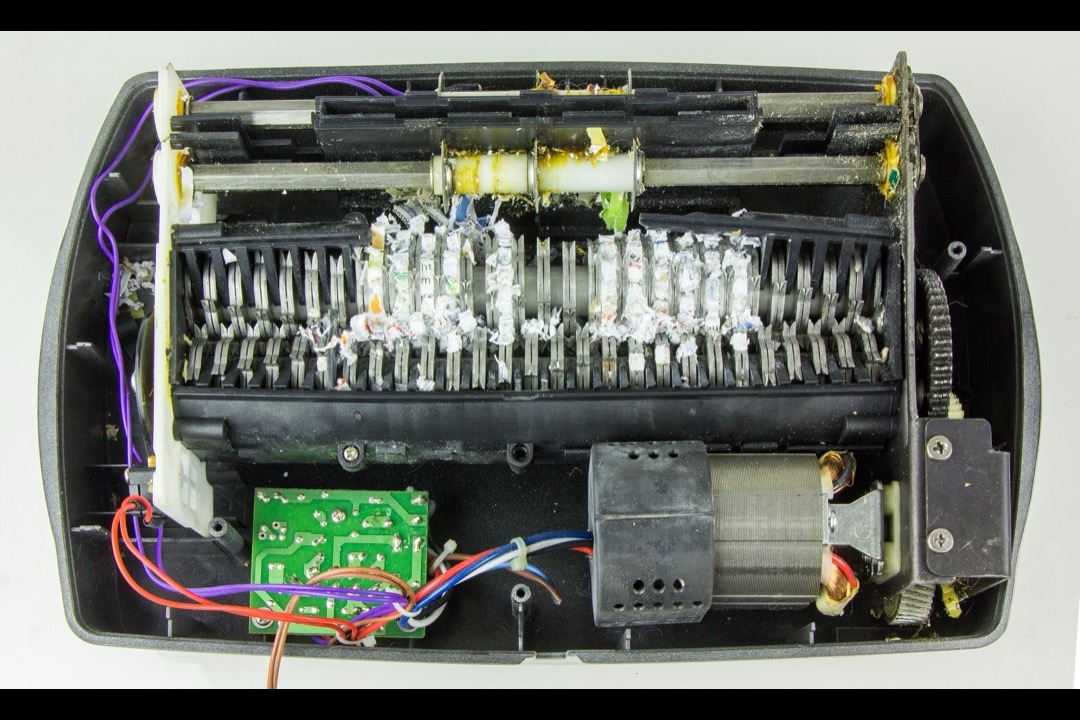
If you have been shopping for a paper shredder and landed on the cross-cut versus micro-cut question, you are asking the right question — the cut type determines how secure your destroyed documents actually are, and it affects speed, noise, maintenance, and cost in ways that matter day to day.
Most shredder comparisons give you a quick table and a verdict. This guide goes deeper because the decision has real consequences — particularly if you handle documents with compliance requirements. I have helped office managers spec shredders for administrative teams handling everything from routine correspondence to HIPAA-regulated patient records, and the cut type choice is more nuanced than “micro-cut is better.” For specific product recommendations after you decide which type you need, our roundup of the best paper shredders covers top picks in both categories with verified pricing and ratings.
How Paper Shredders Cut: The Mechanical Difference
Before comparing the two types, it helps to understand what is physically happening inside the machine.
A cross-cut shredder uses two sets of rotating blades that cut paper in two directions simultaneously — horizontally and vertically. The result is small rectangular or diamond-shaped particles. A standard cross-cut shredder produces roughly 400 particles per standard letter-size page, with each particle measuring approximately 4mm by 40mm at P-3 level, or 4mm by 40mm at P-4 level (up to 160 square millimeters per particle).
A micro-cut shredder uses a similar dual-direction cutting mechanism but with much finer tolerances. The blades are closer together and the cutting angles are tighter, producing particles as small as 2mm by 15mm — roughly 2,000 particles per page at P-5 level. At P-6 level, particles shrink to approximately 1mm by 10mm, yielding over 6,000 particles per page.
The practical difference: a cross-cut shredder turns a single page into confetti-sized pieces. A micro-cut shredder turns it into something closer to dust.
At a Glance: Cross-Cut vs Micro-Cut Comparison
| Factor | Cross-Cut | Micro-Cut |
|---|---|---|
| Security level | P-3 to P-4 | P-5 to P-6 |
| Particles per page | 200–400 | 2,000–6,000+ |
| Max particle size | 160–320 mm² | 10–30 mm² |
| Sheet capacity per pass | 12–18 sheets typical | 8–12 sheets typical |
| Continuous run time | 20–30 minutes | 10–20 minutes |
| Noise level | 65–70 dB | 68–75 dB |
| Oiling frequency | Every 30 min of use / biweekly | Before every session |
| Price range | $50–$150 | $80–$250 |
| Can shred CDs/cards | Most models yes | Varies — check specs |
| Waste bin efficiency | Moderate — larger particles | Better — particles compress tightly |
| Best for | Home, general office | Sensitive data, compliance |
Understanding Shredder Security Levels: DIN 66399
The international standard for document destruction security is DIN 66399 (standardized globally as ISO/IEC 21964). It defines seven security levels for paper, designated P-1 through P-7. Understanding these levels matters because compliance requirements, insurance policies, and data protection regulations reference them specifically.
| Level | Max Particle Size | Particles per Page | Cut Type | Typical Use |
|---|---|---|---|---|
| P-1 | 2,000 mm² | ~18 | Strip-cut | General, non-sensitive |
| P-2 | 800 mm² | ~35 | Strip-cut | Internal, non-confidential |
| P-3 | 320 mm² (max 4mm wide) | ~200 | Cross-cut | Confidential personal |
| P-4 | 160 mm² (max 6mm wide) | ~400 | Cross-cut | Sensitive personal/business |
| P-5 | 30 mm² (max 2mm wide) | ~2,000 | Micro-cut | Confidential business, compliance |
| P-6 | 10 mm² (max 1mm wide) | ~6,000 | Micro-cut | Highly confidential, classified |
| P-7 | 5 mm² (max 1mm wide) | ~12,000+ | High-security | Top secret, intelligence |
The jump from P-4 to P-5 is the critical threshold — particle size drops from 160 mm² to 30 mm², an 80 percent reduction. This is the line between “difficult to reconstruct” and “practically impossible to reconstruct,” and it is the line between cross-cut and micro-cut territory.
Can Shredded Documents Actually Be Reconstructed?
This is the question that should drive your decision, and most shredder comparisons either skip it entirely or dismiss it with vague reassurances.
The reality is nuanced. In 2011, DARPA ran the Shredder Challenge — a competition to reconstruct documents from shredded pieces using computer algorithms. Participants successfully reconstructed meaningful content from strip-cut and basic cross-cut shredded documents using pattern-matching software that analyzed particle shapes, text alignment, and paper fiber patterns. The challenge demonstrated that document reconstruction is not theoretical — it is technically feasible with sufficient motivation and resources.
For strip-cut (P-1 and P-2) documents, reconstruction is straightforward. A patient person with tape can do it manually, and software can automate it reliably.
For cross-cut (P-3 and P-4) documents, reconstruction is significantly harder but not impossible. The two-direction cutting creates far more particles with less predictable alignment, but academic research has demonstrated partial reconstruction of P-3 and P-4 shredded documents using advanced algorithms. The cost and effort required make this impractical for most threat scenarios — no one is spending research-lab resources to reconstruct your bank statements from your curbside recycling.
For micro-cut (P-5 and above) documents, reconstruction is considered practically impossible with current technology. The particle size is too small, the number of particles per page too high, and the distinguishing features per particle too limited for algorithmic or manual reassembly.
The practical takeaway: if the people who might want your information are identity thieves sorting through residential waste, cross-cut is more than sufficient. If the people who might want your information have institutional resources — competitors, litigants, state actors — micro-cut is the appropriate precaution.
Regulatory Compliance: Which Cut Type Meets Which Requirements
If your document destruction is governed by regulatory requirements, the shredder type you choose has compliance implications that go beyond personal preference.
HIPAA (healthcare): The HHS guidance requires that protected health information be rendered “unreadable, indecipherable, and otherwise cannot be reconstructed.” P-4 cross-cut meets the minimum standard, but P-5 micro-cut is increasingly expected during compliance audits. Multiple healthcare compliance consultants now recommend P-5 as the baseline for any practice handling PHI.
FACTA (consumer financial data): The Fair and Accurate Credit Transactions Act requires “reasonable measures” to destroy consumer information. P-4 is generally accepted; P-5 provides a stronger compliance position.
GLBA (financial institutions): The Gramm-Leach-Bliley Act requires financial institutions to protect customer information through its disposal. P-4 meets the standard; larger institutions typically standardize on P-5 for defensibility.
GDPR (EU personal data): The General Data Protection Regulation requires that personal data be destroyed beyond reconstruction. P-5 micro-cut is the recommended minimum for GDPR-compliant destruction of physical documents.
If you are unsure whether compliance requirements apply to your work, consult with your compliance officer or legal counsel. The cost difference between a cross-cut and micro-cut shredder is trivial compared to the cost of a compliance violation. For offices managing both physical document security and general office workflows, pairing a compliant shredder with a reliable label maker for document classification can streamline your records management process.
Cross-Cut Shredders: Where They Excel
Cross-cut shredders are the workhorse category for a reason. They balance security, speed, and practicality in a way that fits most home and general office scenarios.
Speed and throughput: Cross-cut models handle more sheets per pass and run for longer continuous periods. For offices that accumulate paper and shred in batch sessions — emptying the “to shred” bin once a week — this practical advantage matters. You spend less time feeding paper and waiting for cool-down cycles.
Lower maintenance: Oiling every couple of weeks versus every session is a meaningful difference in practice. Most people will maintain a biweekly routine. Fewer people will consistently oil a machine before every use.
Media versatility: Most cross-cut shredders at the mid-range and above can handle credit cards, CDs, DVDs, staples, and paper clips without requiring removal. Many micro-cut models are paper-only or require you to remove staples and clips before feeding. If you regularly destroy old credit cards, loyalty cards, or optical media, verify the micro-cut model’s media capabilities before purchasing.
Lower noise: The 5-decibel difference between typical cross-cut and micro-cut operation may not sound significant, but decibels are logarithmic — 70 dB versus 75 dB represents roughly a 70 percent increase in perceived loudness. In a shared or open workspace, this is noticeable.
Micro-Cut Shredders: Where They Excel
Micro-cut shredders justify their higher cost and maintenance requirements with security capabilities that cross-cut cannot match.
Reconstruction-proof security: At P-5 and above, reconstructing a shredded document is not a practical possibility with any currently available technology. For anyone shredding documents where the consequences of reconstruction would be significant — client financial records, legal case files, personnel documents, medical records — this is the decisive factor.
Waste efficiency: This is counterintuitive but consistently true — micro-cut shredders produce smaller bin volumes per page than cross-cut models. The tiny particles pack densely and compress under their own weight, while cross-cut confetti creates air pockets. In practice, you empty the bin less frequently with micro-cut, which partially offsets the lower sheet-per-pass throughput.
Longer blade life: When properly maintained with consistent oiling, micro-cut shredder blades typically last longer than cross-cut blades. The finer cutting mechanism operates within tighter tolerances, and the lubrication routine that the machine demands also protects the blades. A well-maintained micro-cut shredder can deliver reliable service for 7 to 10 years; cross-cut models typically last 3 to 5 years under comparable use.
Compliance confidence: If your industry is regulated and your office handles records subject to destruction requirements, micro-cut eliminates the gray area. You do not need to argue that P-4 “probably” meets the standard — P-5 definitively meets or exceeds every major US and EU data destruction requirement for paper documents. For offices managing compliance documentation alongside other administrative workflows, a well-organized document production setup with a quality laminator for permanent records and a micro-cut shredder for destruction covers both ends of the document lifecycle.
What Materials Can Each Type Handle?
This is a practical consideration that many comparison guides overlook, and it can be the deciding factor for offices that destroy more than just paper.
| Material | Cross-Cut | Micro-Cut |
|---|---|---|
| Standard paper (20 lb) | Yes | Yes |
| Cardstock / heavy paper | Most models | Some models — check rating |
| Credit/debit cards | Most mid-range+ | Varies — many paper-only |
| CDs and DVDs | Many mid-range+ | Rarely |
| Paper clips and staples | Most models | Some — check specs |
| Small binder clips | Usually no | No |
| Junk mail with window envelopes | Yes | Yes |
If you regularly destroy old payment cards, ID badges, or optical media alongside paper documents, cross-cut gives you more versatile options. If you only need to destroy paper, this distinction does not apply.
Which Type Do You Need? A Decision Guide
Scenario 1 — Home office, personal documents only. You shred bank statements, credit card offers, expired insurance documents, and tax returns older than seven years. No regulatory requirements apply. Choose cross-cut (P-4). It provides more than enough security for personal document destruction, handles higher volumes when you do your quarterly cleanout, and requires less maintenance.
Scenario 2 — Small office, general business documents. You shred internal memos, old invoices, draft contracts, and general correspondence. No client data or regulated information. Choose cross-cut (P-4). The throughput advantage and lower maintenance make it the practical choice for office environments without compliance requirements.
Scenario 3 — Medical or dental practice. You shred documents containing protected health information — patient intake forms, insurance EOBs, prescription records, referral letters. HIPAA applies. Choose micro-cut (P-5). The cost difference between a P-4 cross-cut and a P-5 micro-cut shredder is negligible compared to the cost and reputational damage of a HIPAA compliance finding.
Scenario 4 — Legal or financial services firm. You shred client financial records, legal case documents, personnel files, and correspondence containing confidential business information. GLBA, FACTA, or state privacy laws may apply. Choose micro-cut (P-5). Attorney-client privilege and fiduciary duty to protect client information make the higher security level a professional obligation, not a preference.
Scenario 5 — Corporate office or enterprise environment. You handle trade secrets, board materials, M&A documents, competitive intelligence, or employee records at scale. Choose micro-cut (P-5 or P-6) and consider centralized shredding stations rather than desktop models. For high-volume corporate environments, a departmental micro-cut shredder with a 20+ gallon bin and auto-feed capability pays for itself in time savings. Pair it with a thermal label printer for classified document tracking and you have a defensible chain-of-custody workflow.
Maintenance: Keeping Either Type Running
Both shredder types benefit from consistent maintenance, but the requirements differ enough to affect your daily routine.
Cross-Cut Maintenance
- Oiling: Every 30 minutes of cumulative shredding time, or approximately every two weeks for moderate use. Apply shredder oil (or plain canola oil) in a zigzag pattern across the paper feed opening, then run a few sheets through to distribute.
- Bin emptying: When the bin reaches 75 percent capacity — overfilling increases the risk of particles backing up into the cutting assembly.
- Blade cleaning: Run two or three oiled sheets through the shredder monthly to clear accumulated paper dust from the blades. Some manufacturers sell pre-oiled cleaning sheets for this purpose.
- Cool-down: Respect the rated continuous run time. If the shredder’s motor housing feels warm to the touch, stop and allow 20 to 30 minutes of cool-down before resuming.
Micro-Cut Maintenance
- Oiling: Before every use session — not optional. The finer cutting mechanism generates more friction, and dry micro-cut blades jam more frequently and wear faster. A 30-second oiling routine before each session is the single most important maintenance habit.
- Sheet discipline: Never exceed the rated sheet capacity. Cross-cut shredders are somewhat forgiving when overfed; micro-cut models are not. If the shredder is rated for 10 sheets, feed 8 to 10 and never 12.
- Reverse cycling: If the shredder hesitates or slows, immediately switch to reverse for a few seconds, then resume forward. Forcing paper through a struggling micro-cut mechanism causes blade damage.
- Dust management: Micro-cut shredders produce finer paper dust than cross-cut models. Periodically vacuum around the cutting assembly and the interior of the bin housing to prevent dust accumulation on mechanical components.
Final Verdict
For most home offices and general business environments without regulatory requirements, cross-cut at P-4 is the right choice. It provides solid security against realistic threats, handles higher volumes with less fuss, requires less maintenance discipline, and costs less — both upfront and over the life of the machine. Cross-cut is not a compromise; it is the appropriate tool for the threat level most people actually face.
For offices handling regulated data — healthcare, legal, financial, or any environment where document reconstruction would have legal or compliance consequences — micro-cut at P-5 is the right choice. The higher cost, lower throughput, and more demanding maintenance are the price of compliance confidence and genuine security against determined adversaries. That is a price worth paying when the alternative is a compliance finding or a client data breach.
The one thing both types share: a shredder only works if you use it. The most common document security failure is not the wrong cut type — it is the stack of sensitive documents sitting in a desk drawer because the shredder felt like too much effort. Whichever type you choose, make it easy to access, oil it on schedule, and use it consistently. Our best paper shredders guide has specific model recommendations in both categories, verified for current availability and pricing.
Buyer's Guide
The right shredder type depends on what you are destroying, who might want to read it, and how much maintenance you are willing to perform. These six factors determine which cut style fits your actual needs.
Sensitivity of Documents You Shred
This is the single most important factor. If you shred only personal mail, expired offers, and routine financial statements, cross-cut at P-4 provides adequate security — reconstruction is impractical without specialized resources. If you handle client data, patient records, legal documents, employee files, or anything subject to regulatory destruction requirements, micro-cut at P-5 or higher is the appropriate choice. The question is not theoretical — it is whether the documents you shred could cause financial, legal, or reputational harm if reconstructed. If the answer is yes, micro-cut.
Regulatory Compliance Requirements
If your work falls under HIPAA, FACTA, GLBA, or GDPR data destruction requirements, the shredder you choose has compliance implications. HIPAA and FACTA effectively require P-4 minimum with P-5 recommended. GLBA requires destruction that renders customer financial information unreadable. GDPR requires that personal data of EU citizens be destroyed beyond reconstruction. In all four frameworks, micro-cut at P-5 is the safest defensible position. Cross-cut at P-4 may technically meet minimum requirements, but leaves more room for auditor interpretation — and auditors tend to interpret conservatively.
Daily Shredding Volume
Cross-cut shredders handle higher volumes more efficiently. They typically accept more sheets per pass — 12 to 18 sheets for mid-range cross-cut versus 8 to 12 for comparable micro-cut models — and run for longer continuous periods before requiring a cool-down cycle. Cross-cut shredders average 20 to 30 minutes of continuous runtime; micro-cut models typically need a cool-down after 10 to 20 minutes. If you accumulate large batches of documents and shred infrequently in bulk sessions, cross-cut is significantly more practical. If you shred small batches daily, micro-cut's lower throughput is less of a constraint.
Noise Tolerance in Your Workspace
Micro-cut shredders are measurably louder than cross-cut models. Typical cross-cut shredders operate at 65 to 70 decibels — comparable to a normal conversation. Micro-cut models run at 68 to 75 decibels, closer to a vacuum cleaner. In a private office or dedicated workspace, the difference is minor. In an open-plan office, a shared workspace, or a home office where you take calls while shredding, the additional noise from a micro-cut model can be disruptive. If noise is a constraint, look for specific models marketed as quiet-operation, which use sound-dampening enclosures regardless of cut type.
Maintenance Commitment
Micro-cut shredders require more disciplined maintenance than cross-cut models. The finer cutting mechanism needs lubrication before every use session to prevent jams and blade wear. Cross-cut shredders need oiling every couple of weeks under moderate use. Both types need periodic emptying and occasional clearing of paper dust from the cutting assembly. If you are realistic about your maintenance habits — you will shred but probably will not oil the machine before every session — cross-cut is the more forgiving choice. If you can commit to the routine, micro-cut rewards that discipline with superior security and longer blade life.
Budget and Total Cost of Ownership
At comparable sheet capacities, micro-cut shredders cost 30 to 60 percent more than cross-cut models at the point of purchase. A solid cross-cut shredder for home or small office use runs between 50 and 150 dollars; a comparable micro-cut model runs 80 to 250 dollars. Beyond purchase price, micro-cut shredders consume more lubricant oil due to the higher oiling frequency. On the other hand, micro-cut models produce smaller waste particles that compress more efficiently in the bin, so you may use fewer bags over time. The total cost difference over a five-year ownership period is modest — the purchase price gap is the largest component.
Frequently Asked Questions
Is a cross-cut shredder secure enough for personal use?
What security level do I need for HIPAA compliance?
Do micro-cut shredders jam more than cross-cut?
How often do you need to oil a paper shredder?
Is micro-cut shredded paper recyclable?
Related Articles
About the Reviewer

Sarah Chen, CAP, PMP
B.A. Business Administration, UCLA
Sarah Chen spent 10 years in office management and operations at Fortune 500 companies before founding DeskRated in 2026. After managing supply budgets for teams of 50+ people and testing thousands of products through daily use, she started writing the honest, no-fluff supply reviews that office professionals actually need. Sarah holds both CAP and PMP certifications and is based in Los Angeles.