7 Best Office Coffee Makers of 2026
Sarah Chen reviews the best office coffee makers for workplace breakrooms. Compare top-rated single-serve, drip, and dual-brew machines by capacity, brew speed, and total cost of ownership.
Updated
As a Certified Administrative Professional who has managed breakroom procurement for offices ranging from five-person startups to 150-seat professional services firms, I can tell you that the office coffee maker is the single most frequently discussed, most emotionally charged, and most operationally consequential breakroom purchase an office manager will make. It is not about coffee quality in the abstract — it is about a machine that runs 20 to 40 cycles per day, serves people with incompatible preferences, gets cleaned by whoever feels guilty enough to do it, and directly affects whether people stay at their desks or leave the building for a coffee run. A bad coffee setup costs you 15 to 30 minutes of lost productivity per person per day in walk-to-café trips and breakroom complaints. A good one becomes invisible infrastructure — it just works, and people stay focused.
For this review, we evaluated seven of the best office coffee makers currently available on Amazon across every relevant machine format: single-serve pod brewers, programmable drip machines, commercial-grade units, dual-brew hybrids, and specialty single-serve with built-in frothers. We evaluated each machine against the criteria that matter for workplace procurement specifically — not just coffee flavor, but throughput during peak demand, total cost of ownership including consumables and labor, noise levels for open-plan environments, maintenance burden, durability under heavy daily use, and counter space requirements. Every product on this list addresses a distinct office configuration rather than duplicating a use case already covered.
The competitor landscape for “best office coffee makers” is dominated by coffee enthusiast sites that evaluate machines on extraction quality and barista-grade specifications. That perspective misses the actual decision-maker: the office manager, administrative professional, or facilities coordinator who needs a machine that works for 15 people with different preferences, runs reliably for 3 to 5 years under heavy daily use, and fits within a supply budget that has to cover everything from printer paper to breakroom equipment. This review is written from that procurement perspective — every recommendation accounts for total cost of ownership, maintenance reality, and the operational constraints of shared workplace equipment.
| Product | Price | Buy |
|---|---|---|
| Keurig K-Elite Single Serve Coffee MakerBest Overall | $149.99 | View on Amazon |
| Ninja 12-Cup Programmable Coffee Brewer CE201Budget Pick | $89.99 | View on Amazon |
| Technivorm Moccamaster KBGV Select 10-CupPremium Pick | $350.97 | View on Amazon |
| Keurig K-1500 Commercial Coffee MakerRunner-Up | $214.00 | View on Amazon |
| Ninja Pod & Grounds Specialty Single-Serve Coffee Maker PB051 | $129.99 | View on Amazon |
| Cuisinart PerfecTemp 14-Cup Programmable Coffee Maker DCC-3200 | $105.78 | View on Amazon |
| Hamilton Beach 2-Way Coffee Maker 49980RG | $76.79 | View on Amazon |
Jump to the setup that matches your office:
- Best for Small Offices — 1–10 people, single-serve and compact machines
- Best for Large Offices — 15+ people, high-volume and commercial-grade
How We Chose These Office Coffee Makers
Our evaluation framework prioritized the metrics that matter for workplace deployment over individual coffee preference. We required a minimum of 1,000 verified Amazon reviews to establish a meaningful reliability baseline for machines running at office-level duty cycles. We evaluated total cost of ownership across a 12-month horizon including purchase price, consumable costs at 25 cups per day, and maintenance requirements. We assessed noise levels against the threshold for open-plan office placement, verified counter space requirements against standard breakroom configurations, and confirmed warranty terms and parts availability for replacement components. We required genuine use-case differentiation across all seven products — no two machines on this list serve the same primary office scenario. Price-to-value ratios were evaluated within category (single-serve versus drip versus dual-brew) rather than across categories, because comparing a pod machine’s per-cup convenience to a drip brewer’s per-cup cost produces misleading conclusions without accounting for the maintenance labor differential.
Keurig K-Elite — Best Overall
The Keurig K-Elite earns the best overall position for offices because it solves the three problems that cause the most friction with shared office coffee machines: noise that disrupts nearby workstations, a reservoir that empties before the morning is over, and the inability to accommodate different drink preferences without multiple machines.
Quiet Brew Technology is the specification that separates the K-Elite from every other Keurig model and most competing single-serve machines. In an open-plan office where the coffee station shares floor space with workstations, the noise generated by a standard single-serve brewer during the 8:30 to 9:30 morning rush creates a cumulative distraction that compounds with each cup brewed. The K-Elite’s reduced noise output makes it appropriate for placement in environments where a standard Keurig would generate complaints. The 75 oz reservoir supports approximately nine cups between refills — not the largest on this list (the K-1500’s 96 oz reservoir handles 18), but sufficient for a team of six to eight without requiring someone to refill mid-morning. The five brew sizes from 4 to 12 oz serve the full spectrum of office coffee drinkers: the 4 oz setting produces a concentrated shot for those who prefer stronger coffee, while the 12 oz setting fills a standard travel mug for people heading into a long meeting.
The Strong Brew and Iced Coffee settings are the features that prevent the most common office machine complaint: “the coffee is too weak.” Strong Brew runs water through the pod more slowly for higher extraction, and the Iced Coffee setting brews a concentrated portion designed to pour over ice without diluting to water. These two buttons address the two requests that drive the most single-serve machine dissatisfaction in shared environments, without requiring any additional equipment or training. At 73,075 reviews and 4.6 stars, the K-Elite’s reliability dataset is the deepest on this list and represents years of documented performance across home and office deployments.

Keurig K-Elite Single Serve Coffee Maker
by Keurig
The most office-appropriate single-serve machine available — 70,000+ reviews, Quiet Brew Technology for open-plan environments, and a 75 oz reservoir that minimizes refill interruptions throughout the workday.
Pros
- Quiet Brew Technology makes this one of the few single-serve machines that will not interrupt phone calls or conversations in an open-plan office
- Five brew sizes from 4 to 12 oz accommodate everything from a quick espresso-strength shot to a full travel mug without switching machines
- 75 oz water reservoir supports approximately 9 cups between refills — enough to serve a small team through a full morning without maintenance
- Strong Brew and Iced Coffee settings address the two most common special requests in a shared office machine without requiring additional equipment
Cons
- No internal used-pod collection bin means someone has to empty the drip tray area regularly or pods accumulate visibly
- Brew temperature maxes out below the 195–205°F range that specialty coffee professionals consider optimal for full extraction
- Single-serve only — no carafe option for meetings or events where multiple cups are needed simultaneously
Ninja 12-Cup Programmable Brewer — Budget Pick
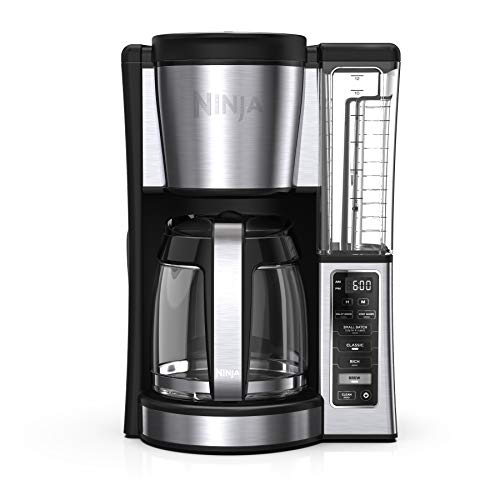
The Ninja CE201 is the right machine for offices that have decided — or discovered through experience — that ground coffee produces better results and lower costs than pods, and want the best drip brewer available without spending more than what the office supply budget comfortably allows. At this price, it competes with machines that offer half its feature set.
The Small Batch mode is the feature most relevant to office use. Standard 12-cup drip machines produce weak, watery coffee when you brew less than a full pot — the water-to-grounds ratio designed for 12 cups does not scale down proportionally. The Ninja’s Small Batch mode recalibrates the brew cycle for 1 to 4 cups, maintaining the same extraction strength as a full pot. This is the specification that makes the CE201 viable for offices where consumption varies significantly between days — Monday might need two full pots while Friday needs four cups. The Hotter Brewing Technology addresses the other universal complaint about budget drip machines: lukewarm coffee. The CE201 brews at a higher temperature than competing machines in its price range and delivers coffee to the carafe noticeably hotter.
The 24-hour delay brew is a practical office feature that competitors in this price range often omit. Load the grounds and water the afternoon before, set the timer for 7:45 AM, and the first person to arrive walks into a breakroom with fresh coffee already brewed. This eliminates the morning “who’s making coffee” negotiation that wastes five minutes every day in offices without a designated coffee person. The Classic and Rich brew strength options serve both camps in the perennial office coffee strength debate without requiring separate machines. The honest limitation is the glass carafe: coffee sitting on the warming plate degrades after 30 to 45 minutes, and the plate itself can scorch if left running for hours. For offices where the pot sits untouched for long stretches, a thermal carafe machine would be more appropriate — but at this price, the glass carafe is the expected trade-off.
Ninja 12-Cup Programmable Coffee Brewer CE201
by Ninja
Best value drip brewer for offices that prefer ground coffee over pods — Hotter Brewing Technology and Small Batch mode solve the two most common complaints about budget office drip machines.
Pros
- Small Batch mode brews 1–4 cups at full strength without the diluted flavor that plagues most 12-cup machines when making partial pots
- Hotter Brewing Technology addresses the most common complaint about budget drip machines — coffee that arrives lukewarm in the carafe
- 24-hour delay brew lets whoever arrives first walk into the office with a fresh pot already waiting — zero morning workflow disruption
- Classic and Rich brew strength options satisfy both light-coffee and strong-coffee preferences from a single machine
Cons
- Glass carafe only — no thermal carafe option, so coffee quality degrades on the warming plate after 30–45 minutes
- Ground coffee only — no pod compatibility for employees who prefer single-serve convenience
- Warming plate can scorch coffee if left unattended beyond the recommended 2-hour window
Technivorm Moccamaster KBGV Select — Upgrade Pick
The Moccamaster occupies a different category from every other machine on this list. It is not the most convenient, not the most feature-rich, and not the most budget-friendly. It is the machine that makes the best coffee — and for offices that view their coffee program as a talent retention and workplace culture investment rather than a line item to minimize, that distinction drives the purchasing decision.
The copper boiling element is the engineering foundation. It heats water to 196–205°F — the SCA-recommended extraction temperature range — in under a minute and maintains that temperature throughout the brew cycle. Most drip machines in the consumer price range heat water to 175–190°F, which under-extracts the coffee and produces the flat, slightly sour flavor that people associate with “office coffee.” The Moccamaster produces coffee that tastes noticeably different from a standard drip machine, and the difference is apparent to regular coffee drinkers without any specialized palate. The SCA certification is not a marketing badge — it is an independent evaluation by the Specialty Coffee Association confirming that the machine meets the full set of parameters for optimal extraction: water temperature, brew time, brewing volume, and holding temperature.
The 5-year warranty is the specification that matters most for procurement justification. At the Moccamaster’s price point, the purchase requires approval beyond the standard office supply budget. The warranty, combined with Technivorm’s documented track record of machines lasting 10+ years with user-replaceable parts available on Amazon, allows you to amortize the cost across five years of daily use — which brings the annual cost to roughly seventy-five dollars a year, well below the annual consumable cost of any pod machine. Hand-built in the Netherlands with individual serial numbers, available in nine colors to match breakroom aesthetics, and simple enough that maintenance is a five-minute weekly rinse rather than a descaling ritual. The honest limitations are the lack of a programmable timer (someone needs to start each brew cycle) and the 10-cup capacity (sufficient for teams up to 10, but requiring multiple cycles for larger offices). For the right office — one that values coffee quality as a workplace amenity and can absorb the upfront cost — the Moccamaster is the machine that people will actually talk about, which is the definition of a breakroom amenity that pays for itself in cultural capital.

Technivorm Moccamaster KBGV Select 10-Cup
by Technivorm
The only SCA-certified brewer on this list — a copper boiling element, 5-year warranty, and hand-built construction that justifies the premium for offices treating their coffee program as a retention and culture investment.
Pros
- Copper boiling element reaches the SCA-recommended 196–205°F extraction temperature in under a minute — the only machine on this list that consistently hits this standard
- SCA (Specialty Coffee Association) certification means independent third-party verification of optimal brewing parameters, not just a marketing claim
- 5-year warranty is the longest on this list and reflects Technivorm's documented track record of 10+ year service life with user-replaceable parts
- Hand-built in the Netherlands with individual serial numbers — a procurement-justifiable quality story for offices that view breakroom amenities as a retention and culture investment
Cons
- No programmable timer or delay brew — someone needs to be present to load grounds and start the cycle
- 10-cup capacity is adequate for teams up to 10 but insufficient for larger offices without running multiple brew cycles per morning
- Premium price requires procurement approval in most organizations — difficult to justify as an impulse purchase on an office supply budget
Keurig K-1500 Commercial — Runner-Up
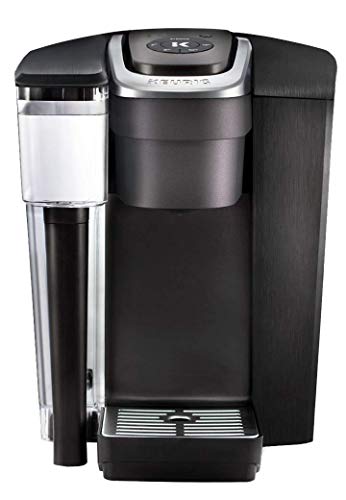
The K-1500 is the only machine on this list designed from the ground up for commercial workplace deployment rather than adapted from a consumer product line. Every design decision reflects the reality of a machine that will run 20 to 40 cycles per day in an environment where no single person is responsible for its maintenance.
The 96 oz water reservoir is the headline specification. At approximately 18 cups between refills, a fully loaded K-1500 can serve a 15-person office through the entire morning without anyone needing to refill the tank. This matters more than it appears in a product listing: in offices without a designated breakroom manager, a machine that needs refilling every 6 to 8 cups creates a negative feedback loop where people avoid being the last to brew because they do not want to be the one who has to refill. The K-1500’s reservoir capacity breaks that cycle. The drain-and-store feature is a commercial-specific design detail: it allows the water system to be fully emptied for transport, seasonal office closures, or deep cleaning without the trapped-water problems that cause mold and mineral buildup in consumer machines that get powered down with water still in the lines.
Quiet Brew Technology matches the K-Elite’s noise performance, making the K-1500 appropriate for placement in reception areas, co-working spaces, and open-plan offices where the machine operates throughout the day within earshot of people doing focused work. The Strong Brew button addresses the most common K-Cup complaint — that standard pod strength is too weak — by slowing the water flow through the pod for higher extraction. The honest limitation is the lack of a programmable clock: someone needs to power the machine on each morning, and there is no auto-off function to handle end-of-day shutdown. For offices with a regular opening and closing routine, this is a minor inconvenience. For offices with variable hours or no designated last-out person, it means the machine may run overnight unnecessarily. At this price point, the K-1500 competes directly with the K-Elite plus a second consumer Keurig, which is worth considering — but the K-1500’s commercial-grade internals and larger reservoir justify the single-machine approach for offices that want one reliable unit rather than managing two consumer models.
Keurig K-1500 Commercial Coffee Maker
by Keurig
Purpose-built for workplace deployment — the largest reservoir on this list at 96 oz, commercial-grade construction, and Quiet Brew Technology for offices that need a machine designed for 15-person team use.
Pros
- 96 oz water reservoir is the largest on this list — supports approximately 18 cups between refills, designed for teams of up to 15 without constant maintenance
- Commercial-grade build with drain-and-store capability is designed for workplace deployment, not adapted from a consumer model
- Quiet Brew Technology operates at a noise level appropriate for placement in open-plan offices, co-working spaces, and reception areas
- Strong Brew button addresses the most common single-serve complaint — that standard K-Cup strength is too weak for regular coffee drinkers
Cons
- No programmable auto-on/off clock — someone needs to power the machine on each morning and remember to turn it off at close
- K-Cup pods only — no ground coffee compatibility for teams that prefer freshly ground beans
- Heavy when reservoir is full — not easily repositioned once placed on the breakroom counter
Ninja Pod & Grounds PB051 — Most Versatile
The Ninja PB051 exists to solve the most common office coffee machine argument: pods versus grounds. By accepting both K-Cup pods and loose ground coffee in a single machine, it eliminates the debate entirely and lets each person brew their preferred format without requiring two separate machines. For offices upgrading from a basic drip maker where the most frequent request is “can we get a machine that makes lattes,” the built-in fold-away frother makes the PB051 the lowest-cost path to coffeehouse-style drinks.
The four brew styles — Classic, Rich, Over Ice, and Specialty — provide more beverage variety than any other single-serve machine on this list. The Specialty setting brews a concentrated portion designed to be mixed with frothed milk for lattes and cappuccinos, which is the specific drink that drives the most “can we upgrade the coffee situation” requests in shared offices. The built-in frother folds away when not in use, maintaining a compact profile on the counter. At 5.51 inches wide, the PB051 is the narrowest machine on this list — a specification that matters in breakrooms where the coffee maker shares counter space with a microwave, toaster oven, and whatever else the office has accumulated.
The 56 oz reservoir is mid-range for this list and supports approximately 7 to 10 cups between refills, which is adequate for teams up to 8 but will require mid-morning refills for larger groups. The grounds brewing side extends to 24 oz — large enough for the biggest travel mugs — which is a meaningful advantage over the Keurig machines that max out at 12 oz. The documented reliability concerns in user reviews are worth acknowledging: a minority of reviews report inconsistent water dispensing and occasional leaking at the pod chamber seal, typically after several months of use. The failure rate does not appear to be widespread based on the 11,898-review dataset at 4.3 stars, but it is a pattern worth monitoring if the machine runs at high daily volume. For offices that want maximum beverage variety from a single machine at a mid-range price point, the PB051 offers the broadest capability set available.

Ninja Pod & Grounds Specialty Single-Serve Coffee Maker PB051
by Ninja
Most versatile single-serve machine — K-Cup pods and ground coffee in one unit, four brew styles including specialty concentrate, and a built-in frother that replaces a separate appliance.
Pros
- Dual compatibility with K-Cup pods and ground coffee eliminates the office debate about which brewing method to standardize on — both work in one machine
- Four brew styles (Classic, Rich, Over Ice, Specialty) cover more beverage types than any other single-serve machine on this list
- Built-in fold-away milk frother enables lattes and cappuccinos without a separate appliance — a meaningful upgrade for offices replacing a basic drip machine
- 5.51-inch width is the narrowest footprint on this list — fits on counters where space is allocated to multiple breakroom appliances
Cons
- Some reviews report inconsistent water dispensing and occasional leaking at the pod chamber seal after extended use
- Brew temperature runs cooler than ideal for some users — a recurring theme in mid-range single-serve machines
- Frother performance varies by milk type and requires regular cleaning to maintain consistent results
Cuisinart PerfecTemp 14-Cup DCC-3200 — Best for Large Offices
The Cuisinart DCC-3200 answers a simple question: what is the best machine for offices where the morning requirement is the largest possible volume of good coffee from a single brew cycle? At 14 cups per fill, the DCC-3200 produces more coffee per cycle than any other machine on this list — enough to serve a mid-morning team meeting of 10 to 12 people from a single pot without running a second cycle.
The adjustable carafe temperature is the feature that most distinguishes the DCC-3200 from competing large-capacity drip machines. Standard drip brewers use a fixed-temperature warming plate that has one setting: hot enough to keep coffee warm but also hot enough to scorch it within an hour. The DCC-3200’s Low, Medium, and High settings allow the office to find the sweet spot between “warm enough to drink” and “burned by 10 AM.” For offices where the morning pot sits on the warming plate for an hour or more, this single feature meaningfully extends the window of drinkable coffee. The charcoal water filter included in the box is a practical detail for offices in hard water areas — most of the US east of the Rockies — where mineral content affects both coffee taste and machine longevity. The filter reduces chlorine and particulates before they reach the brew basket, producing cleaner-tasting coffee and reducing the frequency of descaling required.
At 44,250 reviews and 4.4 stars, the DCC-3200’s reliability dataset spans multiple years of heavy consumer and light-commercial use. The Bold brew strength setting provides a stronger extraction for offices that prefer their coffee robust, and the 24-hour programmable timer supports the same “walk into fresh coffee” workflow as the Ninja CE201. The honest limitations are the control panel — which takes a few days for new users to navigate intuitively — and the Brew Pause feature, which allows mid-cycle pouring but can cause uneven extraction if people pull the carafe repeatedly during the brew cycle. A simple sign reading “Please wait until brewing is complete” solves the latter. For offices of 12 or more where drip coffee is the preferred format, the DCC-3200 is the most practical single-machine purchase available.

Cuisinart PerfecTemp 14-Cup Programmable Coffee Maker DCC-3200
by Cuisinart
Highest-capacity drip brewer on this list — 14 cups per cycle with adjustable carafe temperature and a charcoal water filter, backed by 43,000+ verified reviews.
Pros
- 14-cup capacity is the largest carafe on this list — a single brew cycle produces enough coffee for a mid-morning team meeting without running a second pot
- Adjustable carafe temperature (Low, Medium, High) prevents the scorching problem that destroys coffee quality on fixed-temperature warming plates
- 43,000+ reviews at 4.4 stars represents one of the largest validated satisfaction datasets for any drip coffee maker on Amazon
- Charcoal water filter included in the box improves flavor consistency in offices with hard or heavily treated municipal water
Cons
- Control panel layout and labeling require a brief learning curve — not immediately intuitive for first-time users in a shared environment
- Brew Pause feature for mid-cycle pouring can cause uneven extraction if used frequently
- No pod compatibility — ground coffee only, which requires someone to manage supplies and cleanup
Hamilton Beach 2-Way 49980RG — Best Dual-Brew Value
The Hamilton Beach 2-Way is the machine for offices that want both a full carafe for the morning rush and single-serve capability for afternoon individual cups — without buying two machines, without using pods, and without spending more than a hundred dollars. Its dual-brew design with separate water reservoirs for each side means the carafe side and the single-serve side operate independently: one person can brew a single cup while a full pot brews on the other side.
The no-pods approach is the 2-Way’s most distinctive characteristic in the current market. Both sides use ground coffee — the carafe side uses a standard basket filter and the single-serve side uses the included mesh scoop filter. This eliminates the single largest recurring expense in office coffee: pod costs. For a 15-person office consuming 25 cups daily, the shift from pods to ground coffee saves $1,800 to $3,400 annually — a savings that covers the cost of the machine many times over in the first year alone. The environmental argument is real as well: K-Cup pods generate approximately 12 billion units of plastic and aluminum waste annually, and offices running ground coffee bypass that waste stream entirely.
The 53,713 reviews at 4.5 stars represent the deepest reliability dataset of any ground coffee machine here. This volume of reviews accumulated over multiple years of market presence provides a more confident long-term reliability picture than newer products with smaller review pools. The AutoPause & Pour feature lets someone grab a cup mid-brew without coffee dripping onto the warming plate — a practical consideration in an office where the first person to arrive wants their cup before the full pot finishes. The honest limitations are K-Cup incompatibility (teams committed to pods will not find this machine useful), the single-serve side’s height restriction (some tall travel mugs do not fit), and the mesh filter’s tendency to allow fine sediment through (paper filters are a simple fix at 2 to 3 cents each). For offices that want the most machine for the least money with the lowest ongoing cost, the Hamilton Beach 2-Way is the straightforward recommendation.

Hamilton Beach 2-Way Coffee Maker 49980RG
by Hamilton Beach
Best dual-brew value — a 12-cup carafe and single-serve station sharing one counter footprint with no pod waste, backed by the deepest review pool of any ground coffee machine here at 53,713 verified reviews.
Pros
- Dual-brew design combines a 12-cup carafe and a 14 oz single-serve side with separate water reservoirs — two machines in one counter footprint
- No pods required on either side — both use ground coffee, eliminating recurring pod expenses and plastic waste entirely
- 53,713 reviews at 4.5 stars is the deepest review pool of any ground coffee machine here, reflecting a sustained, well-documented reliability track record
- AutoPause & Pour lets you grab a cup mid-brew without dripping — a practical feature when the first person to arrive needs coffee before the full pot finishes
Cons
- Not compatible with K-Cup pods — teams that prefer pod convenience will need a separate machine or to switch to ground coffee
- Single-serve side accommodates cups up to approximately 5.5 inches tall — some larger travel mugs may not fit under the brew head
- Built-in mesh filter can allow fine sediment through — paper filters recommended for cleaner cups
Best Coffee Maker for Small Offices
For a small office of roughly one to ten regular coffee drinkers, the goal flips: you want on-demand individual cups with minimal waste and the smallest possible counter footprint, not a 14-cup carafe that half-empties down the drain every afternoon. Single-serve is almost always the right format at this size because it scales down to a single person without brewing a wasted pot.
The Keurig K-Elite is the pick for most small offices — its 75 oz reservoir handles six to eight people through the morning, and Quiet Brew Technology keeps it viable next to workstations. If your team is split between pod fans and ground-coffee holdouts, the Ninja PB051 accepts both and is the narrowest machine here at 5.51 inches wide — ideal where the coffee maker fights a microwave and toaster for counter space. For a small office that still wants an occasional full pot without pod costs, the Hamilton Beach 2-Way gives you a single-serve side and a 12-cup carafe in one footprint, at the lowest price of any dual-brew machine here.
| Product | Price | Buy |
|---|---|---|
| Keurig K-Elite Single Serve Coffee MakerBest for Small Offices Quiet single-serve, 75 oz reservoir for 6–8 people | $149.99 | View on Amazon |
| Ninja Pod & Grounds Specialty Single-Serve Coffee Maker PB051Best Compact Pod + Grounds Narrowest footprint; brews pods and ground coffee | $129.99 | View on Amazon |
| Hamilton Beach 2-Way Coffee Maker 49980RGBest Budget Dual-Brew Single-serve plus 12-cup carafe, no pods, cheapest dual-brew here | $76.79 | View on Amazon |
The rule of thumb: one single-serve machine per 10–15 regular drinkers. Below that, a compact pod or dual-brew unit is almost always the lowest-hassle, lowest-waste choice.
Best Coffee Maker for Large Offices and High-Volume Use
Once you’re serving 15 or more people through a compressed morning window, throughput becomes the deciding factor. Single-cup brewing can’t keep up with a 12-person 8:30 AM rush, so the answer is either a large-capacity drip brewer that produces a full pot per cycle or a commercial-grade single-serve with a reservoir big enough to avoid constant refills. For genuinely commercial or plumbed deployments beyond ~30 people you’re into coffee-service territory, but for a countertop large-office setup these three cover it.
The Cuisinart DCC-3200 is the highest-capacity single pot here at 14 cups, with adjustable warming-plate temperature so the pot doesn’t scorch before the 10 AM stragglers arrive — the most practical single-machine buy for a drip-preferring large office. The Keurig K-1500 is the only purpose-built commercial unit on the list: its 96 oz reservoir serves ~18 cups between refills and its drain-and-store internals are built for 20–40 cycles a day. If your large office prefers ground coffee but wants flexibility on light-attendance days, the Ninja CE201 brews a proper 1–4 cup small batch without the watered-down result full-size machines produce on partial pots.
| Product | Price | Buy |
|---|---|---|
| Cuisinart PerfecTemp 14-Cup Programmable Coffee Maker DCC-3200Highest-Capacity Single Pot 14 cups per cycle with adjustable carafe temperature | $105.78 | View on Amazon |
| Keurig K-1500 Commercial Coffee MakerBest Commercial-Grade 96 oz reservoir (~18 cups), commercial drain-and-store | $214.00 | View on Amazon |
| Ninja 12-Cup Programmable Coffee Brewer CE201Best Value High-Volume Drip 12-cup drip with true 1–4 cup Small Batch mode | $89.99 | View on Amazon |
For teams above 15, plan on either a large-capacity drip brewer for the morning pot plus a single-serve for afternoon stragglers, or one commercial unit sized for peak demand — not average demand.
How to Choose the Best Office Coffee Maker
Buyer's Guide
Choosing the right coffee maker for an office is a procurement decision, not a personal preference — the right machine matches your team's consumption pattern, headcount, and maintenance capacity rather than any individual's coffee taste.
Brewing Capacity and Office Size
The first and most consequential decision is matching machine throughput to your team's peak demand window. For offices of 1–8 regular coffee drinkers, a single-serve machine like the Keurig K-Elite handles the volume without producing waste. For 8–15 people, a 12-cup drip brewer (Ninja CE201, Cuisinart DCC-3200) produces enough for the morning rush in one or two cycles. For 15–30 people, either a commercial-grade single-serve (Keurig K-1500) or a large-capacity drip brewer paired with a single-serve machine is the appropriate configuration. Beyond 30, you are likely evaluating commercial plumbed systems rather than countertop units. The mistake most offices make is buying for average consumption rather than peak demand — the machine needs to handle Tuesday morning when everyone is in, not Thursday afternoon when half the team is remote.
Total Cost of Ownership
The purchase price of an office coffee maker is typically 15–30 percent of the first-year total cost. The rest is consumables: K-Cup pods at 40–70 cents each versus ground coffee at 10–15 cents per cup, paper filters at 2–3 cents each, charcoal water filters every 60 days, and descaling solution quarterly. For a 15-person office consuming 25 cups daily, annual pod costs run approximately $2,500–$4,400 versus $625–$940 for ground coffee. The Cuisinart DCC-3200 includes a charcoal water filter and reusable gold-tone filter that reduce recurring costs. The Hamilton Beach 2-Way uses no pods at all on either side. Factor maintenance labor into the calculation as well: someone spends 5–10 minutes daily managing a drip brewer versus essentially zero for a self-service pod machine, and that labor cost compounds across 250 working days per year.
Brew Type and Flexibility
Office coffee preferences are rarely unanimous. Single-serve pod machines (Keurig K-Elite, K-1500) offer maximum individual choice — each person selects their preferred pod from a variety box — but limit the brew to one format. Drip machines (Ninja CE201, Cuisinart DCC-3200, Technivorm Moccamaster) produce batch coffee that tastes better when brewed fresh but offers no individual customization. Dual-brew machines (Hamilton Beach 2-Way, Ninja PB051) split the difference by providing both a carafe for volume and single-serve for individual preference, but require slightly more counter space. The Ninja PB051 adds a built-in frother for specialty drinks — a meaningful differentiator for offices upgrading from basic drip machines where the most common request is for lattes or cappuccinos.
Ease of Use and Maintenance
In a shared office environment, the machine needs to be operable by every team member without training and maintainable without a designated person. Single-serve pod machines are the simplest to use (insert pod, press button) and easiest to maintain (empty the drip tray, descale monthly). Drip brewers require someone to measure coffee, manage the filter, start the brew cycle, and clean the carafe — a chain of small tasks that, in practice, falls on one or two people. The Keurig machines and Ninja PB051 are the most self-service-friendly options on this list. The Technivorm Moccamaster is the easiest drip machine to clean due to its simple design and no electronic controls, but its lack of a programmable timer means someone must initiate each brew cycle manually.
Durability and Warranty
Office coffee makers run significantly harder than home units — 20–40 brew cycles per day versus 2–4 at home. This accelerated duty cycle means that build quality and warranty terms matter more in a workplace context than for personal use. The Technivorm Moccamaster's 5-year warranty and documented 10+ year service life with user-replaceable parts make it the most durable option despite its premium price — amortized over five years of office use, the per-year cost approaches budget machine territory. The Keurig K-1500 is specifically engineered for commercial duty cycles. The Hamilton Beach and Cuisinart units carry standard 1–3 year warranties appropriate for moderate-use environments. When evaluating durability, check whether replacement carafes, filters, and water reservoirs are readily available on Amazon — a machine that lasts five years is only valuable if consumable parts remain purchasable.
Space and Noise Level
Breakroom counter space is a shared resource, and the machine's footprint determines what else fits alongside it. The Ninja PB051 at 5.51 inches wide is the most space-efficient option, leaving room for a microwave, toaster, or second appliance. The Hamilton Beach 2-Way provides dual-brew capability in a single machine footprint, effectively replacing two machines. For open-plan offices where the coffee station is within earshot of workstations, noise level becomes a genuine productivity consideration. Both Keurig machines (K-Elite and K-1500) feature Quiet Brew Technology specifically designed for noise-sensitive environments. Drip machines are generally quieter during brewing but produce audible warming plate noise when idle. Measure your available counter space before purchasing and verify clearance height — several machines on this list exceed 14 inches tall and may not fit under standard upper cabinets.
Final Verdict
For most offices setting up or upgrading their breakroom coffee program in 2026, the Keurig K-Elite is the best starting point. It delivers the combination that matters most in a shared workplace: quiet operation for open-plan environments, a reservoir large enough to survive the morning rush, and brew flexibility (Strong, Iced, five sizes) that accommodates diverse preferences without requiring training or multiple machines. At 70,000+ verified reviews, its reliability is as well-documented as any small appliance on Amazon.
For offices on a tight supply budget where ground coffee is the preferred format, the Ninja CE201 delivers Hotter Brewing Technology and Small Batch mode at a price that leaves room in the budget for three months of premium coffee beans. For offices that view their coffee setup as a retention tool and culture statement, the Technivorm Moccamaster produces coffee that is genuinely, noticeably better — and its 5-year warranty makes the premium defensible on a per-year basis.
For larger teams of 15 or more that need a machine purpose-built for commercial duty cycles, the Keurig K-1500 is the correct single-machine purchase. For offices that want maximum variety from a single unit — pods, grounds, and frothed specialty drinks — the Ninja PB051 covers more ground than any other machine on this list. And for the office that wants both a full carafe and single-serve capability with zero pod waste and the lowest possible ongoing cost, the Hamilton Beach 2-Way provides dual-brew functionality at a price that makes the decision easy. Whatever machine you select, pair it with a posted cleaning schedule — a simple laminated card with daily, weekly, and monthly tasks — because the single biggest factor in long-term coffee quality and machine longevity is consistent maintenance, not the machine itself.
Frequently Asked Questions
How many coffee makers does my office need?
Are K-Cup pods or ground coffee more cost-effective for an office?
How often should an office coffee maker be cleaned and descaled?
Should I get a drip coffee maker or single-serve machine for my office?
What is the best coffee maker for a hybrid office with variable daily attendance?
Related Articles
About the Reviewer

Sarah Chen, CAP, PMP
B.A. Business Administration, UCLA
Sarah Chen spent 10 years in office management and operations at Fortune 500 companies before founding DeskRated in 2026. After managing supply budgets for teams of 50+ people and testing thousands of products through daily use, she started writing the honest, no-fluff supply reviews that office professionals actually need. Sarah holds both CAP and PMP certifications and is based in Los Angeles.