7 Best Binders for School of 2026 (3-Ring Binders, Tested & Ranked)
Sarah Chen reviews the best 3-ring binders for school, college, and office. Compare slant ring vs D-ring, zipper binders, and budget picks across 7 top-rated options.
Updated
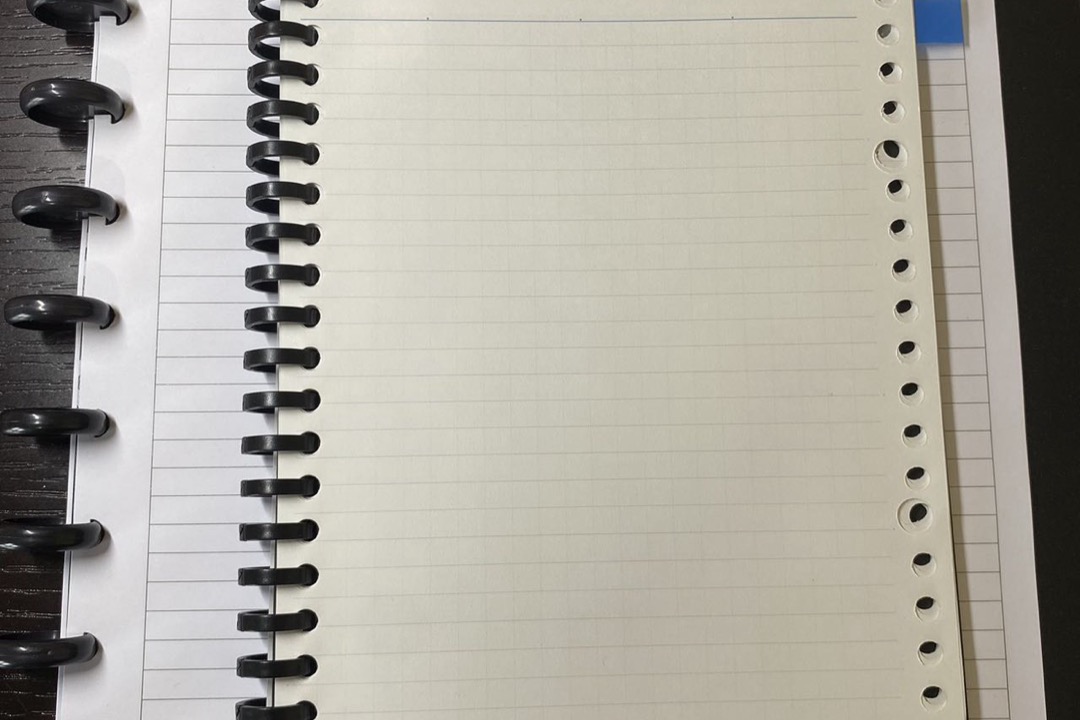
As a Certified Administrative Professional and PMP who has managed supply procurement for offices ranging from solo consultancies to 200-person corporate teams, I can tell you that the 3-ring binder is the most underestimated organizational tool in any workspace or classroom in 2026. It is also the supply most frequently purchased on autopilot — grabbed off a shelf based on price and color with no consideration for ring type, capacity, or how the binder will actually be used. That mismatch between purchase and use case is why so many binders end up with cracked spines by November, rings that fail to latch by February, or pages that buckle and tear because the ring geometry was wrong for the way the user actually writes in the binder.
This review covers seven of the best 3-ring binders for school currently available on Amazon, spanning budget round-ring options for elementary and middle school students, professional slant-ring and D-ring binders for college and office use, and full zipper binders for students who need everything — notes, supplies, and a homework organizer — secured in a single unit. We evaluated ring mechanism type and build quality, cover construction and spine durability under daily backpack use, sheet capacity relative to realistic semester and academic-year needs, interior pocket design, and long-term reliability signals drawn from thousands of verified Amazon reviews. Our selection covers ring sizes from 1 inch to 3 inches and price points from under six dollars to the high twenties. With back-to-school shopping ramping up through the summer, this is the window when the most popular sizes and colors sell fastest and inventory on specific ring types tightens — buying early avoids the August scramble. If you also use physical folders alongside your binders, our review of the best file folders covers complementary organization tools that work well with a binder-based system.
One distinction that no competitor review covers clearly: the ring type matters more than most buyers realize at the point of purchase. O-rings, D-rings, and slant rings produce meaningfully different experiences when you actually write in the binder versus just reading it. Understanding which ring geometry matches your use pattern is the first decision to make — everything else (size, material, closure) follows from that.
| Product | Price | Buy |
|---|---|---|
| Avery Durable View 3 Ring Binder, 3" Slant RingsBest Overall | $8.70 | View on Amazon |
| Amazon Basics 3-Ring Binder, 1" Round RingBudget Pick | $5.70 | View on Amazon |
| Amazon Basics 3 Ring Binders, 3" D-Ring, 2-PackPremium Pick | $18.80 | View on Amazon |
| Avery Heavy-Duty View Binder, 1" One Touch Slant RingsRunner-Up | $5.82 | View on Amazon |
| Five Star Zipper Binder, 2" 3-Ring | $23.59 | View on Amazon |
| Case-it Mighty Zip Tab 3" Zipper Binder | $26.99 | View on Amazon |
| Sooez BinderX Extra Durable 1" Round Ring Binder | $9.99 | View on Amazon |
Find the Best Binder for Your Need
Jump straight to the binder that matches how you’ll actually use it — daily writing, heavy-duty durability, or carrying everything in one zippered unit:
- Best 3-ring binders overall
- Best heavy-duty binders
- Best binders for middle and high school students
- More binder picks by use case
How We Chose These 3-Ring Binders
Our selection methodology required verified purchase volume and sustained review ratings rather than new-product launch scores that often reflect novelty rather than quality. Six of the seven products have over 5,000 verified Amazon reviews, with the Amazon Basics 1-inch binder exceeding 21,000 reviews — the most statistically robust satisfaction signal available for any binder on the platform. We required genuine differentiation across all seven picks: slant ring, D-ring, O-ring, round ring, standard closure, zipper closure, and eco-certified materials each represent a distinct user need rather than a minor variation on the same product. Capacity coverage spans 175 sheets to 600 sheets per binder. Price coverage spans the full market from budget to premium. Ring type was evaluated for both daily writing comfort and long-term page wear. Zipper binder picks were specifically evaluated for zipper mechanism durability — the category’s most common long-term failure point.
Best 3-Ring Binders Overall
The Avery Durable View 3-inch slant ring binder is the binder most students and office users will be happiest with — the most forgiving ring geometry for daily writing, spine-and-edge construction built to survive a full academic year, and a clear view cover that solves labeling without a separate purchase. Every binder is reviewed once in the sections below; the use-case sections further down simply point back to these picks, so you can jump straight to the binder that fits how you actually work.
Avery Durable View 3 Ring Binder, 3” Slant Rings — Best Overall
The Avery Durable View earns the best-overall position through a combination that no other binder on this list fully replicates: a ring geometry proven to be the most forgiving for daily writing use, construction specifically engineered to resist the spine cracking that kills most binders within a school year, and a clear view system that solves the identification and personalization problem cleanly without requiring a separate purchase.
The slant ring geometry is the design decision that defines the Avery Durable View’s daily-use experience. Standard round rings center pages at the spine, which means pages buckle slightly when the binder is flat on a desk and a student writes near the binding edge. Slant rings are angled so that pages press against the back panel when the binder is open — producing the same flat-lay benefit as a D-ring but with a mechanism that Avery’s durability data shows reduces page catching and tearing compared to standard D-rings. For students who write extensively in their binders rather than simply storing printed materials, this is a meaningfully better experience over a full academic year. The 3-inch capacity (635 sheets) means a student can load an entire semester’s worth of content — notes, handouts, lab sheets, and graded papers — without running out of room or needing to purge mid-semester.
The DuraHinge and DuraEdge construction addresses the two specific failure points that kill most economy binders: spine cracking along the hinge line that flexes every time the binder is opened, and edge splitting on the back cover where the binder contacts desks and locker shelves repeatedly. Neither failure is cosmetic — a cracked spine causes the binder to collapse when standing on a shelf, and a split edge exposes the interior to moisture and corner damage. The two nonstick interior pockets are a functional advantage over binders with standard poly pockets: nonstick material prevents handouts from sticking together or fusing to the pocket walls over time, which is a minor but genuinely useful quality-of-life improvement in a binder that will be loaded and unloaded daily for months. Pair the Avery Durable View with a label maker to create a professional printed spine label, and you have a binder that looks and functions as well in month nine as it did on day one.

Avery Durable View 3 Ring Binder, 3" Slant Rings
by Avery
The best overall 3-ring binder for school and office — slant ring design for flat page lay, DuraHinge construction that survives daily backpack use, and a customizable clear view cover.
Pros
- Slant ring design lets pages lie flat when open — eliminates the page-curl problem that makes D-ring binders harder to write in
- DuraHinge and DuraEdge polypropylene construction withstands daily backpack abuse without cracking or peeling at the spine
- Clear view overlay on front, back, and spine lets you create a custom cover with any printed insert — no separate labeling needed
- Two nonstick interior pockets keep handouts and loose sheets from sticking together or fusing to document pages
Cons
- A subset of buyers report units arriving with bent or misaligned rings — inspect the ring mechanism before first use
- At 3 inches, the spine width can feel bulky in a standard backpack when fully loaded to 635-sheet capacity
Amazon Basics 3-Ring Binder, 1” Round Ring — Budget Pick
The Amazon Basics 1-inch binder has accumulated over 21,000 verified reviews at a 4.7-star average — making it the single most purchase-validated 1-inch binder on Amazon. At this scale of verified buyer feedback, the rating reflects genuine manufacturing consistency and reliable daily performance rather than a promotional spike or a narrow favorable demographic. For students, parents, and office managers who need a dependable 1-inch binder at the lowest honest price, this is the recommendation that requires a compelling reason to deviate from.
The practical case for the Amazon Basics budget pick is straightforward. For elementary and middle school students who need a binder per class, buying five or six of these at under six dollars each costs less than two premium binders — and if one gets damaged or lost, replacing it is a minor expense rather than a budget event. The 175-sheet round-ring capacity is appropriate for a single class per semester: one binder per subject, organized with tabbed dividers, is a clean system that keeps coursework separated without the bulk of a large-capacity consolidation binder. The smooth ring mechanism is the quality detail that separates the Amazon Basics from truly economy alternatives: the rings open and close cleanly without the sticky, grinding catch that cheaper ring mechanisms develop after a few weeks of daily use, which is the tactile frustration that makes students stop using a binder entirely.
The honest limitations are proportional to the price. The polypropylene cover is on the thinner end of the standard-binder range, which means it handles normal daily backpack loading and classroom use but will show wear sooner than the Avery DuraHinge construction under heavy use. The round ring mechanism can fail to latch securely if pages are loaded unevenly or the rings are under-clicked — pages shifting and falling out is the most common complaint in the reviews, and the fix is simply ensuring the rings are clicked fully closed before closing the binder. For the majority of school use cases where a dependable, lightweight, inexpensive 1-inch binder is the actual requirement, the Amazon Basics delivers exactly that.

Amazon Basics 3-Ring Binder, 1" Round Ring
by Amazon Basics
The highest-reviewed 1-inch binder on Amazon — 21,000 verified purchases, smooth rings, and a clear view cover at a price that makes buying one per class genuinely affordable.
Pros
- 21,000+ verified reviews at a 4.7-star average — the most purchase-validated 1-inch binder on Amazon by a wide margin
- Smooth round rings open and close cleanly without the sticky catch that cheaper mechanisms develop after repeated use
- Clear view overlay front and back enables a custom printed cover insert at zero additional cost
- Lightweight construction keeps the loaded binder manageable for students carrying it alongside textbooks all day
Cons
- Round rings can fail to latch securely under heavy loading — pages shift and fall out if the mechanism is not clicked firmly closed
- Polypropylene cover is on the thinner side, making it better suited for moderate daily use than heavy backpack or locker abuse
Amazon Basics 3 Ring Binders, 3” D-Ring, 2-Pack — Upgrade Pick
The Amazon Basics D-ring two-pack is the upgrade recommendation for students and professionals who need serious capacity and flat-page performance at a price that remains significantly below premium single-binder competitors. Two 600-sheet D-ring binders for around twelve dollars is genuinely difficult to beat on a per-binder capacity and cost basis — and the 13,000+ verified reviews confirm that the value is not achieved by cutting quality corners that create problems after a month of use.
The D-ring geometry is the functional center of this product’s case. When pages are loaded into a D-ring binder, they align against the flat edge of the ring and press against the back panel when the binder is open on a desk. The result is a flat-page lay that makes writing near the binding edge comfortable and removes the buckling problem that standard round-ring binders create. For students who annotate printed materials, take handwritten notes on loose-leaf paper, or fill in worksheets in their binders, this is a meaningful daily-use improvement over round-ring alternatives. The 600-sheet capacity per binder means you can load an entire academic year’s materials for a single subject — including notes, graded assignments, syllabi, and reference handouts — without approaching the capacity limit.
The two-pack format is the purchase logic that makes this the upgrade recommendation rather than a simple capacity upgrade. Buying two large-capacity D-ring binders simultaneously for multi-semester organization, two-semester subject splitting, or keeping one binder active and one archived creates the kind of systematic document management that professionals who have studied project management frameworks recognize immediately. Pair the D-ring binders with tabbed dividers and a label maker for professional spine and tab labels, and the organizational system scales cleanly from a single college course to a multi-year professional reference archive. The ring misalignment issue noted in some reviews is a quality control variable worth checking on arrival — properly aligned D-rings should snap together with a clean, even click across all three rings simultaneously.

Amazon Basics 3 Ring Binders, 3" D-Ring, 2-Pack
by Amazon Basics
The best upgrade binder for power users — D-ring design for flat page lay, 600-sheet capacity, and a two-pack value that cuts per-binder cost significantly.
Pros
- D-ring design keeps pages pressed against the back cover rather than centered in the binder — pages lie flat and offer maximum usable writing surface
- Massive 600-sheet capacity per binder accommodates an entire semester's worth of notes, handouts, and assignments in a single unit
- Two-pack value makes this the most cost-efficient way to get two full-size binders at once for multi-subject or multi-semester organization
- 13,000+ verified reviews confirm sustained quality across the entire production run, not just early units
Cons
- Some buyers report ring misalignment on arrival, which prevents smooth page turning — check alignment before loading
- Plastic covers are thinner than Avery equivalents and can feel less premium, though they hold up adequately for standard use
Avery Heavy-Duty View Binder, 1” One Touch Slant Rings — Runner-Up
The Avery One Touch earns the runner-up position by addressing a usability pain point that no other binder on this list solves: the ring mechanism. Every standard 3-ring binder requires you to press both sides of the ring mechanism simultaneously — a two-handed operation that is awkward when your other hand is holding a handout, balancing a laptop, or managing a bag. The One Touch mechanism opens and closes with a single thumb press on a lever at the spine. After a full year of daily opening and closing, the difference in accumulated convenience is substantial.
The four stacked interior pockets are the second meaningful differentiation from standard binders. Most 3-ring binders include two interior pockets — one inside the front cover and one inside the back. The Avery One Touch doubles this to four, which provides enough storage space to separate handouts by type (blank paper in one pocket, returned assignments in another, reference sheets in a third, and index cards in the fourth) without those categories mixing together. For students who use their binder pocket storage systematically rather than as a catch-all dumping ground, four organized pockets solve a real organizational problem. The DuraHinge spine construction matches the quality of Avery’s premium slant ring line, providing the same resistance to cracking and splitting that makes Avery binders outlast economy alternatives.
The linen texture cover is a detail worth noting for office and professional use cases. The matte linen texture has a considerably more professional appearance than glossy polypropylene covers — appropriate for client-facing binders, portfolio documents, or professional reference materials that need to look intentional rather than generic. The honest caveat about the “heavy duty” branding is simply that durability is comparable to standard Avery models rather than dramatically superior — the meaningful upgrades are the ring mechanism and the pockets, not a material tier change. For students building an organized planning and organizational system, the One Touch binder pairs naturally with a structured planner for managing assignments and deadlines alongside the physical document system.

Avery Heavy-Duty View Binder, 1" One Touch Slant Rings
by Avery
The runner-up for everyday school use — one-touch ring mechanism, four interior pockets, and DuraHinge construction at the lowest price of any Avery slant ring binder.
Pros
- One Touch ring mechanism opens and closes with a single thumb press — faster and less awkward than standard two-handed ring manipulation
- Four stacked interior pockets (vs. the standard two) provide significantly more storage for handouts, index cards, and loose sheets
- DuraHinge spine flexes without cracking after thousands of open-close cycles — rivals the slant ring flagship at a lower price
- Linen texture cover offers a more professional appearance than glossy poly alternatives for office or portfolio use
Cons
- Despite the 'heavy duty' branding, durability is roughly equivalent to standard Avery models — not a dramatic upgrade over the base line
- Pages can snag on the slant ring mechanism when turning quickly, requiring a slight pause to clear
Five Star Zipper Binder, 2” 3-Ring — Best for All-in-One Students
The Five Star Zipper Binder is built around a different organizational philosophy than every other product on this list: instead of a binder that holds documents plus a separate folder for supplies and a separate bag for carrying, the Five Star consolidates all three into one unit. The full perimeter zipper seals everything inside regardless of orientation, the built-in five-tab expanding file provides a separate section for homework, permission slips, and assignments that do not belong in the main binder rings, and the carry handle and removable shoulder strap allow the entire unit to be carried independently.
The perimeter zipper is the feature that justifies the higher price for students who perpetually lose materials. Unlike an open-sided standard binder where a jostled backpack or an accidentally horizontal carry can send loose papers sliding out, the zipper creates a sealed environment where everything stays put regardless of what happens to the binder in transit. For elementary and middle school students whose backpacks contain a chaotic mix of books, water bottles, sports equipment, and supplies, the zipper removes loose-paper loss from the equation entirely. The five-tab expanding file is a genuinely useful addition: it creates a separate organizational layer for materials that do not belong in the binder rings but need to travel with the student — homework to turn in, forms for parents to sign, permission slips, and day-planner pages. This is the organizational separation that otherwise requires buying a separate expanding folder and stuffing it into an already-full backpack.
The 10,000+ verified reviews confirm that the Five Star survives a full school year of daily use under normal conditions, which is a meaningful distinction from lower-reviewed zipper binders that fail within a semester. The honest limitation is the zipper mechanism itself — it is the most common long-term failure point in every zipper binder on the market, and the Five Star is not immune. The pull tab and zipper track degrade with daily heavy use, and reviewers with multi-year experience report failures typically beginning in the second year of heavy daily use. For one academic year, the Five Star is a reliable and well-designed product. For students expecting a binder to last multiple years under heavy use, the standard Avery slant ring binder’s DuraHinge construction has a better long-term durability track record. The loaded size of a full zipper binder is also worth noting: it occupies a larger footprint on a classroom desk than a standard binder, which can be inconvenient in lecture halls with small fold-out desk surfaces.

Five Star Zipper Binder, 2" 3-Ring
by Five Star
The all-in-one organizer for students who want a binder, planner, and carry bag in one unit — zipper security, a built-in five-tab file, and shoulder strap for hands-free carrying.
Pros
- Full perimeter zipper seals every loose page, pencil, and eraser inside — nothing falls out in a backpack, locker, or between classes
- Built-in expanding five-tab file section creates a portable homework and assignment organizer without buying a separate accordion folder
- Carry handle and removable shoulder strap allow the binder to double as a standalone carry bag for students who want to leave their backpack at home
- 10,000+ reviews confirm it routinely survives an entire school year of daily use — significantly more durable than the average student binder
Cons
- Zipper failure is the most common complaint in long-term reviews — the pull tab and track degrade after months of daily heavy use
- The combined size of a loaded zipper binder plus its strap makes it too large and heavy for most standard desk surfaces in classroom settings
Case-it Mighty Zip Tab 3” Zipper Binder — Maximum Capacity Zipper
The Case-it Mighty Zip Tab occupies a specific niche at the top of the zipper binder market: maximum capacity combined with the organizational completeness of a five-subject divider file, wrapped in heavy-duty fabric that survives the abrasion that polypropylene covers cannot. It is the zipper binder for students who want their entire academic life — all their course notes, all their class files, all their supplies — in a single unit they can carry to any classroom without deciding what to bring and what to leave behind.
The 600-sheet O-ring capacity is the primary differentiator from the Five Star. Where the Five Star provides 380 sheets of 2-inch round-ring capacity, the Case-it doubles down with 600 sheets of 3-inch O-ring capacity — enough to load a full semester for multiple courses simultaneously rather than one course at a time. The five-subject tabbed file alongside the main binder section creates a parallel organizational system: the rings hold long-term reference materials and organized notes, while the tabbed file handles active in-progress work, assignments to turn in, and materials that rotate in and out frequently. For college students whose course loads generate substantial physical paperwork — law students, nursing students, engineering students — this architecture matches the actual document volume they deal with.
The heavy-duty fabric exterior is the construction upgrade over the Five Star’s fabric-poly composite. The Case-it’s fabric is noticeably more abrasion-resistant against the corners and zippers of a heavily loaded backpack, which is where polypropylene covers show surface cracking and the zipper track starts to catch. The padded shoulder strap transforms the Case-it from a binder into a functional portable document system — for students who want to carry it as their primary bag rather than inside a backpack, the strap makes that genuinely ergonomic even at full load. The weight trade-off is real: a fully loaded Case-it is a serious carry, and for younger students whose total daily pack weight is already a pediatric concern, the combined weight of a 600-sheet binder plus five-subject file plus supplies approaches the limits of comfortable daily carrying. The zipper durability caveat applies here as it does for the Five Star — it is the universal failure mode of the zipper binder category.

Case-it Mighty Zip Tab 3" Zipper Binder
by Case-it
The maximum-capacity zipper binder — 600-sheet O-ring capacity, five-subject tabbed file, and heavy-duty fabric construction for students who need their entire academic life in one unit.
Pros
- Highest capacity zipper binder on this list — 600 sheets plus a full five-subject tabbed file creates a complete semester organizer in one unit
- Heavy-duty fabric exterior is noticeably more abrasion-resistant than standard polypropylene, holding up to sustained daily backpack use without surface cracking
- Padded shoulder strap with handle provides ergonomic carrying options for a heavily loaded binder that approaches backpack weight
- Five-subject divider file creates a full class-by-class organization structure alongside the binder section — genuinely replaces a separate accordion folder
Cons
- Zipper durability is the category-wide weakness and the Case-it is not immune — long-term users report pull tab fatigue after sustained heavy use
- At full capacity, the combined weight of a loaded 600-sheet binder plus five-subject file becomes a genuinely heavy carry for younger students
Sooez BinderX Extra Durable 1” Round Ring Binder — Eco-Friendly Pick
The Sooez BinderX is the only product on this list that addresses the sustainability dimension of binder purchasing — a consideration that has moved from niche preference to institutional procurement requirement for a growing number of schools, universities, and corporate offices with documented sustainability standards. PVC-free, BPA-free, and made from recyclable materials, the BinderX provides an independently certifiable supply chain that standard polypropylene binders cannot offer.
The practical case for the Sooez BinderX goes beyond the eco certification. Ten available pastel colors provide the widest color selection of any binder on this list — in a world where students and administrative professionals use color-coded binder systems to organize by subject or project category, having ten distinct colors available means a class-by-class color system can scale to ten subjects without doubling up on colors. The one-year warranty is the other meaningful differentiator: no other binder on this list offers an explicit written quality guarantee. For schools purchasing in bulk and wanting documented quality assurance, the warranty provides institutional purchasing support that Avery and Amazon Basics do not match at this price point.
The flexibility rating to -22°F is an unusual specification that is more relevant than it might initially appear. Standard polypropylene binders become brittle in very cold conditions — a binder left in a car in winter, stored in an unheated school supply room, or used in cold-climate outdoor educational programs can develop stress cracks along the spine and cover when flexed at low temperatures. The BinderX’s cold-flexibility rating addresses this failure mode. The honest limitation is the product’s relative newness on the market: roughly 1,800 reviews means durability data across multi-year daily use is still accumulating. The early reviews are positive and the design quality is evident, but the Avery and Amazon Basics alternatives carry a statistically much larger evidence base for long-term reliability. For schools or organizations whose procurement standards require eco-certified materials, the BinderX is the clear choice. For individual buyers without that requirement, it is a well-designed competitor to the Amazon Basics budget pick with better color selection and a warranty advantage.
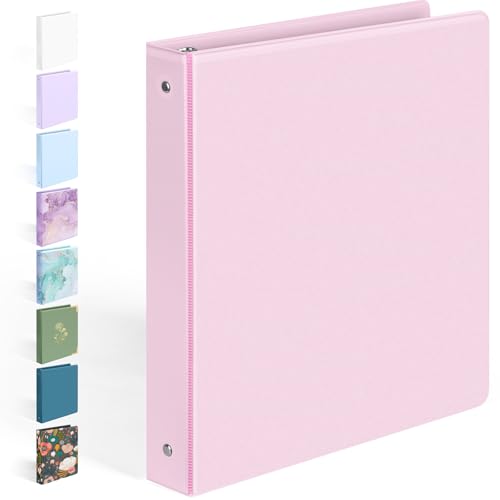
Sooez BinderX Extra Durable 1" Round Ring Binder
by Sooez
The eco-friendly binder pick — PVC-free and BPA-free materials, 10 pastel color options, and a one-year warranty that no other binder on this list offers.
Pros
- PVC-free, BPA-free, and recyclable materials make this the only eco-certified binder on this list — meaningful for schools and offices with sustainability procurement standards
- Available in 10 pastel colors, providing the widest color selection of any binder here for class-coded organization systems
- Flexible construction rated to -22°F maintains cover integrity in cold storage environments — uniquely relevant for schools in cold climates
- One-year warranty is the only explicit written quality guarantee in this roundup — the manufacturer stands behind the product with a documented commitment
Cons
- Roughly 1,800 reviews means long-term durability data is still accumulating — limited multi-year reliability evidence compared to Avery or Amazon Basics
- Some buyers report ring misalignment on a subset of units — a quality control issue to watch for on arrival
Best Heavy-Duty Binders
If your binder has to survive years of daily loading rather than a single school year — an office reference archive, a contractor’s job binder, a homeschool curriculum that gets pulled off the shelf every day — the decision comes down to ring geometry and cover construction, not price. All three picks below use reinforced construction that resists the spine cracking and edge splitting that kills economy binders. The Avery Durable View is the most durable overall thanks to its DuraHinge spine and slant rings; the Amazon Basics D-ring two-pack delivers the most heavy-duty capacity per dollar; and the Avery One Touch is the most durable option in a compact 1-inch size for daily-access reference material.
| Product | Price | Buy |
|---|---|---|
| Avery Durable View 3 Ring Binder, 3" Slant RingsMost durable overall DuraHinge spine + DuraEdge corners resist cracking; slant rings keep pages flat | $8.70 | View on Amazon |
| Amazon Basics 3 Ring Binders, 3" D-Ring, 2-PackBest heavy-duty high-capacity 600 sheets per binder, two-pack value, D-rings for flat-lay writing | $18.80 | View on Amazon |
| Avery Heavy-Duty View Binder, 1" One Touch Slant RingsBest compact heavy-duty One-touch rings and DuraHinge build in a shelf-friendly 1-inch size | $5.82 | View on Amazon |
Best Binders for Middle and High School Students
Middle and high school students put binders through the harshest daily conditions of any user — jammed into backpacks with water bottles and gym shoes, opened and closed a dozen times a day, and expected to keep a semester of loose paper from escaping. The two zipper binders here seal everything inside regardless of how the backpack gets tossed around, while the Amazon Basics 1-inch is the lightweight, buy-one-per-class option for students who prefer a separate binder per subject over one heavy all-in-one unit.
| Product | Price | Buy |
|---|---|---|
| Five Star Zipper Binder, 2" 3-RingBest all-in-one organizer Full-perimeter zipper + five-tab file + shoulder strap; nothing falls out | $23.59 | View on Amazon |
| Case-it Mighty Zip Tab 3" Zipper BinderBest for carrying everything 600-sheet capacity plus a five-subject file — a whole semester in one unit | $26.99 | View on Amazon |
| Amazon Basics 3-Ring Binder, 1" Round RingBest lightweight per-class pick Under six dollars each, light enough to run one binder per subject | $5.70 | View on Amazon |
More Binder Picks by Use Case
A few needs fall outside the durability and student categories — eco-certified procurement, cold-climate storage, and the simple buy-one-per-class value case. These picks cover them:
| Product | Price | Buy |
|---|---|---|
| Sooez BinderX Extra Durable 1" Round Ring BinderBest eco-friendly / cold-climate PVC-free, BPA-free, 10 colors, rated flexible to -22°F, one-year warranty | $9.99 | View on Amazon |
| Amazon Basics 3-Ring Binder, 1" Round RingBest budget buy-one-per-class 21,000+ reviews at 4.7 stars; cheap enough to stock a full set of subjects | $5.70 | View on Amazon |
| Avery Durable View 3 Ring Binder, 3" Slant RingsBest for office reference archives 3-inch slant-ring capacity and a professional clear-view cover for policy and contract archives | $8.70 | View on Amazon |
How to Choose the Best Binder for School
Buyer's Guide
Choosing the right 3-ring binder depends on matching ring type, capacity, and closure to your actual use case — a binder optimized for a middle schooler's daily backpack is a different product than one designed for a college student consolidating an entire semester or an office professional maintaining a reference archive.
Ring Type
The three ring types — O-ring, D-ring, and slant ring — differ in how pages sit when the binder is open. O-rings (circular) center pages at the spine, causing slight buckling when writing on an open page. D-rings position against the back cover so pages lie flat, maximizing usable writing surface and making it easier to write comfortably on a loaded binder. Slant rings are a variant of D-ring where the ring mechanism is angled, which Avery's research indicates reduces page wear and catching compared to standard D-rings. For students who primarily read and reference materials, O-rings are perfectly adequate. For students who frequently write in their binders, D-ring or slant ring is the meaningful upgrade.
Ring Size and Capacity
Ring diameter determines how many sheets a binder holds: 1 inch accommodates approximately 175-225 sheets, 1.5 inch holds around 300 sheets, 2 inch holds 380-400 sheets, and 3 inch holds 600-650 sheets. Before selecting ring size, estimate your actual document volume — one semester of notes for a lecture-heavy course typically generates 100-200 sheets, while a full-year archive or multi-subject consolidation binder needs 400+ sheets of capacity. Buying too small a binder forces inconvenient mid-semester swaps; buying too large creates a heavy, bulky carry. For most individual college courses, 1.5 to 2 inches is the practical sweet spot.
Cover Material
Binder covers range from flexible polypropylene (the most common, lightest, and most affordable) to heavy-duty fabric (used on zipper binders like Five Star and Case-it) to specialty constructions like Avery's DuraHinge polypropylene. Flexible poly is adequate for binders that travel in a backpack but do not experience severe daily abuse. DuraHinge poly adds a reinforced spine that resists cracking through thousands of open-close cycles. Heavy-duty fabric offers greater surface abrasion resistance but adds weight. Clear view overlays on the cover and spine allow custom paper inserts for labeling and personalization — a feature worth prioritizing because it eliminates the need for adhesive labels on the binder itself.
Durability Tier
Economy binders (typically under six dollars) are built for light, infrequent use — they work fine for occasional reference binders kept on a shelf but show wear quickly under daily backpack loading and unloading. Standard binders (six to twelve dollars) from Avery and Amazon Basics represent the most common school use case — polypropylene construction that handles a full academic year with normal care. Heavy-duty binders (twelve dollars and above) are appropriate for students who need a binder to last multiple school years or for office professionals who access their binders daily throughout the workday. Zipper binders occupy their own durability tier where the zipper mechanism becomes the failure point rather than the cover or rings.
Closure Type
Standard 3-ring binders have no closure — pages are held in by the rings, and the binder is open on three sides. This is adequate for backpack transport where the binder stays upright, but loose pages can slide out if the binder is jostled horizontally or stored on its side. Zipper binders seal the entire perimeter with a zipper closure, ensuring nothing escapes regardless of orientation — ideal for backpacks with limited organization and students who carry binders loosely. The trade-off for zipper security is zipper durability: zipper mechanisms are the most common failure point in zipper binders, and daily heavy use typically degrades the pull tab within one to two years.
Age and Use Case Fit
Elementary students need lightweight, durable binders that survive the chaos of a shared classroom — 1-inch round ring at a low price point is the right call, and a clear view cover with a printed insert keeps the binder identifiable. Middle and high school students balance capacity and portability: 1.5 to 2-inch binders with slant or D-rings work for most subjects, and a zipper binder appeals to students who want everything contained in one unit. College students often shift to a per-subject binder strategy or a single large-capacity binder with tabbed dividers. Office professionals who maintain reference binders typically want a 3-inch D-ring binder with a professional cover — pair it with a dedicated [label maker](/best-label-makers/) and a [planner](/best-planners/) for a complete administrative organizational system.
Final Verdict
For the broadest range of students and office users in 2026, the Avery Durable View 3 Ring Binder with 3” Slant Rings is the best 3-ring binder to buy. The slant ring geometry delivers the flat-page lay that makes daily writing comfortable, the DuraHinge and DuraEdge construction survives a full academic year of backpack use without cracking, and the clear view overlay solves personalization without any additional purchase. It is the binder that requires the fewest compromises across the most common school and office use cases.
For students who need an affordable 1-inch binder per class, the Amazon Basics 1-inch Round Ring Binder is the correct budget choice — 21,000+ verified reviews confirm consistent quality at a price that makes per-class purchasing practical. For students consolidating everything into one unit, the Five Star Zipper Binder provides zipper security, a built-in five-tab file, and shoulder strap carry in a single package that genuinely justifies the premium. And for schools or offices with sustainability procurement requirements, the Sooez BinderX is the only eco-certified option in the category with a one-year warranty to back the commitment. Whatever binder system you build, pairing it with a structured planner and a label maker for professional spine and tab labels produces the kind of organized workspace that sustains itself through a full academic year rather than collapsing by midterms.
Frequently Asked Questions
Who makes the best 3-ring binders?
Which is better, a D-ring or O-ring binder?
What size binder is best for college?
Do people still use binders in college?
How long should a quality binder last?
Related Articles
About the Reviewer

Sarah Chen, CAP, PMP
B.A. Business Administration, UCLA
Sarah Chen spent 10 years in office management and operations at Fortune 500 companies before founding DeskRated in 2026. After managing supply budgets for teams of 50+ people and testing thousands of products through daily use, she started writing the honest, no-fluff supply reviews that office professionals actually need. Sarah holds both CAP and PMP certifications and is based in Los Angeles.