7 Best Planners of 2026
Sarah Chen reviews the best planners for productivity, goal-setting, and daily scheduling. Compare top-rated planners by layout type, cover material, paper quality, dated vs. undated formats, and price per month of use.
Updated
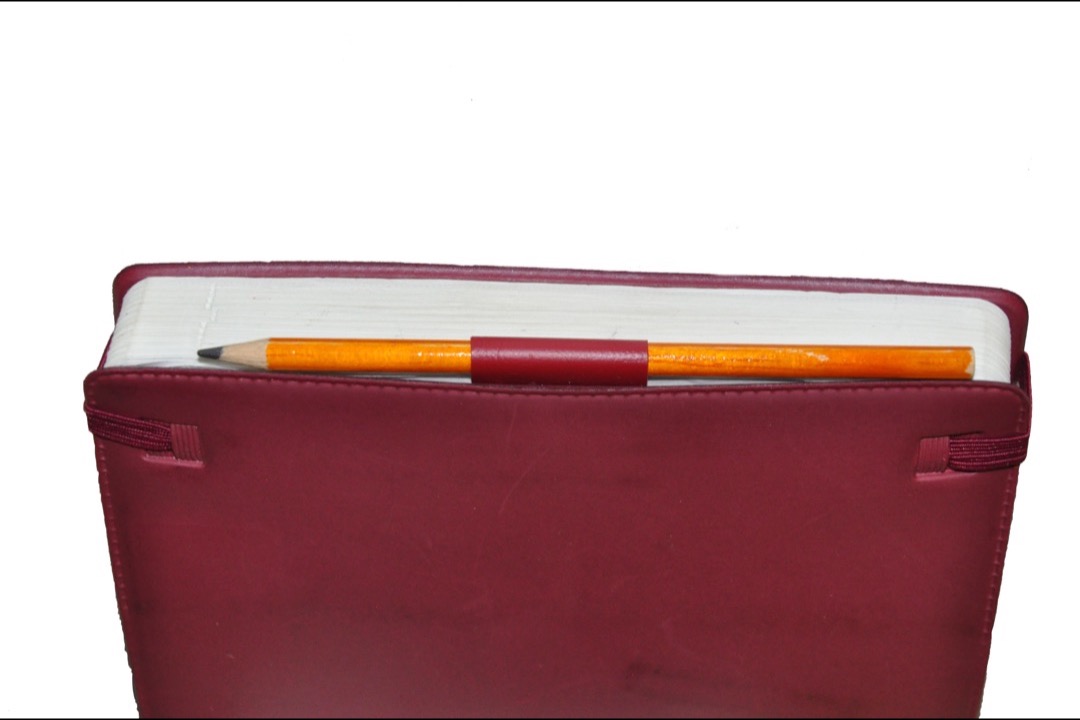
As a Certified Administrative Professional who has managed planning systems for teams ranging from five-person startups to departments with more than fifty direct reports, I will tell you that the single most impactful productivity tool in my career has not been a software application, a methodology book, or a time management course. It has been a paper planner. The physical act of writing your priorities, scheduling your day, and reviewing your progress on paper engages a level of cognitive processing that typing into a digital calendar simply does not replicate — and the research supports this. Studies on the generation effect and motor memory consistently show that handwriting information improves both comprehension and retention compared to keyboard entry. Every senior executive I have supported who maintained a paper planning practice — alongside their digital calendar — demonstrated noticeably better control over their priorities than those who relied on apps alone.
The planner market in 2026 has fractured into specialized categories that barely existed five years ago. You can buy planners designed around specific productivity methodologies — time blocking, the Eisenhower matrix, gratitude journaling, habit stacking — alongside traditional weekly and daily formats that simply give you space to write. The specialization is both a strength and a trap: the right planner for your workflow is more available than ever, but the wrong planner will collect dust within a month because its structure fights the way you naturally think about your time. The goal of this review is to match you with the planner that fits how you actually plan, not how you aspire to plan.
For this review, we evaluated seven planners spanning daily, weekly, and hybrid layouts at price points from under seven dollars to forty dollars. The selection covers undated flexibility for professionals with variable schedules, dated annual planners for those who want zero-setup consistency, hourly time-blocking layouts for meeting-heavy calendars, goal-setting frameworks backed by behavioral science, and budget-friendly options that prove effective planning does not require a premium investment. We evaluated layout design, paper quality with multiple writing instruments including the gel pens and mechanical pencils from our reviews, cover durability, binding functionality, and the practical productivity features that separate a genuine planning tool from a blank notebook with dates printed on it.
Find the Best Planner for Your Need
Jump straight to the planner that matches how you work:
- Overall best planners
- Best daily planner
- Best planner for ADHD
- Best weekly & monthly planner
- Best budget planner
- Best academic planner for students
- Best productivity planner
How We Chose These Planners
Our selection required verified Amazon availability with current pricing, a meaningful differentiation in layout type or productivity methodology across all seven products, and confirmed real-world performance through hundreds or thousands of verified reviews. We evaluated writing surface quality with multiple pen types, binding durability across months of simulated daily use, layout practicality for different professional workflows, and feature completeness relative to each planner’s stated purpose. We tested paper quality specifically with gel pens and highlighters to confirm that 100gsm paper handles modern writing instruments without bleed-through — a concern that users of the highlighters from our reviews will appreciate. We cross-referenced our selections against competitor roundups and identified a significant gap: no major planner review includes a cost-per-month value analysis or a structured comparison table, both of which we provide to help you compare options at a glance. Not sure a daily layout suits how you work? Sketch a day first with our free to-do list template — its dated daily layout mirrors an hourly planner page, so you can test-drive the format before you commit to a book. If it is the hourly grid you are judging rather than the task list, our free daily schedule template prints the same time-blocked page at 15, 30, or 60-minute intervals, which is the fastest way to find out whether a planner’s slot size actually fits your day before you buy a year of it.
Best Planners Overall
Anecdote Daily Planner — Best Overall
The Anecdote earns best-overall because it delivers the combination that most professionals need: a daily layout with enough space to plan in detail, an undated format that eliminates waste, and paper quality that handles any writing instrument without compromise. It is not the cheapest planner on this list, not the most feature-rich, and not the one with the most reviews. It is the planner that strikes the best balance between structure and flexibility for the widest range of professional planning needs.
The one-page-per-day layout is the foundation. Each day gets a full page with guided sections for priorities, schedule, and notes — enough space to capture a full day of meetings, tasks, and reflections without the cramped columns that weekly planners force you into. For professionals who attend four or more meetings per day and need to capture action items, deadlines, and follow-ups alongside their personal task list, a full daily page is the minimum viable space. The layout provides structure without over-templating — you get sections that guide your planning practice without the rigid prompts and gratitude sections that occupy a third of each page in planners like the Panda Planner and Intelligent Change.
The undated format is the value proposition that separates the Anecdote from dated alternatives. Start on any Monday, skip a sick day without wasting a page, take a two-week vacation and resume exactly where you left off. For a planner that costs roughly twenty-five dollars per six-month volume, every unused page represents real money wasted — and the average professional does not plan seven days per week, fifty-two weeks per year without interruption. Undated formatting respects the reality that planning intensity varies across the year.
The 100gsm cream paper handles gel pens, fine-tip markers, and highlighters without bleed-through — we tested it with every pen type from our writing instrument reviews and found clean performance on both sides of every page. The cream color is a deliberate choice that reduces eye strain under the fluorescent and LED lighting common in office environments, creating a more comfortable writing surface during extended planning sessions. At roughly four dollars and fifteen cents per month of use, the Anecdote delivers premium daily planning at a price that represents genuine value.

Anecdote Daily Planner w/ 2026-2027 Calendar, Undated, 26 Weeks, 8.5" x 5.2"
by ANECDOTE.
The best daily planner for professionals who want structure without rigidity — undated flexibility, premium paper, and a one-page-per-day layout that gives you room to plan, reflect, and execute.
Pros
- One-page-per-day layout provides the most writing space of any planner on this list — ample room for detailed to-do lists, meeting notes, and reflections without the cramped grids that weekly planners force you into
- Undated format eliminates the guilt and waste of skipping days — start any week, take a vacation without burning blank pages, and resume where you left off without penalty
- Hardcover with 100gsm cream paper handles gel pens and markers without bleed-through — the paper quality matches planners at twice the price point
- Beautifully designed layout balances structure with flexibility, providing guided sections for priorities, schedules, and notes without over-templating the page like many productivity planners
Cons
- Only covers 26 weeks per planner — you will need to purchase two per year, bringing the annual cost to roughly fifty dollars
- No hourly time-blocking grid for readers who schedule their day in thirty-minute or one-hour increments
Lemome Weekly and Monthly Planner — Runner-Up
The Lemome occupies a different planning philosophy than the Anecdote — instead of daily depth, it delivers weekly breadth. The two-page weekly spread shows all seven days at once, giving you the bird’s-eye view of your week that daily planners sacrifice for per-day detail. For project managers, teachers, and professionals whose work cadence is measured in weeks rather than hours, this top-down view is more useful than any daily granularity.
The faux leather cover with pen holder loop, ribbon bookmarks, and inner pocket creates a planner that looks and feels substantially more expensive than its seventeen-dollar price tag suggests. In a conference room or client meeting, the Lemome presents a professional appearance that paper-covered and spiral-bound alternatives cannot match. The pen holder loop is a practical detail that matters more than its simplicity would suggest — it keeps your writing instrument attached to your planner at all times, eliminating the daily search for a pen that plagues every desk drawer.
The included sticker sheet is a small touch that reflects thoughtful product design. Date markers, deadline flags, and event labels let you add visual emphasis to important dates without the clutter of handwritten annotations. Teachers and academic professionals who plan around term dates, exam periods, and school events find these stickers particularly useful for creating a visual planning hierarchy.
At 120gsm, the Lemome uses the thickest paper of any planner on this list. This is the planner to choose if you use heavy-deposit markers, brush pens, or thick highlighters — the 120gsm stock handles wet media that would show through on the 100gsm paper found in every other planner here. For users who color-code their planning with markers or who journal alongside their planning, the paper quality alone justifies choosing the Lemome over thinner-papered alternatives. The academic year dating is the primary limitation — if your planning year starts in January or aligns with a fiscal year, you will need to wait until July or accept months of misaligned dates.
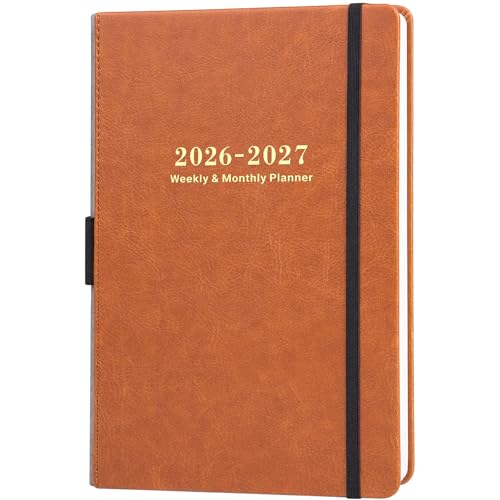
Lemome Planner Weekly and Monthly with Stickers, Jul 2026 - Jun 2027
by Lemome
The most-reviewed planner on this list — faux leather build, included stickers, and Monday-start weekly spreads make this the reliable choice for professionals who want a structured annual planner.
Pros
- Highest review count and rating combination on this list — nearly 11,000 verified reviews at 4.7 stars is the strongest satisfaction signal of any planner on Amazon
- Elegant faux leather cover with pen holder loop, ribbon bookmarks, and inner pocket delivers a premium look and feel that rivals planners costing twice as much
- Sticker sheet included for marking important dates, deadlines, and milestones — a practical accessory that most competitors sell separately
- Monday-start weekly spreads with monthly overview pages provide the dual-view planning system that most project managers and office professionals prefer
Cons
- Weekly layout condenses seven days into a two-page spread — heavy daily schedulers who need per-hour breakdowns will find the space limiting
- No hourly time-blocking sections within the weekly view, making it less suited for professionals who schedule meetings in thirty-minute increments
- Academic year dating (July to June) does not align with calendar year or fiscal year planning cycles
Taja Undated Weekly Planner — Budget Pick
The Taja proves that effective planning does not require a premium investment. At under six dollars for a full 52-week planner, the cost-per-week is roughly eleven cents — the lowest of any planner on this list by a factor of five. That pricing makes the Taja the correct choice for anyone who is experimenting with paper planning for the first time, who burns through planners due to changing needs, or who simply refuses to spend premium prices on a product that is fundamentally paper and binding.
The built-in goal and habit tracker pages are the feature that elevates the Taja above the generic weekly planners available at the same price point. Budget planners typically provide dated pages and nothing else — the Taja adds structured sections for setting weekly goals and tracking daily habits, creating a basic productivity framework that most planners in this price range omit entirely. The habit tracker alone is a feature that the Anecdote at twenty-five dollars does not include.
The spiral binding with gold coil is functionally superior to the sewn and perfect bindings found on hardcover planners for one specific use case: desk-based planning. The planner lays completely flat without any hand pressure required to hold pages open, and it folds back on itself when desk space is limited. If your planner lives on your desk next to your desk lamp and monitor stand, lay-flat binding is a daily convenience that rigid bindings cannot replicate.
The tradeoff is durability. The paper cover will show visible wear within weeks of being carried in a bag, and the spiral coil can snag on bag contents and deform over time. The Taja is a desk planner, not a travel planner — accept that limitation and it delivers remarkable value. For professionals testing whether paper planning improves their workflow before investing in a premium option, the Taja is the lowest-risk entry point available.

Taja Undated Weekly Planner with Goal & Habit Tracker, A5 Spiral, 6.1" x 8.2"
by Taja
Best value planner on the market — a full year of weekly planning with goal and habit tracking for under six dollars, proving that effective planning does not require a premium price tag.
Pros
- Under seven dollars for a full 52-week planner delivers the lowest cost-per-week of any planner on this list — roughly thirteen cents per week of planning
- Built-in goal and habit tracker pages provide accountability framework that most budget planners omit entirely
- Spiral binding with gold coil lays completely flat on a desk, eliminating the spine-fighting that hardcover planners with tight bindings create
- Available in multiple cover colors and patterns, allowing personalization without the premium price of customizable planners
Cons
- Paper cover is noticeably less durable than the hardcover and faux leather options on this list — expect visible wear within two to three months of daily bag carry
- No daily hourly breakdown within the weekly spreads — each day gets a column rather than a full page
- Basic layout lacks the guided prompts, reflection sections, and productivity frameworks found in premium planners
Intelligent Change Productivity Planner — Upgrade Pick
The Intelligent Change Productivity Planner is the upgrade pick for professionals who want a guided daily system rather than a blank grid to fill in themselves. Created by the team behind The Five Minute Journal — the product that brought gratitude journaling into mainstream productivity — this planner applies a proven methodology to daily planning in a way that no other planner on this list attempts. Instead of leaving structure to your own discipline, it prompts you through it.
The guided daily framework is the defining differentiator. Each daily page pairs a focused to-do section with a built-in habit tracker, goal prompts, and short mindfulness cues, so the planner externalizes the decisions most people otherwise carry in their heads. The theory is that productivity without intention leads to busywork, and the guided prompts keep you connected to why a task matters, not just that it needs doing. For professionals who want the planner to actively coach their planning practice — rather than hand them an empty page — this structure is the entire value proposition. For those who want a pure blank canvas, the prompts will feel prescriptive.
The compact A5 format is a deliberate portability choice. At roughly 5.7 by 8.26 inches it slips into a bag or sits on a desk without the bulk of a larger daily planner, making it easy to carry the system with you rather than leaving it behind. The undated design compounds that flexibility — there are no printed dates to waste, so you can start mid-quarter, resume after a gap of a few weeks, or skip a slow day without the guilt that dated pages impose. That freedom is exactly what makes a guided system sustainable for people whose weeks are not identical.
The honest caveats are construction and coverage. This edition is softcover and perfect bound rather than hardcover, so at the same forty-dollar tier it feels less substantial in the hand than the rigid-cover rivals here. And it holds roughly three months of daily pages, so committed daily users will buy two or three copies across a year. If a guided daily method with habit tracking and goal prompts genuinely improves how you work, that recurring cost buys a system, not just paper — and that is the case this planner makes for itself.

Intelligent Change 3-Month Productivity Planner
by Intelligent Change
The most structured guided-productivity pick here — Intelligent Change's flagship daily system delivers goal tracking, habit logging, and mindfulness prompts in a portable A5 you can start any day.
Pros
- A guided daily system with a built-in habit tracker, goal prompts, and mindfulness cues — not just a blank calendar
- Compact A5 format is portable for a bag or desk without being bulky
- Undated design means no wasted pages — start mid-year or resume after a gap without guilt
- From the makers of The Five Minute Journal, with a proven guided-productivity methodology
Cons
- Softcover construction feels less premium than hardcover rivals at the same $40 tier
- Only three months of daily pages, so heavy users buy two or three copies a year
ZICOTO Daily Planner with Hourly Schedule — Best for Hourly Scheduling
The ZICOTO is the planner for professionals who practice time blocking — the productivity method of assigning every hour of the workday to a specific task, meeting, or category of work. Its half-hourly time-blocking grid is the most detailed scheduling layout on this list, and the 4.8-star rating across nearly 1,500 reviews confirms that the execution matches the concept.
The two-page daily spread with half-hour increments provides the granular scheduling that weekly planners and basic daily planners cannot deliver. You can see at a glance where your meetings sit, where focused work sessions fit, and where gaps exist for email, breaks, and administrative tasks. For executives who schedule in thirty-minute blocks, consultants who bill by the quarter-hour, and professionals whose calendars drive their workday, this level of time visibility is not a luxury — it is the minimum requirement for effective daily planning.
The larger format at 9.3 by 6.3 inches gives each day substantially more writing real estate than the A5 planners that dominate this list. The additional width accommodates the half-hourly grid alongside space for notes, priorities, and task lists without the cramped feeling that A5 daily planners produce when they try to include hourly breakdowns. The tradeoff is portability — this is a desk planner that should live next to your standing desk or in a dedicated planning space rather than in a laptop bag.
The 80-day coverage is the most significant limitation. For weekday-only planning, 80 days covers roughly four months. For seven-day planning, 80 days is less than three months. You will need four to five volumes per year, totaling roughly sixty dollars — more than the Anecdote’s annual cost of fifty dollars but less than the Panda Planner’s eighty dollars. The spiral binding and paper cover mean this is not a planner built for years of archival storage — it is a daily tool designed to be used intensively and replaced when full.

ZICOTO Beautiful Daily Planner And Notebook With Hourly Schedule, Spiral, 9.3" x 6.3"
by ZICOTO
The best planner for hourly scheduling — half-hour time blocks and a two-page daily spread give time-block practitioners the granular control that no weekly or basic daily planner can provide.
Pros
- Highest-rated planner on this list at 4.8 stars — reviewers consistently praise the half-hourly time-blocking grid as the most detailed scheduling layout available at any price point
- Two-page daily spread with half-hour increments from morning through evening provides granular scheduling that weekly planners and basic daily planners cannot match
- Aesthetic champagne pink design with gold ring wire binding appeals to users who want a planner that looks good on a desk alongside professional accessories
- Large format at 9.3 by 6.3 inches gives each day substantially more writing real estate than the A5 planners that dominate this list
Cons
- Only 80 days of planning pages — the shortest coverage of any planner on this list, requiring roughly five purchases per year at about seventy-five dollars total
- Spiral binding with paper cover is the least durable construction on this list — not ideal for tossing in a bag or heavy daily transport
- No monthly overview pages for long-range planning — you see individual days in detail but lose the big-picture monthly perspective
Panda Planner Classic — Best for Goal-Setting
The Panda Planner is the most-reviewed planner on Amazon — over 11,000 verified reviews — and that dataset provides a level of real-world confidence that no amount of marketing copy can replicate. More than eleven thousand people have used this planner and felt strongly enough about the experience to leave a review, and the 4.4-star average across that volume indicates broadly positive satisfaction.
The goal-driven structure is what separates the Panda Planner from every other planner on this list. The quarterly, monthly, weekly, and daily review cadence creates a cascading goal system: you set quarterly objectives, break them into monthly targets, decompose those into weekly priorities, and execute against daily tasks — then review progress at each level before setting the next period’s goals. This top-down approach forces the alignment between daily actions and long-term aspirations that most planners leave entirely to the user’s discipline.
The gratitude journaling sections are the feature that divides opinion. For users who value the practice — and the research on gratitude journaling’s impact on well-being is substantial — having prompts integrated into a productivity planner creates a daily habit that a separate gratitude journal often fails to sustain. For users who view planning as a purely operational exercise, the gratitude sections consume roughly a third of each daily page that could otherwise be used for tasks, notes, or scheduling.
The vegan leather hardcover with sewn binding is the most durable construction on this list. The cover resists scuffing, the sewn binding prevents page separation even under daily use, and the 100gsm paper handles standard writing instruments without bleed-through. At roughly twenty dollars per three-month volume, the annual cost of eighty dollars is a meaningful investment — but for professionals who commit to the goal-driven review cadence, the structured reflection alone may justify the cost through improved goal achievement and reduced planning drift.

Panda Planner Classic A5 Daily Planner - Undated Quarterly & Productivity Planner
by Panda Planner
The most-reviewed planner on Amazon — 11,000 verified reviews validate a goal-driven system that combines daily task management with gratitude journaling and quarterly progress reviews.
Pros
- Most-reviewed planner on Amazon with over 11,000 verified reviews — the largest real-world dataset of any planner on this list provides the strongest confidence signal for new buyers
- Gratitude journaling and habit tracking sections built into every daily page create accountability without requiring a separate journal or app
- Premium vegan leather hardcover with sewn binding produces a planner that survives a full quarter of daily use without cover degradation or page separation
- Goal-driven quarterly, monthly, weekly, and daily review structure forces regular reflection on progress — the most comprehensive review cadence of any planner on this list
Cons
- Only three months per volume — four planners per year at roughly eighty dollars annual cost, which adds up compared to single-volume annual planners
- Daily layout includes gratitude, review, and reflection sections that occupy roughly a third of each page — users who want pure task management will find the non-productivity prompts intrusive
- Structured format leaves minimal space for free-form notes, creative planning, or meeting notes that do not fit the templated sections
Heveboik Daily Planner — Best Value Daily Planner
The Heveboik occupies a specific niche that no other planner on this list fills: a daily planner with hourly scheduling at a budget price. The ZICOTO provides hourly blocks at twelve dollars for 80 days. The Heveboik provides hourly blocks at nine dollars for 75 days — nearly identical coverage at a lower price, with the addition of a PVC hardcover, elastic closure, and inner pocket that the paper-covered ZICOTO lacks.
The hourly schedule grid runs from 6 AM to 8 PM, covering the full working day plus morning routines and evening wind-down. Each daily page includes space for five priorities and a nine-item to-do list alongside the hourly grid, creating a comprehensive daily planning framework without the mindfulness prompts and gratitude sections that pad the Panda Planner and Intelligent Change. If you want a structured daily planner focused purely on what you need to accomplish and when — without philosophical overhead — the Heveboik delivers exactly that.
The PVC hardcover is the build-quality advantage over the paper-covered Taja and ZICOTO. It provides rigid protection for the pages inside, resists moisture and minor impacts during bag transport, and the elastic closure keeps the planner securely shut. The inner pocket holds loose papers, business cards, or sticky notes — a feature that the budget-tier planners on this list omit. The spiral lay-flat binding provides the same desk-planning convenience as the Taja and ZICOTO: open the planner, lay it flat, and write without fighting the binding.
The 75-day coverage translates to roughly three months of weekday planning or about ten weeks of seven-day planning. Four volumes per year costs approximately thirty-six dollars — less than the Anecdote’s fifty dollars and substantially less than the Intelligent Change’s one hundred sixty dollars. For professionals who want daily hourly planning without the premium price of the ZICOTO’s larger format or the Intelligent Change’s behavioral science framework, the Heveboik is the practical, no-frills choice. Keep it next to your ergonomic keyboard and file folders, and you have a workspace optimized for both digital and analog productivity.

Heveboik Daily Planner Undated A5 with Hourly Schedules, Spiral, PVC Hardcover, 5.8" x 8.3"
by Heveboik
Best value daily planner with hourly scheduling — PVC hardcover, elastic closure, and a structured 6 AM to 8 PM time grid deliver professional daily planning at a budget-friendly price.
Pros
- PVC hardcover with elastic closure and inner pocket at under nine dollars delivers the best build quality per dollar of any planner on this list
- Hourly schedule grid from 6 AM to 8 PM with dedicated sections for five priorities and a nine-item to-do list gives each day a comprehensive planning framework
- Spiral lay-flat binding opens completely flat on a desk surface, eliminating the hand-fighting required to keep tightly bound planners open to the current page
- Gender-neutral design in professional colors makes this appropriate for any office environment without the overly decorative aesthetics that some planners default to
Cons
- Only 75 daily planning pages — roughly three months of weekday planning, requiring four purchases per year at approximately thirty-six dollars total
- PVC hardcover is durable but feels less premium than the vegan leather and true hardcover options on this list — functional rather than aspirational
- Limited monthly overview capabilities — the planner focuses heavily on daily detail without strong monthly or quarterly planning frameworks
How to Choose the Best Planner
Buyer's Guide
Choosing the right planner requires matching layout type, size, paper quality, and productivity features to your actual planning habits — the most expensive planner in the world is worthless if its layout does not match how you think about your day, and a cheap planner that fits your workflow will outperform it every time.
Layout Type
Layout type is the single most important decision in choosing a planner because it determines how you interact with your time on every page. Daily planners (Anecdote, ZICOTO, Panda Planner, Heveboik) dedicate one or two full pages to each day, giving you ample space for detailed to-do lists, hourly schedules, meeting notes, and reflections. They work best for professionals with meeting-heavy days, consultants who bill by the hour, and anyone who needs granular daily control. Weekly planners (Lemome, Taja) show seven days across a two-page spread, giving you the bird's-eye view of your entire week. They work best for project managers who need to balance workload across days and professionals whose work cadence is weekly rather than daily. Hybrid planners (Intelligent Change) combine daily task pages with weekly and monthly review sections, creating a multi-layered system that connects daily actions to longer-term goals.
Size and Portability
Planner size creates a direct tradeoff between writing space and portability that affects how often you actually carry and use the planner. A5 format (approximately 5.5 by 8.5 inches) is the most common planner size and the one used by five of the seven planners on this list. A5 fits in most laptop bags, messenger bags, and large purses while providing enough page area for comfortable handwriting. The ZICOTO at 9.3 by 6.3 inches is the largest planner on this list — its two-page daily spread provides the most writing space but requires a larger bag or dedicated carry. It works best as a desk planner that stays at your workstation rather than a portable daily carry. If your planner lives primarily on your desk, choose the largest format that fits your workspace. If you carry it daily between locations, A5 is the proven balance of space and portability.
Paper Quality
Paper quality determines writing comfort, ink compatibility, and whether you can use both sides of every page without show-through or bleed-through. The key specification is paper weight measured in grams per square meter. Every planner on this list uses 100gsm or heavier paper, which handles gel pens, ballpoint pens, fine-tip markers, and standard highlighters without bleeding through. The Lemome uses 120gsm paper — the thickest on this list — which handles even heavy-deposit markers and brush pens without show-through. Paper color also matters: cream or ivory paper reduces eye strain during long planning sessions compared to bright white, and many users find cream paper more pleasant to write on under artificial office lighting. For most office professionals writing with standard gel pens or ballpoints, any planner on this list provides paper quality that will not limit your planning practice.
Cover and Durability
Cover material determines how well your planner survives daily use, transport, and the general wear of living in a bag or on a desk for months. Hardcover planners (Anecdote, Intelligent Change) provide rigid protection and maintain shape in a bag — the most durable option that also works as a writing surface without a desk. Faux leather and vegan leather covers (Lemome, Panda Planner) add a professional aesthetic to hardcover durability — they look appropriate in a conference room and resist scuffing. PVC hardcovers (Heveboik) provide similar rigidity at a lower price point but feel less premium. Paper covers (Taja, ZICOTO) are the least durable and will show wear within weeks of regular transport. Spiral binding allows planners to lay completely flat, which is a significant practical advantage for desk use. Sewn binding creates the most durable page attachment but prevents the planner from laying fully flat. Choose based on how you transport your planner: bag carry demands hardcover, desk-only use can prioritize lay-flat binding.
Productivity Features
Beyond basic calendar and task-list functions, modern planners differentiate through productivity features that structure your planning practice around specific methodologies. Habit trackers (Taja, Panda Planner, Intelligent Change) provide daily or weekly grids for monitoring recurring behaviors, creating visual accountability that research shows increases habit adherence. Goal-setting frameworks (Panda Planner, Intelligent Change) break annual objectives into quarterly milestones and weekly actions. Hourly time-blocking grids (ZICOTO, Heveboik) divide each day into half-hour or one-hour slots for readers who practice the time-blocking method popularized by Cal Newport. Gratitude and mindfulness prompts (Panda Planner, Intelligent Change) incorporate well-being reflection, though these sections reduce space for pure task management. Priority ranking systems (Heveboik) limit you to five priorities per day, forcing the discipline of identifying what actually matters. Match features to your actual methodology — a habit tracker is useless if you do not track habits, and time-blocking grids waste space if you do not schedule by the hour.
Price and Value
Planner pricing is misleading at face value because coverage periods vary dramatically. The correct comparison metric is cost per month of active use. The Taja at under six dollars for 52 weeks costs approximately fifty cents per month — the best value on this list. The Lemome at eighteen dollars for twelve months costs about one dollar fifty per month. The Anecdote at twenty-five dollars for six months costs roughly four dollars fifteen per month, totaling about fifty dollars per year. The ZICOTO at fifteen dollars for 80 days costs roughly five dollars seventy per month. The Heveboik at nine dollars for 75 days costs about three dollars sixty per month. The Panda Planner at twenty dollars for three months costs roughly six dollars sixty-five per month, totaling about eighty dollars per year. The Intelligent Change at forty dollars for three months costs roughly thirteen dollars per month, totaling about one hundred sixty dollars per year. The question is not which planner is cheapest but which delivers the most value per month for your specific planning needs.
Best Daily Planner
If you plan in full days rather than weeks, the decision comes down to how much guidance you want on the page. The undated Anecdote gives you the most open space to run your own day, the Panda Planner wraps each day in gratitude, goals, and habit prompts, and the Heveboik delivers a structured hourly daily at the lowest price of the three — pick the level of structure that matches how you actually think.
| Product | Price | Buy |
|---|---|---|
| Anecdote Daily Planner w/ 2026-2027 Calendar, Undated, 26 Weeks, 8.5" x 5.2"Best undated daily A hardcover one-page-per-day layout you can start any week of the year. | $24.99 | View on Amazon |
| Panda Planner Classic A5 Daily Planner - Undated Quarterly & Productivity PlannerBest guided daily Daily pages with gratitude, goals, and habit tracking built into the structure. | $19.97 | View on Amazon |
| Heveboik Daily Planner Undated A5 with Hourly Schedules, Spiral, PVC Hardcover, 5.8" x 8.3"Best budget daily An undated daily with an hourly schedule at the lowest price here. | $8.95 | View on Amazon |
Best Planner for ADHD
For readers who find dated planners a source of guilt, an undated format paired with light habit and priority structure tends to reduce overwhelm rather than add to it — you get scaffolding without a printed date on every page reminding you of the week you missed. The Taja keeps that structure low-pressure, the Panda Planner externalizes goals and habits so nothing lives only in your head, and the Intelligent Change guided system replaces the blank page with focused prompts.
| Product | Price | Buy |
|---|---|---|
| Taja Undated Weekly Planner with Goal & Habit Tracker, A5 Spiral, 6.1" x 8.2"Low-guilt undated Undated weekly with a habit tracker — no dated pages to guilt-trip a missed week. | $6.99 | View on Amazon |
| Panda Planner Classic A5 Daily Planner - Undated Quarterly & Productivity PlannerStructure + habit tracking Externalizes goals, gratitude, and habits so nothing lives only in your head. | $19.97 | View on Amazon |
| Intelligent Change 3-Month Productivity PlannerGuided focus system A guided daily system with priorities and prompts that reduce blank-page overwhelm. | $39.99 | View on Amazon |
Best Weekly & Monthly Planner
When you plan at the level of the week rather than the hour, you want both a seven-day spread and a monthly view to see deadlines coming. The Lemome pairs weekly and monthly spreads across a full dated year, the Taja delivers an undated weekly with habit tracking at a rock-bottom price, and the Anecdote gives daily-planner fans a clean week-at-a-glance rhythm.
| Product | Price | Buy |
|---|---|---|
| Lemome Planner Weekly and Monthly with Stickers, Jul 2026 - Jun 2027Weekly + monthly spreads Weekly and monthly spreads side by side for the whole 2026–2027 year. | $21.49 | View on Amazon |
| Taja Undated Weekly Planner with Goal & Habit Tracker, A5 Spiral, 6.1" x 8.2"Budget weekly A 52-week undated weekly with a habit tracker for under ten dollars. | $6.99 | View on Amazon |
| Anecdote Daily Planner w/ 2026-2027 Calendar, Undated, 26 Weeks, 8.5" x 5.2"Daily-into-weekly hybrid Daily pages that still give a clean week-at-a-glance rhythm. | $24.99 | View on Amazon |
Best Budget Planner
Effective planning does not require a premium price, and these three prove it from different angles. The Taja is the outright value leader with a habit tracker under ten dollars, the Heveboik adds an hourly daily schedule for well under nine, and the ZICOTO delivers design-forward half-hourly time blocks that still stay cheap.
| Product | Price | Buy |
|---|---|---|
| Taja Undated Weekly Planner with Goal & Habit Tracker, A5 Spiral, 6.1" x 8.2"Cheapest pick Amazon's Choice undated weekly with a habit tracker at a rock-bottom price. | $6.99 | View on Amazon |
| Heveboik Daily Planner Undated A5 with Hourly Schedules, Spiral, PVC Hardcover, 5.8" x 8.3"Best budget hourly An undated daily with an hourly schedule for under nine dollars. | $8.95 | View on Amazon |
| ZICOTO Beautiful Daily Planner And Notebook With Hourly Schedule, Spiral, 9.3" x 6.3"Best budget aesthetic Half-hourly time blocks in a design-forward layout that still stays cheap. | $12.98 | View on Amazon |
Best Academic Planner for Students
Students juggling a full course load need a planner that maps to the school year and survives a backpack. The Lemome’s dated July-to-June academic year is built for exactly that, the Taja is the cheap, durable-enough backup for a tight budget, and the undated Anecdote adapts to any term start date. If you are an educator planning lessons rather than a student, our dedicated guide to teacher planners covers layouts built specifically for the classroom.
| Product | Price | Buy |
|---|---|---|
| Lemome Planner Weekly and Monthly with Stickers, Jul 2026 - Jun 2027Jul–Jun academic year A dated Jul 2026–Jun 2027 academic year with stickers, pen loop, and inner pocket. | $21.49 | View on Amazon |
| Taja Undated Weekly Planner with Goal & Habit Tracker, A5 Spiral, 6.1" x 8.2"Budget student pick A cheap undated weekly that survives a backpack and a full course load. | $6.99 | View on Amazon |
| Anecdote Daily Planner w/ 2026-2027 Calendar, Undated, 26 Weeks, 8.5" x 5.2"Undated for any term Undated daily pages that adapt to any semester start date. | $24.99 | View on Amazon |
Best Productivity Planner
If you want your planner to be a system rather than a notebook, look for goal-setting and habit-tracking built into the structure. The Intelligent Change guided method from the Five Minute Journal makers leads here, the Panda Planner delivers daily goal-setting and gratitude in a durable cover, and the Taja offers a genuine goal-and-habit framework for buyers who want productivity structure cheaply.
| Product | Price | Buy |
|---|---|---|
| Intelligent Change 3-Month Productivity PlannerBest guided system A guided daily method with goals, habits, and mindfulness prompts from the Five Minute Journal makers. | $39.99 | View on Amazon |
| Panda Planner Classic A5 Daily Planner - Undated Quarterly & Productivity PlannerBest goal-setting Daily goal-setting with gratitude and habit tracking in a durable vegan-leather cover. | $19.97 | View on Amazon |
| Taja Undated Weekly Planner with Goal & Habit Tracker, A5 Spiral, 6.1" x 8.2"Best budget goal-tracker A weekly habit tracker and goal section for buyers who want productivity structure cheaply. | $6.99 | View on Amazon |
Final Verdict
For most professionals choosing a planner in 2026, the Anecdote Daily Planner is the correct starting point. Its one-page-per-day layout provides the space that serious planning demands, the undated format eliminates page waste, and the 100gsm cream paper handles every writing instrument you will pair with it. At roughly four dollars fifteen cents per month, it delivers premium daily planning at a price that represents genuine value for any professional who plans consistently.
For professionals who prefer a weekly overview over daily depth, the Lemome delivers the best weekly planner experience on Amazon — nearly 11,000 reviews at 4.7 stars, faux leather construction, and the thickest paper on this list. For budget-conscious planners or first-time paper planning adopters, the Taja at under seven dollars for a full year proves that the cost of entry to effective planning is essentially zero.
For professionals who want their planner to be a complete productivity system rather than a scheduling tool, the Intelligent Change Productivity Planner integrates mindfulness, goal-setting, and daily planning into a framework backed by the behavioral science team behind The Five Minute Journal. For time-block practitioners who schedule their day in half-hour increments, the ZICOTO provides the most detailed hourly grid on the market. And for goal-driven professionals who want structured quarterly reviews and gratitude integration, the Panda Planner has earned its 11,000-review reputation through a system that genuinely connects daily actions to long-term objectives.
Whatever planner you choose, pair it with the right writing tools — a smooth gel pen or precise mechanical pencil transforms the planning experience from a chore into a practice you look forward to. The best planner is the one you actually use every day, and that starts with matching the layout to your workflow, not your aspirations.
Frequently Asked Questions
Should I buy a dated or undated planner?
What is the best planner layout for productivity?
How do paper planners compare to digital planning apps?
How much should I spend on a planner?
What paper weight is best for planners used with gel pens and markers?
Related Articles
About the Reviewer

Sarah Chen, CAP, PMP
B.A. Business Administration, UCLA
Sarah Chen spent 10 years in office management and operations at Fortune 500 companies before founding DeskRated in 2026. After managing supply budgets for teams of 50+ people and testing thousands of products through daily use, she started writing the honest, no-fluff supply reviews that office professionals actually need. Sarah holds both CAP and PMP certifications and is based in Los Angeles.