7 Best Ballpoint Pens of 2026
Sarah Chen reviews the best ballpoint pens for office, travel, forms, and shared supply rooms. Compare top-rated ballpoints by ink type, point size, refillability, and procurement cost.
Updated
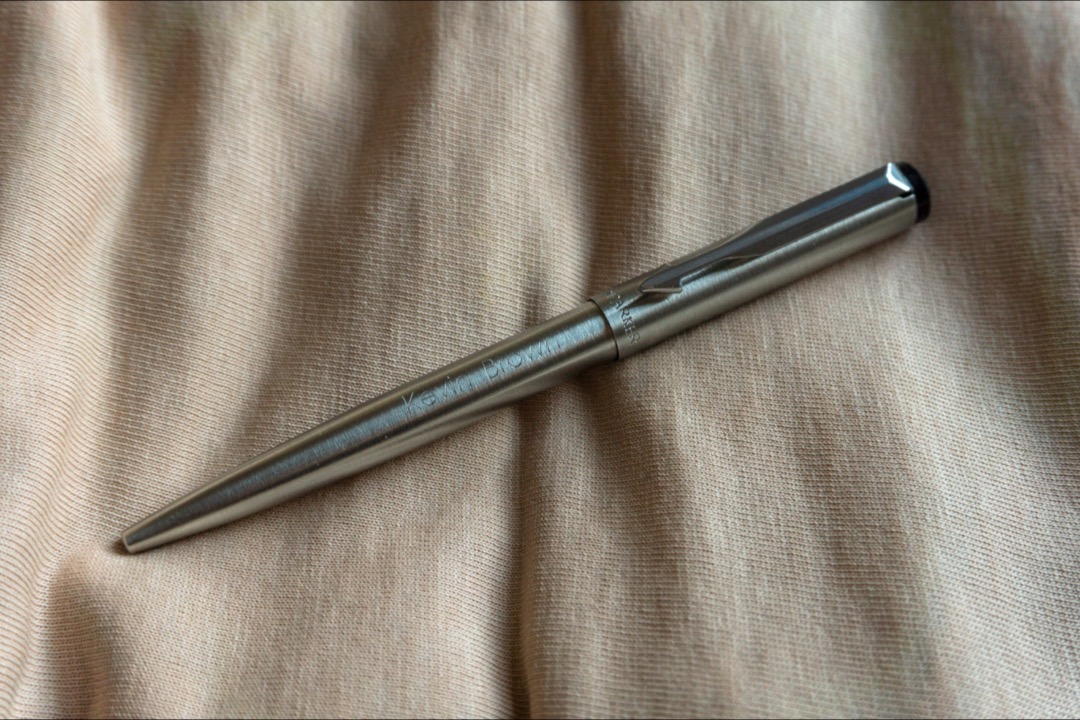
As a Certified Administrative Professional who has stocked supply rooms for offices ranging from five-person startups to corporate environments with more than 150 desks, I can tell you that the ballpoint pen is the most operationally important writing tool in any office — and the most consistently mis-purchased. Office managers tend to default to whichever pen is cheapest in the supplier catalog, then field a steady stream of skipping complaints, ink-blob complaints, and grip-fatigue complaints from staff who hate the pen they have been issued. The opposite mistake is also common: stocking a single-pen-fits-all premium ballpoint at three dollars per unit for a high-circulation environment where pens get lost, walked off, and dropped behind desks every week. Neither approach is correct. The right answer is matching the pen to the use case — and the use cases inside even a small office are surprisingly varied. The pen for the front-desk visitor cup is not the same pen as the pen for the executive signing desk, which is not the same pen as the pen for the supply-closet bulk refill, which is not the same pen as the pen for the field-service technician’s truck.
For this review, we evaluated seven ballpoint pens spanning the full range of office, personal, and travel use cases available on Amazon in 2026. The selection covers the journalist-tested reference standard recommended by Wirecutter for twelve consecutive years, the bulk-procurement workhorse that delivers the best per-pen cost on the market, the made-in-USA pressurized-ink pen engineered for travel and extreme conditions, and the executive-aesthetic Parker classic that has been in continuous production since 1954. We evaluated ink chemistry across traditional oil-based, low-viscosity hybrid, and pressurized formulations; point-size accuracy and the often-overlooked correction for gel-pen-to-ballpoint switchers; retractable-versus-capped tradeoffs from a procurement reliability lens; refillability and long-term cost-per-use; grip ergonomics including the underweighted factor of click noise in shared meeting environments; and use-context fit across everyday notes, official documents, and travel scenarios. Every ASIN was verified live on Amazon, and every specification was confirmed against manufacturer data and validated through thousands of verified buyer reviews.
The ballpoint pen market segments cleanly into three procurement-relevant tiers. Bulk-value capped pens (BIC Round Stic, Pentel RSVP) deliver low per-pen cost and high reliability for shared supply rooms, classrooms, conference tables, and front-desk pen cups — environments where loss and circulation drive total cost more than premium features do. Personal-use refillable hybrids (Uni-Ball Jetstream, Pilot Acroball) deliver the best writing comfort and ink quality for individual desks, with refillable designs that lower long-term cost-per-use across years of daily writing. Premium and specialty pens (Fisher Space Pen, Zebra F-301, Parker Jotter) serve specific use cases where the pen itself is part of the context — signing client-facing documents, traveling in extreme conditions, or projecting executive professionalism on a conference table. Match your purchase to the tier that fits your actual use case, and you eliminate the most common ballpoint pen mistakes. The same procurement logic applies across every desk supply category — from gel pens to mechanical pencils to fountain pens — but ballpoints are the category where the cost-per-unit math matters most because the unit volume is highest.
Find the Best Ballpoint Pen for Your Need
Jump straight to the pen that matches how you actually write:
- Best ballpoint pens overall
- Best bulk and cheap ballpoint pens
- Best retractable ballpoint pens
- Best metal ballpoint pens
- Best executive and gift ballpoint pens
- Best smooth, fine-point pens for writing
How We Chose These Ballpoint Pens
Our selection required verified Amazon availability with current pricing, meaningful differentiation in ink chemistry or use case across all seven products, and confirmed real-world performance through thousands of verified reviews. We evaluated ink smoothness and skip-resistance across multiple paper types, dry-time under timed left-handed writing conditions, line consistency from first stroke to ink depletion, grip comfort during extended forms-filling sessions, and refill availability and per-refill cost for refillable models. We cross-referenced our selections against authoritative roundups from Wirecutter, JetPens, The New York Times, and the r/pens community on Reddit, confirming that the Uni-Ball Jetstream appears as the top pick in virtually every credible 2024 and 2025 ballpoint pen recommendation — its status as the category benchmark is universal across editorial sources. We also applied a procurement lens that competitor reviews almost universally miss: cost-per-unit analysis at scale, click-mechanism failure rates as a hidden total-cost-of-ownership factor, and the use-case differentiation between personal-desk pens and shared-supply-room pens. Office buyers do not need a single best pen — they need the right pen for each of their actual writing contexts.
Best Ballpoint Pens Overall
Every pen below earned its spot on ink quality, review depth, and a distinct use-case fit. The full reviews come first — the use-case sections further down reference these same seven picks, so you can jump straight to your scenario without re-reading a card.
Uni-Ball Jetstream RT — Best Overall
The Jetstream RT earns best-overall status through a credential that no other ballpoint pen on this list — or on Amazon — can match: Wirecutter has named it their top ballpoint pen pick every year since 2013. Twelve consecutive years of editorial endorsement across journalist testing, lab evaluation, and re-validation against new contenders represents a consistency record that is essentially unprecedented in product review history. When the same pen wins the category for over a decade, it is not because newer pens have not tried — it is because the Jetstream solved the central engineering problem of ballpoint pen design in a way that competitors have not been able to replicate.
The engineering achievement is the hybrid low-viscosity ink. Traditional oil-based ballpoint ink — the formulation in BIC, Parker Jotter, Zebra F-301, and Pentel RSVP — is durable, fast-drying, and forms-permanent, but requires meaningful writing pressure and produces a draggy feel that creates hand fatigue across long writing sessions. Gel ink — the formulation in Pilot G2 and Pentel EnerGel — writes with effortless smoothness and produces vivid, dark lines, but smears under a left-handed writing posture and remains water-soluble. The Jetstream’s hybrid formulation delivers the smoothness of gel ink with the dry-time and durability of oil-based ink. Writers describe the experience as “the pen that finally doesn’t make you choose.” On standard office paper, the Jetstream writes with minimal pressure, dries within a fraction of a second, and produces a consistent line from first stroke to last drop of ink.
The refillable design extends the long-term value proposition beyond the writing experience. Jetstream refills are available in 0.5mm, 0.7mm, and 1.0mm point sizes plus multiple ink colors, and they cost roughly half the per-pen price of buying a new pen. A single Jetstream barrel will accept dozens of refill cycles before the click mechanism, grip, or clip shows meaningful wear, which makes the total cost of ownership across a year of daily writing substantially lower than disposable alternatives even at the Jetstream’s mid-tier initial price. The retractable click mechanism is robust — quieter and smoother than the Parker Jotter’s signature loud click but firmer and more responsive than the budget click mechanisms that fail within months on cheaper retractable pens.
The honest tradeoff to acknowledge: at the 0.7mm point size, the Jetstream produces a noticeably thinner line than a 0.7mm gel pen at the same nominal designation. Writers switching from a 0.7mm gel pen who want comparable line weight should size up to the 1.0mm Jetstream variant — the engineering reason is covered in the buyer’s guide section below.

uniball Jetstream RT Retractable Ballpoint Pens, 0.7mm Fine Point, Black, 12-Count
by Uni-Ball
The reference-standard ballpoint — Wirecutter's top pick since 2013, hybrid ink that writes like gel without the smear, refillable design, and a click mechanism that holds up to daily use.
Pros
- Wirecutter's top pick since 2013 — twelve consecutive years as the recommended ballpoint pen across journalist testing, professional reviews, and verified buyer feedback is a consistency record no other pen on this list approaches
- Hybrid low-viscosity ink delivers gel-pen smoothness with traditional ballpoint dry-time and smear resistance — the engineering combination that solved the central tradeoff between ink quality and document permanence
- Refillable with widely available Jetstream refills in multiple point sizes and colors, cutting per-use cost roughly in half compared to disposable competitors and extending a single barrel's life across years of daily use
- Retractable click mechanism with a strong stainless steel pocket clip survives daily commute, shirt-pocket carry, and being clipped to a notebook cover without the clip fatigue that plagues budget retractable designs
Cons
- 0.7mm fine point lays down a noticeably thinner line than the same designation in gel ink — writers switching from a 0.7mm gel pen should consider sizing up to the 1.0mm Jetstream variant for comparable line weight
- At roughly a dollar and a half per pen, the 12-count sits well above bulk-pack budget options like the BIC Round Stic — for a shared supply room rather than a personal-use pen, the math changes
BIC Round Stic Xtra Life — Budget Pick
The BIC Round Stic 144-count is not trying to compete with the Jetstream on writing experience. It occupies a fundamentally different market position: the bulk-procurement workhorse that delivers acceptable writing quality at the lowest per-pen cost on this list. At under ten cents per pen, the Round Stic is the unambiguous correct choice for shared supply rooms, classrooms, conference tables, front-desk pen cups, and any environment where pens circulate among many users and loss is a constant operational reality.
The procurement math is what makes the Round Stic dominant in its category. A 144-pack costs less than a single high-end pen, which means an office can fully restock supply cups across multiple floors for the cost of one premium ballpoint. The capped design has zero moving parts in the deployment mechanism, which eliminates the single most common failure mode in ballpoint pens — broken click mechanisms — from the supply equation entirely. When a Round Stic fails, it has run out of ink, not broken. The pen that arrives in the supply room writes the same on day one as on day three hundred. That predictability is exactly what procurement actually buys.
The 1.0mm medium point produces a bold, dark line that scans cleanly on optical-mark recognition forms (the standardized testing format), signs through carbon copies with adequate pressure transfer, and remains readable across years of document storage. The traditional oil-based ink is the original ballpoint formulation — fast-drying, smear-resistant, and chemically stable. Left-handed writers benefit from the instant dry-time. The 4.8-star rating across more than 11,000 reviews is the satisfaction signal that confirms the writing experience holds up to actual user expectations even at the budget price tier.
The honest tradeoffs: the hard plastic barrel is functional rather than comfortable for writing sessions longer than thirty minutes, the cap is small enough to lose easily (order extra to account for cap-loss attrition, not just ink depletion), and the design is non-refillable — when the ink runs out, the pen goes in the trash. For shared-supply-room economics, those tradeoffs are correct. For a personal-use pen on your own desk, switch to a refillable Jetstream or Acroball.

BIC Round Stic Xtra Life Ballpoint Pens, 1.0mm Medium Point, Black, 144-Count
by BIC
Best procurement value — under ten cents per pen, no mechanical failure mode, traditional ink that holds up on forms and carbon copies, and the satisfaction rating to back the volume order.
Pros
- Under ten cents per pen in a 144-count box delivers the lowest per-unit cost on this list and the correct economics for any shared supply room, classroom, conference room, or front-desk pen cup where loss and circulation are constant
- Capped design with no moving parts means zero mechanical failure risk — the click mechanism in retractable pens is the single most common failure point, and the Round Stic eliminates that variable entirely from the supply equation
- 1.0mm medium point produces the bold, dark line that scans cleanly on optical-recognition forms, signs legibly through carbon copies, and remains readable across years of document storage
- 4.8-star rating across more than 11,000 verified reviews is a satisfaction signal that matches the premium Jetstream's score at a small fraction of the per-pen cost — a rare combination on Amazon at any price tier
Cons
- Non-refillable disposable design — when the ink runs out, the pen goes in the trash, which is the standard tradeoff for sub-fifteen-cent pens
- Hard plastic barrel without a rubberized grip is functional rather than comfortable for sustained writing sessions longer than thirty minutes
- Cap is small enough to lose easily — order extra pens accounting for cap loss, not just ink depletion
Fisher Space Pen Bullet — Upgrade Pick
The Fisher Space Pen Bullet is the only ballpoint pen on this list that solves a category of writing problems that no conventional pen can address. Its pressurized nitrogen-charged cartridge — originally engineered for NASA’s Apollo program in the 1960s and continuously refined through six decades of production — pushes ink to the tip regardless of pen orientation, temperature, paper condition, or grease contamination. It writes upside down, in zero gravity, on wet paper, in temperatures from -30°F to 250°F, and over grease films that would cause every other pen on this list to skip and fail.
The use case is specific and exactly matched to the engineering: travel pens for backpacks and pockets that get knocked around, field-service tools for technicians who write in cramped spaces or unusual positions, outdoor and adventure writing where weather is a variable, and any context where conventional ballpoint reliability is not adequate. Hikers, sailors, pilots, military personnel, field engineers, and EMS workers have made the Fisher Bullet a category-defining EDC (everyday carry) tool over decades — the pen that earned its place in the standard pocket-carry kit through reliability that no competitor has matched.
The made-in-USA brass-and-chrome construction is built to last decades rather than years. The pressurized PR4 refill itself has a documented service life of more than 100 years when stored unused, and a single refill produces approximately 5,000 feet of writing — the equivalent of dozens of full ballpoint pen cartridges. The cap-and-post design is the form-factor innovation that makes the Bullet the most pocketable serious ballpoint on this list: the capped pen is roughly 3.75 inches long, fits cleanly in any pocket without bulk, and extends to a full-size 5.25-inch writing pen when the cap is posted on the back of the barrel.
The presentation gift box that ships with the pen makes it the only product on this list ready to give as a graduation, retirement, anniversary, or professional milestone gift without additional packaging. The honest tradeoffs: the pressurized refill costs more than disposable pens (a Fisher PR4 refill is several dollars rather than the sub-dollar cost of restocking a budget pen), and the bullet form factor when capped is too short for some writers’ grip preferences — the pen is designed to be posted for full writing length. For everyday office writing on a stable desk, this premium is unnecessary. For the specific use cases the Bullet was engineered for, it is the only correct choice on this list.

Fisher Space Pen Matte Black Bullet Pen, Pressurized Refill, Cap-and-Post Design
by Fisher
The premium upgrade — a Made-in-USA pressurized-ink pen that writes in zero gravity, on wet paper, and at extreme temperatures, in a pocketable bullet-shaped brass body designed to last a lifetime.
Pros
- Pressurized ink cartridge writes in extreme conditions where every other pen on this list fails — upside down, in zero gravity, on wet paper, in temperatures from -30°F to 250°F, and over grease — making it the only ballpoint engineered for travel, fieldwork, and outdoor use
- Made-in-USA construction and brass-and-chrome bullet-shaped barrel built to last decades — not years — with a documented service life of more than 100 years for the pressurized refill itself when stored unused
- Cap-and-post design extends the writing length to a full-size pen when posted, then collapses to roughly 3.75 inches capped — the most pocketable serious ballpoint on this list and the standard EDC (everyday carry) recommendation
- Includes a presentation gift box, making it the only pen on this list ready to give as a graduation, retirement, or professional milestone gift without additional packaging
Cons
- Pressurized refill costs more than disposable pens — a Fisher PR4 refill replacement is several dollars rather than the sub-dollar cost of restocking a budget pen, though the refill life justifies the spend
- Bullet form factor when capped is too short for some writers' grip preferences — the pen is designed to be posted (cap on the back of the barrel) for full writing length
Pilot Acroball PureWhite — Best Quiet-Click Hybrid
The Acroball is the pen for design-conscious office workers who want Jetstream-class writing performance with a cleaner aesthetic and a quieter click mechanism. Pilot’s proprietary AcroInk hybrid formulation delivers smoothness comparable to the Jetstream — the two pens are routinely compared in head-to-head reviews and rated within a hair of each other on writing quality — with a slightly drier feel that some writers prefer for left-handed use and high-humidity environments where wetter inks can blob.
The PureWhite barrel is the design feature that distinguishes the Acroball from the Jetstream’s busier branding. The clean white plastic with metallic accents and a contoured rubberized grip reads more minimal and professional on a desk than the Jetstream’s logo-heavy aesthetic — a quiet preference among design-conscious office buyers and a meaningful one for executives who keep pens visible on a conference table or in a glass-fronted desk organizer. The visual impression of the pen matters more than most reviews acknowledge: a pen that looks intentional reads as part of a professional setup, while a pen that looks like a giveaway reads as something that arrived in a swag bag.
The click mechanism is the underweighted feature that Acroball loyalists cite most often as the reason they switched from the Jetstream. In quiet meeting rooms, libraries, shared open offices, and any sound-sensitive environment, the Acroball’s click is noticeably softer and quieter than the Jetstream’s medium-volume click and the Parker Jotter’s signature loud click. For writers who take notes throughout the day in shared spaces, the difference accumulates into a meaningful comfort improvement — both for the writer and for everyone within hearing distance. The refillable design uses Pilot BRFN-10 refills available in 0.5mm, 0.7mm, and 1.0mm point sizes plus multiple ink colors, allowing one Acroball barrel to serve different writing tasks across its service life.
The tradeoffs: the 5-pack rather than the Jetstream’s 12-count pushes per-pen cost slightly higher (negligible for individual buyers, accumulating for desk-set procurement), and AcroInk runs out faster than traditional oil-based ballpoint ink because the smoothness comes from a higher ink-deposit rate per stroke. Plan on more frequent refilling than you would need with a BIC or RSVP. For everyday personal-desk writing where comfort and aesthetics matter, the Acroball is the runner-up to the Jetstream that some writers will prefer outright.

Pilot Acroball PureWhite Retractable Ballpoint Pens, 0.7mm Fine Point, Black, 5-Pack
by Pilot
The quiet, design-conscious hybrid — Pilot's AcroInk formulation in a clean PureWhite barrel with the smoothness of a Jetstream and a notably quieter click mechanism.
Pros
- Pilot's proprietary AcroInk hybrid formulation delivers smoothness comparable to the Jetstream with a slightly drier feel that some writers prefer for left-handed use and high-humidity environments where wetter inks blob
- PureWhite barrel with metallic accents and contoured rubberized grip creates a clean, minimal aesthetic that reads more professional than the Jetstream's busier branding — a quiet preference among design-conscious office buyers
- Refillable with BRFN-10 Pilot refills in 0.5mm, 0.7mm, and 1.0mm point sizes and multiple ink colors, allowing one barrel to serve different writing tasks across its service life
- Retractable click mechanism is noticeably quieter than the Jetstream and Zebra F-301 — a small but real consideration in shared meeting spaces, libraries, and quiet office environments where pen-click sounds register
Cons
- 5-pack rather than the Jetstream's 12-count pushes per-pen cost slightly higher — for individual buyers the difference is negligible, but for desk-set procurement it accumulates
- AcroInk runs out faster than traditional oil-based ballpoint ink — the smoothness comes from a higher ink-deposit rate per stroke, which means more frequent refilling on this pen than on a BIC or RSVP
Pentel RSVP — Best Latex-Free Comfort Value
The Pentel RSVP earns its place on this list through a combination that no other pen at its price point matches: a contoured latex-free rubber grip in an inexpensive 5-pack, a translucent barrel for ink monitoring, and the highest-rated traditional oil-based pen on this list with more than 12,000 verified reviews behind a 4.8-star rating. At its low per-pen cost, the RSVP is the value benchmark for capped ballpoint pens and the procurement-friendly upgrade from the BIC Round Stic when grip comfort matters more than rock-bottom per-unit cost.
The latex-free grip is the feature that makes the RSVP the correct choice for medical offices, laboratories, dental practices, veterinary clinics, and any workplace where latex sensitivity is a documented health concern. Latex allergies affect approximately 6 percent of the general population and a higher percentage of healthcare workers due to chronic latex exposure, and the difference between a latex-containing rubber grip and a latex-free synthetic grip is invisible to the eye but consequential for sensitive users. Most ballpoint pens on the budget tier do not specify whether their grips contain latex — the RSVP’s explicit latex-free formulation is the safe procurement default for any allergen-conscious environment.
The translucent barrel is the second underweighted feature that RSVP users cite most often. You can see at a glance how much ink remains in each pen, which prevents the mid-meeting empty-pen surprise that opaque-barreled pens like the Round Stic and Parker Jotter create. For a capped pen at sub-sixty-cent price points, the combination of grip comfort and ink visibility delivers a meaningfully better daily writing experience than the cheaper alternatives.
The traditional oil-based ink dries instantly on standard paper, which makes the RSVP a strong left-handed choice and a reliable performer on glossy surfaces where hybrid inks like the Jetstream can smear. The 0.7mm fine point produces a slightly thinner line than the 1.0mm BIC Round Stic — better for detailed notation and small handwriting, less ideal for forms requiring bold legibility. The honest tradeoff: the capped design slows deployment compared to retractable pens, which matters in fast-paced note-taking situations where every second of writing flow counts. For most office writing contexts, the comfort and value tradeoffs favor the RSVP over both the Round Stic (more comfortable) and the Jetstream (less expensive).

Pentel RSVP Stick Ballpoint Pens, 0.7mm Fine Point, Black, 5-Pack
by Pentel
Best value comfort pen — latex-free contoured grip, instant-dry oil-based ink, translucent barrel for ink monitoring, all at under fifty cents per pen with more than 12,000 satisfied reviewers behind it.
Pros
- Latex-free contoured rubber grip in an inexpensive 5-pack, the correct allergen-conscious choice for medical offices, laboratories, and anywhere latex sensitivity is a workplace health concern
- Translucent barrel lets you see remaining ink supply at a glance, eliminating the guesswork that opaque-barreled ballpoints like the Jotter and Round Stic create
- Traditional oil-based ink dries instantly on standard paper, making this a strong left-handed choice and a reliable performer on glossy surfaces where hybrid inks can smear
- 4.8-star rating across more than 12,000 reviews at under fifty cents per pen establishes the RSVP as the highest-satisfaction-per-dollar pen on this list — the value signal is unambiguous
Cons
- Capped design slows deployment compared to retractable pens — for fast-paced note-taking situations, the click mechanism of the Jetstream or Acroball is meaningfully faster
- Non-refillable disposable construction — the value math works at this price, but the environmental footprint is higher than refillable alternatives
Zebra F-301 Stainless Steel — Best Metal-Bodied Value
The Zebra F-301 occupies a unique position on this list as the only stainless steel-bodied retractable ballpoint pen under twenty dollars. It looks and feels like a thirty-dollar pen at half the price, and it ships with three Zebra F-Refill 85512 cartridges included in the pack — Zebra is the only brand on this list to bundle refills with the initial purchase, which extends usable writing life from day one without a separate refill expense.
The stainless steel construction is the defining characteristic. Where every other pen on this list under twenty dollars uses a plastic barrel, the F-301 uses a fully stainless steel barrel and click mechanism that delivers a weighted, premium tactile feel. The metal absorbs daily wear that plastic accumulates as cosmetic damage — drops, pocket carry, and shared-desk handling that would scuff and crack a plastic pen leaves the F-301 looking essentially unchanged across years of use. For a pen that needs to maintain a professional appearance on a client-facing desk without the Parker Jotter’s premium price tag, the F-301 is the cost-effective answer.
The Easy-Glide oil-based ink is engineered as a middle ground between standard traditional oil-based ink and hybrid ink. It flows more smoothly than standard oil-based formulations like the BIC and RSVP — reducing the draggy feel that traditional ballpoints create — while retaining the dry-time and smear resistance that hybrid inks sacrifice. For forms-heavy writing contexts where you want both comfortable everyday writing and document-permanence ink, the Easy-Glide formulation is a useful compromise that neither pure oil-based nor pure hybrid can deliver.
The bundled refills are a procurement detail that materially affects total cost of ownership: when a pen ships with three refills already in the box, the per-write cost across the first year of use is meaningfully lower than equivalent refillable pens that require a separate refill purchase. The honest tradeoffs: the slim cylindrical metal barrel rolls easily on flat or angled surfaces (unlike the Parker Jotter’s chunkier profile or the Fisher Space Pen’s bullet form), and the stainless steel grip section provides less finger traction than rubberized grips on the Jetstream and Acroball — for writers with dry hands or in cool office conditions, the metal can feel slippery. Pair the F-301 with a quality desk lamp and a desk organizer that includes a pen tray with a stop, and the rolling concern goes away in daily use.

Zebra F-301 Stainless Steel Retractable Ballpoint Pens, 0.7mm Fine Point, Black, 6-Pack with 3 Refills
by Zebra
Best metal-bodied value — a stainless steel retractable ballpoint with Easy-Glide oil-based ink that bundles three refills in the pack, delivering premium feel and forms-grade ink permanence at a sub-twenty-dollar price.
Pros
- Stainless steel barrel and click mechanism deliver a weighted, premium feel that no other pen on this list under twenty dollars matches — the F-301 looks and feels like a thirty-dollar pen at half that price
- Easy-Glide oil-based ink is engineered for smoother flow than standard oil-based inks while retaining the dry-time and smear resistance that hybrid inks sacrifice — a useful middle ground for forms work that requires permanence
- Pack ships with three Zebra F-Refill 85512 cartridges included — Zebra is the only brand on this list to bundle refills with the initial pack, which extends usable writing life from day one without a separate refill purchase
- Stainless steel construction survives drops, daily pocket carry, and shared-desk handling without the cosmetic wear that plastic pens accumulate within weeks — the metal body holds its appearance across years of use
Cons
- Slim cylindrical metal barrel rolls easily on flat or angled surfaces — unlike the Parker Jotter's chunkier profile or the Fisher Space Pen's bullet form, the F-301 will roll off a slightly tilted desk if not capped against a stop
- Stainless steel grip section provides less finger traction than rubberized grips on the Jetstream and Acroball — for writers with dry hands or in cool office conditions, the metal can feel slippery
Parker Jotter Originals — Best Executive-Aesthetic Pen
The Parker Jotter is not the smoothest pen on this list, not the cheapest, and not the most engineering-innovative. It is something else entirely: the recognized standard for executive-aesthetic ballpoint pens, in continuous production since 1954, and the pen that most office workers worldwide associate with professional document signing and corporate gifting. When the pen is part of the impression — on a conference table during a client meeting, in a hotel hand for a check-in signature, in the breast pocket of a suit jacket during a formal presentation — the Jotter is the answer.
The Quinkflow ink is engineered specifically for legal and official document signing rather than everyday writing comfort. It produces consistent, dark, archival-quality lines that meet the permanence requirements for contracts, certifications, notarized paperwork, and any document intended to remain legible across decades of storage. The ink is acid-stable, fade-resistant under light exposure, and chemically formulated for the kind of writing that needs to survive court archives, deed records, and personal-history documents. For everyday note-taking, the Quinkflow formulation is unremarkable. For the specific writing contexts where ink permanence is the actual requirement, it is the correct ink chemistry.
The stainless steel arrow clip and brushed cap are signature design elements that have been part of the Parker brand identity for over seventy years. The arrow clip is widely recognized — most office workers can identify a Parker Jotter from across a desk — which is why it has become the standard executive gift pen for graduations, promotions, and corporate milestones. The retractable click mechanism uses Parker’s trademark loud, firm click that some users love as part of the pen’s character and others find too noticeable in quiet meeting environments. The mechanism is robust and built to last decades — a Jotter purchased today will still click reliably in 2046.
The refillable design uses Parker-standard refills available in fine, medium, and broad point sizes plus multiple ink colors. Parker refills are the most widely stocked refill format in office supply stores worldwide, ensuring long-term availability that smaller-brand refill formats cannot guarantee. The honest tradeoffs: the per-pen cost in an 8-pack puts the Jotter in the premium tier (for everyday note-taking the value math favors the Jetstream or Acroball), and the loud click mechanism is part of the pen’s character but draws attention in quiet office settings. The Jotter earns its price specifically for client-facing, signing, and executive use cases — match it to those contexts and the value math works.

Parker Jotter Originals Retractable Ballpoint Pens, Medium Point, Blue Ink, 8-Pack
by Parker
The executive standard — Parker's continuously-produced classic since 1954, with archival-quality Quinkflow ink for official document signing and the stainless steel arrow clip that defines the corporate ballpoint aesthetic.
Pros
- Parker Jotter has been in continuous production since 1954 — over seventy years of design refinement and brand recognition makes this the most recognizable executive ballpoint pen on this list and the standard corporate-gift ballpoint
- Quinkflow oil-based ink is engineered specifically for legal and official document signing — it produces consistent, dark, archival-quality lines that meet the permanence requirements for contracts, certifications, and notarized paperwork
- Stainless steel arrow clip and brushed cap are signature design elements that read as professional rather than disposable — the pen you keep on a conference table looks the part of an executive tool
- Refillable with Parker-standard refills available in fine, medium, and broad point sizes plus multiple ink colors — Parker refills are the most widely stocked refill format in office supply stores worldwide, ensuring long-term availability
Cons
- Retractable click mechanism on the Jotter is louder and firmer than the Jetstream or Acroball — the trademark Parker click is part of the brand identity, but in quiet office or meeting settings it draws attention
- Per-pen cost in an 8-pack puts this in the premium tier — for everyday note-taking the value math favors the Jetstream or Acroball, while the Jotter earns its price specifically for client-facing, signing, and executive use cases
Best Bulk and Cheap Ballpoint Pens
When you are buying pens by the box for a classroom, a reception desk, or a supply closet, the decision is cost-per-pen and reliable ink flow, not premium features. The BIC Round Stic 144-count is the lowest true cost-per-pen here, and the Pentel RSVP 5-pack steps up to a cushioned latex-free grip for people who actually write for hours.
| Product | Price | Buy |
|---|---|---|
| BIC Round Stic Xtra Life Ballpoint Pens, 1.0mm Medium Point, Black, 144-CountBest bulk value 144 pens for the price of a few premium ones — reliable oil-based ink and a proven cap design, the default for stocking a classroom or supply closet. | $14.28 | View on Amazon |
| Pentel RSVP Stick Ballpoint Pens, 0.7mm Fine Point, Black, 5-PackBest budget with comfort grip A cushioned, latex-free grip and smooth fine-point ink at a budget price, for students and staff who write long-hand for hours. | $2.92 | View on Amazon |
Best Retractable Ballpoint Pens
Retractable pens skip the lost-cap problem — one click and you write — which is why they dominate desk and pocket use. All three here are click-retractable and rank among the best writers in the roundup: the Jetstream for the smoothest everyday ink, the Acroball for quiet clicking, and the metal-bodied F-301 for durability.
| Product | Price | Buy |
|---|---|---|
| uniball Jetstream RT Retractable Ballpoint Pens, 0.7mm Fine Point, Black, 12-CountBest overall retractable Hybrid ink that writes like gel without the smear, a solid click mechanism, and refillable design — the reference-standard everyday retractable. | $19.98 | View on Amazon |
| Pilot Acroball PureWhite Retractable Ballpoint Pens, 0.7mm Fine Point, Black, 5-PackBest quiet-click retractable A quieter click and low-viscosity AcroInk, ideal for shared and open-plan offices where a loud pen click carries. | $8.33 | View on Amazon |
| Zebra F-301 Stainless Steel Retractable Ballpoint Pens, 0.7mm Fine Point, Black, 6-Pack with 3 RefillsBest durable retractable A stainless-steel barrel that survives drops and daily abuse, refillable and backed by 3,600+ reviews at a low price. | $16.97 | View on Amazon |
Best Metal Ballpoint Pens
A metal barrel buys durability and a more substantial in-hand feel than plastic — the difference between a pen that lasts a year and one that lasts a decade. The Zebra F-301 is the value entry, the Fisher Space Pen is the near-indestructible travel pick, and the Parker Jotter is the polished step up in stainless steel.
| Product | Price | Buy |
|---|---|---|
| Zebra F-301 Stainless Steel Retractable Ballpoint Pens, 0.7mm Fine Point, Black, 6-Pack with 3 RefillsBest value metal pen Stainless-steel barrel, refillable, and 3,600+ reviews at a budget price — the easiest way into a metal pen that lasts. | $16.97 | View on Amazon |
| Fisher Space Pen Matte Black Bullet Pen, Pressurized Refill, Cap-and-Post DesignBest rugged metal pen A machined pressurized pen that writes upside down, in the cold, and on damp paper — the travel and field-work pick that shrugs off abuse. | $35.10 | View on Amazon |
| Parker Jotter Originals Retractable Ballpoint Pens, Medium Point, Blue Ink, 8-PackBest premium metal pen Iconic stainless-steel Parker styling with Quinkflow ink, the metal pen that also reads as a gift or executive-desk piece. | $32.16 | View on Amazon |
Best Executive and Gift Ballpoint Pens
For a gift, a signature pen, or an executive desk, presentation and writing feel matter more than cost-per-pen. The Parker Jotter is the classic gift pen at an accessible price, and the Fisher Space Pen is the conversation-piece upgrade that still earns daily use.
| Product | Price | Buy |
|---|---|---|
| Parker Jotter Originals Retractable Ballpoint Pens, Medium Point, Blue Ink, 8-PackBest gift and executive pen A recognizable stainless-steel Parker at a gift-friendly price — polished enough for a signature pen, sturdy enough for everyday carry. | $32.16 | View on Amazon |
| Fisher Space Pen Matte Black Bullet Pen, Pressurized Refill, Cap-and-Post DesignBest conversation-piece upgrade The pen that writes in zero gravity and underwater, machined and pocket-sized — a memorable gift that gets used, not shelved. | $35.10 | View on Amazon |
Best Smooth, Fine-Point Pens for Writing
If your priority is the writing experience itself — clean fine lines, no skipping, minimal smear — low-viscosity hybrid ink beats traditional oil-based. The Jetstream is the smoothest writer in the roundup, and the Acroball matches it with a quieter click for shared spaces.
| Product | Price | Buy |
|---|---|---|
| uniball Jetstream RT Retractable Ballpoint Pens, 0.7mm Fine Point, Black, 12-CountBest smooth writer 0.7mm fine point with hybrid ink that lays down a clean, gel-like line without the smear or drag of oil-based ballpoints. | $19.98 | View on Amazon |
| Pilot Acroball PureWhite Retractable Ballpoint Pens, 0.7mm Fine Point, Black, 5-PackBest quiet fine-point The same low-viscosity smoothness with a muffled click, the fine-point pick for anyone who writes in a quiet or shared room. | $8.33 | View on Amazon |
How to Choose the Best Ballpoint Pen
Buyer's Guide
Choosing the right ballpoint pen — for a personal desk, a shared supply room, or a client-facing signing context — requires matching ink type, point size, refillability, and barrel design to how the pen will actually be used. The wrong choice in any dimension turns a reliable writing tool into the source of skipping complaints, illegible forms, or the procurement headache of buying replacement pens twice as often as needed.
Ink Type
Ballpoint ink falls into three distinct chemistries that produce meaningfully different writing experiences and serve different use cases. Traditional oil-based ink (BIC Round Stic, Pentel RSVP, Parker Jotter) is the original ballpoint formulation — thick, fast-drying, durable, and the correct choice for forms, carbon copies, official documents, and any context where ink permanence matters more than writing smoothness. Low-viscosity hybrid ink (Uni-Ball Jetstream, Pilot Acroball) is the modern engineering solution that combines the smoothness of gel ink with the dry-time and durability of oil-based ink — the right choice for everyday writing where comfort matters and a draggy oil-based pen would create hand fatigue. Pressurized ink (Fisher Space Pen) uses a sealed nitrogen-pressurized cartridge that pushes ink to the tip regardless of orientation, temperature, or paper condition — the only correct choice for travel, outdoor use, fieldwork, and any extreme-condition writing. Match the ink to the use case rather than buying based on price alone: a ten-cent oil-based pen is the right answer for a supply room and the wrong answer for daily personal writing.
Point Size and the Ballpoint-vs-Gel Reality Correction
Ballpoint pen point sizes carry a deceptive feature that catches buyers switching from gel pens off-guard: a 0.7mm ballpoint writes a noticeably thinner line than a 0.7mm gel pen at the same nominal designation. The reason is mechanical — gel ink lays down a thicker ink deposit per stroke than oil-based or hybrid ink, so the same ball diameter produces a wider visible line in gel ink than in ballpoint ink. The practical correction: if you are switching from a 0.7mm gel pen to a ballpoint and want comparable line weight, size up to 1.0mm in the ballpoint. The 0.7mm fine point is correct for detailed notation, planner grids, and standard handwriting at small letter heights. The 1.0mm medium point is correct for general writing, signatures, forms, and any context where line visibility matters more than precision.
Retractable vs. Capped
The retractable-versus-capped decision is more consequential than it appears, particularly for shared-desk procurement and high-stakes signing contexts. Retractable click pens (Jetstream, Acroball, Zebra F-301, Parker Jotter) deploy faster, eliminate cap loss as a failure mode, and stay together as a single unit through pocket carry and bag transport. The tradeoff is that the click mechanism is the single most common failure point in ballpoint pen design — when a retractable pen breaks, the click mechanism is almost always what failed. Capped pens (BIC Round Stic, Pentel RSVP, Fisher Space Pen) have no moving parts in the deployment mechanism, which makes them mechanically more reliable across long-term use. For shared supply rooms where pens get rough handling and circulate among many users, capped designs eliminate the click-failure variable. For personal-use pens on a single user's desk, retractable click mechanisms are the convenience-and-style choice.
Refillability and Long-Term Cost
Whether a ballpoint pen accepts replacement refills is the single biggest factor in long-term cost-per-use across years of writing. The refillable pens on this list — Jetstream, Acroball, Fisher Space Pen, Zebra F-301, Parker Jotter — all accept manufacturer-standard refills available widely on Amazon and in office supply stores. Refill costs are typically half to two-thirds the per-pen cost of buying a new disposable pen of comparable quality, and a single quality barrel can be refilled dozens of times before the click mechanism, grip, or clip shows meaningful wear. The disposable pens — BIC Round Stic and Pentel RSVP — make the math work through low initial cost: at ten to fifty cents per pen, the disposable design is cheaper than a refillable pen plus replacement refills over the equivalent writing volume, especially in shared environments where pen loss matters as much as ink depletion. The procurement rule: refillable for personal-use premium pens, disposable for shared supply rooms and high-circulation environments.
Grip and Ergonomics
Grip design determines how a pen feels during the first signature of the day and the fortieth — and the two experiences often diverge sharply. Rubberized contoured grips (Jetstream, Acroball, RSVP) cushion the fingers, absorb writing pressure, and reduce the hand fatigue that accumulates during forms-filling sessions or extended note-taking. Latex-free rubber grips (Pentel RSVP) provide the same cushioning without the dermatological risk that latex creates for sensitive users — a meaningful detail in medical offices and laboratories. Hard plastic barrels (BIC Round Stic) are functional rather than comfortable for sustained writing, but they are the right choice for occasional-use shared pens. Metal barrels (Zebra F-301, Fisher Space Pen) provide premium tactile feedback and weight that some writers prefer for control during signing, but they can feel slippery against dry hands. One additional consideration that gets ignored in most pen reviews: click noise. The Parker Jotter's signature loud click and the Jetstream's medium-volume click both register in quiet meeting rooms. The Pilot Acroball is notably quieter than the Jetstream — a quiet but real preference for writers who work in sound-sensitive environments.
Use Context: Everyday Notes vs. Official Documents vs. Travel
The single most consequential question in choosing a ballpoint pen is what you will primarily use it for, because the right answer differs sharply across the three core ballpoint use cases. For everyday notes, planning, and personal writing on a single desk, the Jetstream and Acroball deliver the best combination of writing comfort, ink quality, and refillable long-term value — these are the personal-use pens. For official documents, contracts, certifications, carbon copies, and any writing context where ink permanence and archival quality matter more than smoothness, the Parker Jotter's Quinkflow ink and the BIC Round Stic's traditional oil-based formulation are the correct choices — these inks are engineered specifically for document permanence. For travel, fieldwork, outdoor use, and any environment where the pen needs to write on wet paper, in extreme temperatures, at unusual angles, or after being knocked around in a backpack, the Fisher Space Pen is the only correct answer on this list — its pressurized cartridge solves problems that no conventional ballpoint can address. Match the pen to the context, and consider stocking different pens for different purposes rather than expecting one pen to cover every scenario.
Final Verdict
For most writers choosing a single ballpoint pen for personal-desk use in 2026, the Uni-Ball Jetstream RT is the unambiguous starting point. Wirecutter has named it the top ballpoint every year since 2013, and the hybrid low-viscosity ink solves the central tradeoff between writing comfort and document permanence in a way that no competitor has been able to replicate. The refillable design extends a single barrel across years of daily use, and the click mechanism holds up to commute, pocket carry, and clipboard duty without the failure mode that breaks cheaper retractable pens within months.
For shared supply rooms, conference tables, classrooms, and front-desk pen cups, the BIC Round Stic 144-count is the procurement winner. Under ten cents per pen, no mechanical failure mode, traditional oil-based ink that holds up on forms and carbon copies, and the satisfaction rating to back the volume order. Stock the Round Stic for high-circulation environments where loss and rough handling drive total cost more than premium features ever could.
For travel, fieldwork, outdoor use, and any extreme-condition writing, the Fisher Space Pen Matte Black Bullet is the premium upgrade that no conventional ballpoint can replace — its pressurized cartridge writes in zero gravity, on wet paper, and at extreme temperatures, and the made-in-USA brass body is engineered to outlast its owner.
Match the pen to the context rather than expecting one pen to cover every scenario. Most offices and most professional desks benefit from stocking two or three pens — a personal-use Jetstream or Acroball, a bulk-restock Round Stic or RSVP for the shared cup, and a premium Jotter or Fisher Bullet for high-stakes signing or travel use. Pair your pens with the right mechanical pencils for tasks where erasability matters, the right gel pens for color-coded note-taking, and a serious fountain pen for the executive desk where writing experience itself is the point. The right pen for each use case is not the same pen, and once your supply room reflects that, the steady stream of skipping complaints and ink-blob complaints disappears.
Frequently Asked Questions
What makes the Uni-Ball Jetstream so much better than other ballpoint pens?
What's the difference between a ballpoint pen and a rollerball pen?
Are ballpoint pens good for left-handed writers?
Which ballpoint pen works best for carbon copy forms and legal documents?
What's the best ballpoint pen to stock at a shared office desk or supply room?
Related Articles
About the Reviewer

Sarah Chen, CAP, PMP
B.A. Business Administration, UCLA
Sarah Chen spent 10 years in office management and operations at Fortune 500 companies before founding DeskRated in 2026. After managing supply budgets for teams of 50+ people and testing thousands of products through daily use, she started writing the honest, no-fluff supply reviews that office professionals actually need. Sarah holds both CAP and PMP certifications and is based in Los Angeles.