7 Best Desk Calendars of 2026
Sarah Chen reviews the best desk calendars for office productivity, scheduling, and workspace organization. Compare top-rated desk calendars by size, format, coverage period, paper quality, and extra features.
Updated
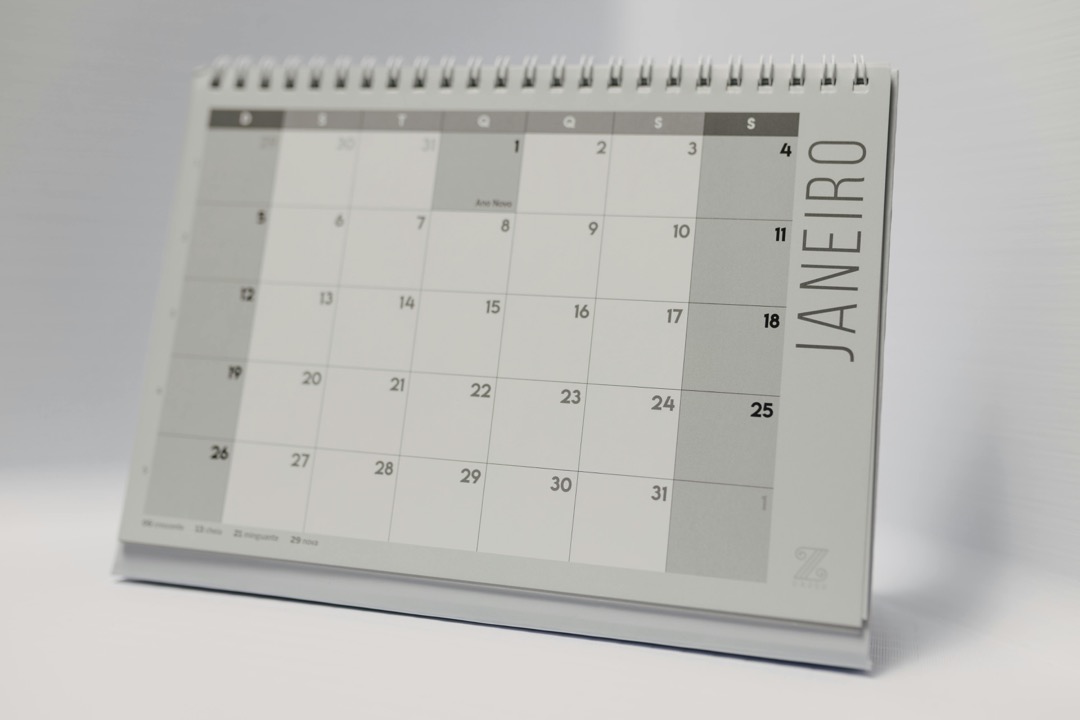
After fifteen years managing administrative operations across organizations ranging from five-person startups to departments exceeding fifty direct reports, I can tell you that the humble desk calendar remains one of the most underrated productivity tools in any office. Digital calendars handle scheduling, notifications, and team coordination brilliantly — but they live behind a screen that you have to actively engage with. A desk calendar provides something fundamentally different: ambient temporal awareness. It sits in your visual field all day, silently reminding you that a quarterly deadline is approaching, that a team member’s birthday is next week, or that a holiday weekend will shorten your project timeline. That passive awareness is worth more than any app notification because it requires zero effort to receive.
The desk calendar market in 2026 has split into two distinct categories that serve different workspace needs. Large desk pad calendars — the traditional format that lays flat across your desk surface — continue to dominate offices with spacious desks where the calendar doubles as a writing surface, desk protector, and month-at-a-glance reference. Standing flip easel calendars have surged in popularity alongside the rise of compact workstations, standing desks, and hybrid work setups where desk real estate is at a premium. Understanding which format fits your workspace is the first and most important decision, because a desk pad calendar on a thirty-six-inch desk is a frustration, and a tiny standing calendar on an executive desk is invisible.
For this review, we evaluated seven desk calendars spanning both formats across a range of price points. The selection includes three large desk pad calendars for traditional office setups, two compact 8-by-6-inch standing flip calendars for space-constrained workstations, and two mid-size 10-by-8-inch standing calendars that bridge the gap between the two. We assessed paper quality with multiple writing instruments including the gel pens and highlighters from our reviews, structural durability across months of simulated daily use, writing space per day, coverage period value, and the supplementary planning features that separate a genuinely useful desk calendar from a sheet of paper with dates on it.
Find the Best Desk Calendar for Your Need
Jump straight to the calendar that matches your desk, your format preference, and your planning style:
- Best desk calendars overall
- Best large desk calendar
- Best small desk calendar
- Best standing (flip) desk calendar
- Best desk pad calendar
- Best monthly desk calendar
- More desk calendar picks by use case
How We Chose These Desk Calendars
Our selection required verified Amazon availability with current pricing and meaningful differentiation in format and size across all seven products. Five of the seven carry hundreds or thousands of verified reviews. Two do not: the BowCuk eighteen-month standing calendar has roughly thirty, and the bloom 2027 edition is a freshly listed SKU with four. We say so plainly in both write-ups rather than quietly implying a track record neither has earned yet. We evaluated paper quality for ink bleed resistance and durability, structural stability for standing formats, writing space per daily block, coverage period relative to price, and the practical value of supplementary features like stickers, to-do sections, and holiday highlighting. We tested desk pad paper specifically with gel pens and highlighters to confirm that daily writing does not transfer through to the desk surface — a concern that users of the gel pens from our reviews will appreciate. We cross-referenced our selections against competitor roundups and identified a significant gap: no major desk calendar review distinguishes between desk pad and standing flip formats with format-specific buying advice, and none includes a structured comparison table covering all seven products. A monthly pad handles the weeks around a deadline but not the hours inside a single day — for that, print a sheet from our free daily schedule template, which builds an hour-by-hour grid around your own start and end times and sits beside the calendar rather than competing with it.
Best Desk Calendars Overall
The AT-A-GLANCE Monthly Desk Pad is the desk calendar most professionals will be happiest with — the largest writing surface, the most reliable bleed-resistant paper, and the dual desk-or-wall versatility that has made it the office standard for decades. Every calendar below is reviewed once in this section; the use-case sections further down simply point back to these picks so you can jump to the format that fits your desk.
AT-A-GLANCE Monthly Desk Pad Calendar — Best Overall
The AT-A-GLANCE earns best-overall because it is the desk calendar that the most professionals will be satisfied with — the format that has defined the desk calendar category for decades, executed with the paper quality and structural features that justify its position as the industry standard. This is not the cheapest calendar on this list, not the most feature-rich, and not the most aesthetically distinctive. It is the calendar that delivers the most writing space, the most reliable paper quality, and the most versatile mounting options in a single product.
The 21.75 by 17 inch desk pad format is the foundation of its utility. Each monthly page spans your entire desk width, and the ruled daily blocks provide enough space for three to four line items per day — enough to note key meetings, deadlines, and reminders without the single-word abbreviations that compact calendars demand. For administrative professionals, project managers, and anyone who maintains a physical calendar as their primary month-level planning reference, this writing space is the minimum viable area for useful daily annotations. The format also serves as a desk protector, providing a clean writing surface for documents placed on top while padding your desk from pen impressions and coffee rings.
The ink bleed resistant paper is the engineering detail that separates AT-A-GLANCE from generic desk pads at the same price point. You can write with gel pens, highlight deadlines with markers, and circle important dates with felt-tips without the ink soaking through to the page underneath or transferring to your desk surface. For professionals who color-code their calendars — red for deadlines, blue for meetings, green for personal events — this bleed resistance is not optional.
The tear-off perforation and wall-hanging eyelets provide versatility that no standing calendar can match. Tear off the completed month and file it for quarterly review. Hang the calendar on a wall or cubicle partition during months when your desk needs the surface area for a large project. The corner protectors keep the pages flat and aligned throughout the month without curling at the edges. At about a dollar per covered month, the AT-A-GLANCE delivers professional-grade desk calendar functionality at a price that makes it an afterthought in any office supply budget.
One timing note, since we are recommending the 2027 edition. This is a January through December 2027 calendar, so it is the right buy if you are stocking up for next year or replacing on a clean January cycle. If you need a calendar working on your desk this week, skip down to the picks whose coverage is already open — the Gannyfer and the BowCuk start in July 2026, the CRANBURY in September, and the Mokani in October, and all four run through the end of 2027.

AT-A-GLANCE 2027 Monthly Desk Pad Calendar, 21.75" x 17"
by AT-A-GLANCE
The gold standard desk pad calendar, now in its 2027 edition — AT-A-GLANCE's 21.75 by 17 inch format delivers the largest writing surface, ink-resistant paper, and the dual desk-or-wall versatility that office professionals have relied on for decades.
Pros
- Industry-standard 21.75 by 17 inch desk pad format provides the largest writing surface of any calendar on this list — daily blocks measure 2-15/16 by 2-3/8 inches, enough room for three to four line items without the cramped abbreviations that smaller calendars force
- Ink bleed resistant paper allows you to write with gel pens, markers, and highlighters directly on the calendar surface without marks transferring to your desk underneath — a critical feature for professionals who color-code deadlines and meetings
- Tear-off perforated pages let you remove completed months cleanly, keeping only the current month visible while archiving previous months in a folder for reference during quarterly reviews
- Corner protectors and wall-hanging eyelets provide dual mounting versatility — use it flat on your desk as a writing surface and desk protector, or hang it on a wall or cubicle partition when desk space is limited
Cons
- Twelve-month January to December 2027 coverage means a mid-year buyer has nothing to write on until January — the eighteen-month picks below are the better choice if you need a calendar working on your desk today
- Large footprint requires a desk surface at least twenty-two inches wide, which eliminates this calendar from compact workstations, standing desk converters, and shared hot-desking environments
- Monthly pages carry ruled blocks, a notes section, and a year reference, but no to-do columns, goal trackers, or sticker sheets that several competitors include at a similar price
Cabbrix Desk Calendar with PU Leather Mat — Upgrade Pick
The Cabbrix approaches the desk calendar as a permanent workspace accessory rather than a disposable annual purchase — and that philosophical shift changes the value equation entirely. The PU leather desk mat base stays on your desk year after year, and the tear-off calendar pad sits on top of it and gets replaced annually. First-year cost is roughly thirty dollars for the complete unit, which is about double what the paper-only pads here cost. Subsequent years cost only the replacement pad. For professionals who maintain a consistent desk setup and value the aesthetic and tactile upgrade of leather over paper, that arithmetic works out over several years — but only if you actually buy the refills rather than replacing the whole unit, so check that your mat’s manufacturer still sells pads before committing.
The eighteen-month January 2027 through June 2028 run reaches further forward than anything else here. For professionals who plan across calendar year boundaries — academic administrators working on fall and spring term schedules, project managers tracking initiatives that span Q4 and Q1, finance professionals planning around fiscal year transitions — that horizon means you can see the first half of 2028 without a second calendar. The trade-off is the start date: this edition does not begin until January 2027, so it is a forward purchase rather than something to put on your desk today. If you need coverage for the rest of this year, the Gannyfer is the desk pad that starts now.
The highlighted federal holidays are a feature that sounds minor but saves real time in practice. When a client asks for a deliverable “by the end of next week” and next week includes Presidents’ Day or Memorial Day, having the holiday visually highlighted on your desk calendar lets you flag the shortened work week immediately rather than pulling out your phone to check. For administrative professionals who manage schedules for multiple team members, visible holiday highlighting prevents the scheduling conflicts that create unnecessary stress.
The floral design on PU leather is a deliberate aesthetic choice that will not suit every office. In creative agencies, design studios, and personal offices, the design elevates the calendar from office supply to workspace accessory. In corporate law firms, financial institutions, and conservative professional environments, the pattern may read as too personal. Know your environment before purchasing — the calendar’s functionality is excellent regardless of setting, but the design makes a statement that should be intentional.

Cabbrix 2027 Desk Calendar with PU Leather Desktop Mat, 22" x 17"
by Cabbrix
The premium upgrade for professionals who want a desk calendar that doubles as a permanent workspace accessory — the refillable PU leather base, eighteen-month coverage, and highlighted holidays are what you are paying roughly double for.
Pros
- PU leather desk mat base transforms a disposable calendar into a permanent desk accessory — the refillable design means you purchase replacement calendar pads each year instead of throwing away the entire unit, reducing long-term cost and waste
- Eighteen-month coverage from January 2027 through June 2028 reaches further into the future than anything else on this list — ideal for professionals who plan projects, budgets, or academic terms that run past the end of next year
- Floral design on premium PU leather elevates the aesthetic from generic office supply to a workspace accessory that complements a well-designed desk setup alongside your desk lamp and monitor
- Highlighted federal holidays printed directly on the calendar eliminate the need to cross-reference a separate holiday schedule when planning deadlines, travel, or office closures around national observances
Cons
- At roughly thirty dollars it costs about twice the paper-only desk pads here, and that premium buys the leather mat rather than more calendar — the case only works if you actually buy refill pads in later years instead of replacing the whole unit
- Floral design may not suit every office aesthetic — the decorative pattern is a deliberate style choice that reads as personal rather than corporate, which may feel out of place in conservative professional environments
- At 22 by 17 inches, the desk mat base is a semi-permanent commitment to your desk layout — repositioning or storing it is less convenient than simply rolling up a paper desk pad
Gannyfer 18-Month Large Desk Calendar — Best Value Large Desk Pad
The Gannyfer is the cheapest full-size desk pad here that you can start using today — the AT-A-GLANCE costs a few dollars less but does not begin until January 2027, and the Cabbrix costs twice as much and begins even later. For a value figure, the Gannyfer delivers the same physical footprint as the AT-A-GLANCE and Cabbrix — the daily blocks are the same size and the desk coverage is the same 22 by 17 inches, so you get the large writing surface that makes a desk pad worth owning without paying the executive premium. What the Gannyfer adds at this tier is a genuine planning layer: a built-in to-do list area and a mini-month reference on each monthly page.
The to-do list area is the feature that differentiates the Gannyfer from most budget desk pads. Instead of a monthly grid surrounded by white space, each page integrates a task list into the layout. Your monthly calendar and your monthly task list live on the same surface — you can glance from a deadline circled on the fifteenth to the related task without reaching for a separate notepad or opening a planner. For professionals who maintain a single desk-based planning hub rather than distributing their planning across multiple tools, this integrated layout reduces the friction between seeing a date and acting on it.
The eighteen-month coverage from July 2026 through December 2027 is a meaningful upgrade over the strict twelve-month AT-A-GLANCE. You can buy it now and use it straight through the calendar-year transition into 2027 without a gap, which matters for anyone planning projects, budgets, or school terms that cross the year boundary. US holidays are marked directly on each page, and a mini-month reference in the corner lets you glance ahead when scheduling.
The premium thick paper is engineered to resist feathering and bleed-through, and we found no transfer to the desk surface underneath when testing with gel pens and markers from our reviews. Two metal rivets bind the pages firmly so the pad holds together across eighteen months of daily page-turning rather than loosening or shedding sheets. At 4.4 stars across roughly 2,500 reviews, the satisfaction data is solid rather than spotless — the rating has drifted down as the review base has grown, which is the normal pattern for a value listing and not a red flag on its own. The floral greenery design is more decorative than corporate — worth noting if your office runs formal — but for a large, functional, well-priced desk pad, it is the value standout.

Gannyfer Desk Calendar 2026-2027, 18-Month Large 22" x 17"
by Gannyfer
Best value 18-month large desk pad — a full 22 by 17 inch surface, coverage that starts now and runs through the end of 2027, a built-in to-do area, and bleed-resistant paper, for a few dollars more than the January-dated AT-A-GLANCE.
Pros
- A full-size 22 by 17 inch desk pad delivers the same large writing footprint as the leather-mounted Cabbrix at half the cost — each daily block leaves room for real appointment notes rather than the abbreviations a compact calendar forces
- Eighteen-month coverage from July 2026 through December 2027 gives you a genuine rolling planning window rather than a strict January-to-December year, so you can buy it now and use it straight through the 2027 calendar-year transition
- Built-in to-do list area on each monthly page turns the calendar into a light task hub — you can glance from a circled deadline to the related task without reaching for a separate notepad
- Premium thick paper is engineered to resist feathering and ink bleed-through, and two metal rivets bind the pages firmly so the pad does not loosen or shed sheets across eighteen months of daily use
Cons
- The mid-year July start means several 2026 months are behind you if you buy late in the calendar year — you are paying for a few pages you may not use
- The floral greenery design reads as decorative and personal rather than corporate, which may feel out of place in a conservative law firm or finance office
- Typography and layout are functional rather than refined — it does not have the polished, executive look of the AT-A-GLANCE or the leather-mounted Cabbrix
CRANBURY Small Standing Desk Calendar — Runner-Up
The CRANBURY holds a 4.8-star average across more than 3,300 verified reviews — and it earns that rating through a combination of structural quality, included accessories, and compact design that solves a specific workspace problem better than any desk pad can. If your desk is a compact workstation, a standing desk surface, a shared hot-desk, or any workspace where a 22-inch desk pad would consume more surface area than you can spare, the CRANBURY is the correct answer.
The 8 by 6 inch standing flip easel occupies less than 48 square inches of desk surface — roughly the footprint of a smartphone laid flat. It can sit beside your monitor, on a shelf above your desk, on a cubicle partition ledge, or on the corner of even the smallest desk without interfering with your keyboard, mouse, or working documents. The standing format displays the current month at a slight angle that makes it readable from a seated position without leaning forward, creating the ambient monthly awareness that desk calendars provide without requiring any horizontal desk space.
The 234 included planner stickers matter more here than on a larger calendar. With only one square inch of writing space per day, detailed handwritten notes are impractical on a compact calendar — but stickers solve the annotation problem elegantly. A red dot sticker marks a deadline. A star marks a priority event. A cake icon marks a birthday. The visual coding system makes the calendar scannable at a glance and eliminates the tiny handwriting that small calendars otherwise demand. For professionals who pair their desk calendar with a detailed planner for daily scheduling, the CRANBURY serves as the month-level visual reference while the planner handles daily and weekly detail. One timing note: this listing has rolled over to its 2027 edition and now runs September 2026 through December 2027, so it is sixteen months rather than the eighteen the older printing offered.
The rigid backboard and twin-wire binding create an easel that stands reliably across the full sixteen months of use. Cheaper standing calendars develop a forward lean as the wire binding loosens and the backboard softens — the CRANBURY’s construction resists this degradation. The seasonal designs on each monthly page add visual variety that makes flipping to a new month feel like a minor event rather than a routine maintenance task.

CRANBURY Small Standing Desk Calendar 2027, 8" x 6"
by CRANBURY
The best small desk calendar — 4.8 stars across 3,300-plus reviews, a rock-solid easel design, and 234 included stickers make the CRANBURY the top choice for professionals who need a compact, glanceable monthly reference.
Pros
- Holds a 4.8-star average across more than 3,300 verified reviews — among the strongest satisfaction signals on this list, and a deep enough base that the rating reflects manufacturing consistency rather than a promotional spike
- Standing flip easel format occupies less than 48 square inches of desk real estate, making it the ideal calendar for compact workstations, shared desks, standing desk surfaces, and any workspace where a full-size desk pad would dominate the available surface
- 234 planner stickers included provide extensive visual coding options for deadlines, appointments, birthdays, and recurring events without cluttering the calendar with handwritten notes — useful on a calendar that gives you about one square inch per day to write in
- Rigid backboard and twin-wire binding create a stable standing display that does not tip, sag, or curl over time — the structural integrity holds up across the full sixteen months of use without the wobble that cheaper easel calendars develop
Cons
- Small 8 by 6 inch format limits writing space to roughly one square inch per day — you can mark key appointments and deadlines but cannot use this as a detailed daily planning surface
- Standing format means this calendar cannot serve as a desk protector or writing surface the way large desk pad calendars do — it is purely a visual reference, not a functional work surface
- Seasonal designs on each monthly page are attractive but may clash with minimalist or corporate office aesthetics where a clean, design-neutral calendar is preferred
bloom daily planners 2027 Standing Flip Calendar — Best Premium Standing Calendar
The bloom standing flip calendar is what happens when a company known for premium planners applies its design and material standards to a desk calendar. The 128gsm bleed-resistant paper creates pages that feel substantial during turns, resist curling in humid environments, and handle gel pens and markers without transfer to the sheet behind. The gold twin-wire binding and seasonal monthly artwork make an easel that looks like it belongs on a carefully curated desk alongside a quality desk lamp and a leather notebook. One thing to say plainly up front: this is the newly listed 2027 edition, and it carries only four reviews.
The 10 by 8 inch mid-size format occupies the practical middle ground between the compact CRANBURY and the full-size desk pads. Each unlined daily block measures 1.2 by 1.4 inches — enough for a brief appointment note or deadline reminder without the single-word abbreviations that the 8 by 6 inch format demands. The standing orientation keeps the calendar visible at eye level while using roughly half the horizontal footprint of a desk pad. For professionals who want more writing space than a compact calendar provides but cannot commit the desk surface that a full pad requires, this mid-size format is the compromise that works.
The coverage is where the bloom asks something of you. This edition runs twelve months, January through December 2027, so it is a clean-January-cycle calendar rather than one you can put to work today — the Gannyfer, Mokani, and BowCuk all start before then. Holidays and daylight saving transitions are printed into the grid itself, and each month carries mini calendars of the previous and upcoming month, so month-to-month lookahead is handled without flipping pages. If you replace your desk calendar every January anyway, this is built for exactly that cycle.
The honest reservations are price and evidence. At nearly twenty dollars this is the most expensive calendar here and more than double any other standing pick, and the premium buys paper weight, binding, and design rather than extra months or features — the Mokani’s 200gsm stock is actually thicker for roughly a third of the money. The 2027 listing also has four reviews. bloom has a long track record as a brand; this specific SKU does not yet, so treat the 4.5-star average as a first signal rather than evidence. Buy it because you want the object on your desk, not because the data says it is the best standing calendar on this page. The seasonal artwork is beautiful and divisive in equal measure: in home offices and creative workspaces it elevates the calendar to a decorative element, and in conservative corporate settings it may read as too informal.

bloom daily planners 2027 Standing Flip Desk Calendar, 10" x 8"
by bloom daily planners
The premium standing flip calendar — 128gsm bleed-resistant paper, a gold twin-wire easel, and seasonal artwork that reads as a designed desk object rather than an office supply, at the highest price and the thinnest review base on this list.
Pros
- 128gsm bleed-resistant paper and a gold twin-wire binding put this a clear tier above the generic standing calendars it competes with — the pages hold their shape in the easel position and handle gel pens, markers, and highlighters without any transfer to the sheet behind
- The 10 by 8 inch page gives unlined daily blocks of 1.2 by 1.4 inches — roughly double the writing room of the compact 8 by 6 inch calendars here, which is the difference between a full appointment note and a single abbreviated word
- Federal holidays and daylight saving transitions are printed into the grid itself, and every month carries mini calendars of the previous and upcoming month so you can look ahead without flipping pages
- Seasonal artwork changes every month and the easel reads as a designed object rather than an office supply — bloom is a female-founded brand recognized as a U.S. Chamber of Commerce Top 100 Small Business, which matters to buyers who weigh that
Cons
- At nearly twenty dollars it is the most expensive calendar on this list and more than double any other standing pick — you are paying for paper weight, binding, and design rather than extra months or features
- Only four reviews at the time of writing: the 2027 edition is a newly listed SKU, so the 4.5-star average is a first signal rather than evidence. The brand has a long track record, this specific listing does not
- Twelve-month January to December 2027 coverage means it does nothing for you until January — if you need a calendar working on your desk this week, the Gannyfer, Mokani, and BowCuk all start before then
Mokani Small Desk Calendar — Budget Pick
The Mokani is the most-reviewed calendar on this list — more than 5,600 verified reviews at 4.8 stars — and that volume of validation provides a level of purchase confidence that no marketing copy or expert recommendation can replicate. Nearly six thousand buyers rated it highly enough to produce the joint-highest average here. At under eight dollars for fifteen months of coverage, the cost per month is about fifty cents — less than a postage stamp, and less than any justification for not having a desk calendar.
The Mokani and CRANBURY compete directly in the compact 8 by 6 inch standing format, and the two now ship the same 234-sticker set, so the choice comes down to coverage and price. The CRANBURY runs sixteen months from September 2026 and costs about twelve dollars. The Mokani runs fifteen months from October 2026 and costs about seven fifty. If you want the extra month and the seasonal artwork, the CRANBURY is worth the four-dollar premium. If you want the same stickers, thicker paper, and the deepest review base on this page for the lowest price, the Mokani is the better buy.
The US holidays clearly marked on each monthly page are a practical feature that saves minor but recurring time throughout the year. Every time you schedule a deadline, plan a meeting, or coordinate a deliverable around a holiday week, the highlighted date on your desk calendar catches your eye before you finalize the schedule. This is the kind of ambient awareness that justifies a physical calendar alongside a digital one — your Google Calendar knows about holidays too, but it requires you to look at it. Your desk calendar shows you the holiday every time you glance at your desk.
The 200gsm stock is the thickest paper on this page — heavier than the bloom’s 128gsm, which costs more than twice as much — and the thick board backing creates a standing display that holds its position reliably. We found no wobble, no forward lean, and no page curl across extended testing. The clean design aesthetic is professional without being decorative — it fits corporate offices, home offices, and academic environments equally well without making a visual statement that might clash with existing decor. For the price of a fancy coffee, you get fifteen months of ambient monthly awareness on your desk.

Mokani Small Desk Calendar 2026-2027, 8" x 6"
by Mokani
The most-reviewed calendar on this list — 5,600-plus verified reviews at 4.8 stars, sub-eight-dollar pricing, and the thickest paper here at 200gsm make the Mokani the value champion for compact desk calendars.
Pros
- Highest review count of any calendar on this list at more than 5,600 verified reviews — combined with a 4.8-star rating, this is the most validated compact calendar available on Amazon by a significant margin
- Under eight dollars for fifteen months of coverage works out to about fifty cents a month — the lowest per-month cost of any calendar on this list, and low enough to be a rounding error in any office supply budget
- US holidays clearly marked on each monthly page eliminate the need to look up federal holidays when scheduling deadlines, meetings, or time-off requests around national observances
- 200gsm paper is the thickest stock of any calendar on this list — heavier than the premium-priced bloom — and the thick board backing holds the easel stable against a bump to the desk
Cons
- Small 8 by 6 inch format shares the same daily writing space limitation as the CRANBURY — each day gets roughly one square inch, which is enough for a single appointment note but not for detailed scheduling
- Fifteen months is the shortest coverage of any 2026-starting calendar here — it runs October 2026 to December 2027, so it does not cover this autumn as fully as the July-start picks do
- Design aesthetic is clean but generic — it lacks the seasonal artwork of the CRANBURY and the bloom, which may matter if your desk calendar doubles as a decorative element
BowCuk 18-Month Standing Flip — Best Budget Mid-Size Standing Calendar
The BowCuk occupies a niche that no other calendar on this list fills: a mid-size standing calendar with eighteen months of coverage for under nine dollars. Its 10 by 8 inch page gives daily blocks of 1.35 by 1.18 inches — noticeably more writing room than the 8 by 6 inch CRANBURY and Mokani — while still leaving most of your desk free. For professionals who want a standing calendar with enough room for legible daily notes but cannot justify the desk consumption of a full 22-inch desk pad, the BowCuk lands in the right middle.
The eighteen-month July 2026 through December 2027 run is what makes it the sensible mid-year purchase. A January-to-December calendar bought in August is a calendar you have already half-used before it reaches your desk. The BowCuk starts on the month you buy it and still carries through the entirety of next year, which means one purchase covers the awkward gap that catches out anyone who replaces their calendar off-cycle.
The double-sided pages are the feature that distinguishes it from every other standing calendar on this list. The front of each page displays the standard monthly grid. The back carries four sections — Important Dates, To-Do Lists, Notes, and a Reminder and Review block. Flip the calendar around and you have a task management surface; flip it back and you have your monthly dates. No other standing calendar here includes planning functionality beyond the grid itself, making the BowCuk the only standing option that works as a self-contained monthly planning hub without a supplementary notepad or planner.
The Julian dates printed alongside standard dates serve a specific professional audience that no other calendar on this list targets. Government contract managers, logistics coordinators, military personnel, agricultural planners, and financial professionals who work with day-of-year numbering will find Julian dates on a desk calendar immediately useful — it eliminates the mental math or lookup required to convert between standard dates and Julian dates when filling out forms, filing documents, or scheduling deliveries that reference day numbers.
The honest limitation is validation. With roughly thirty reviews, the BowCuk has one of the two thinnest evidence bases on this list — the 4.6-star average is encouraging but drawn from a small sample, and this is a seller-brand listing rather than an established stationery name, so year-over-year consistency in paper weight and binding is harder to bank on than it is with AT-A-GLANCE. If you want a mid-size standing calendar from a brand with a long track record, the bloom is the alternative at more than twice the price, though its own 2027 listing is thinner on reviews still. If you want eighteen months of double-sided planning pages for the cost of a sandwich, this is the one.

BowCuk 18-Month Standing Flip Desk Calendar 2026-2027, 10" x 8"
by BowCuk
The best mid-size standing calendar for a mid-year buyer — eighteen months of coverage starting now, double-sided pages with to-do sections, and Julian date numbering that no other standing calendar on this list provides.
Pros
- Eighteen-month July 2026 to December 2027 coverage is the practical answer to buying a calendar mid-year — it starts working the day it arrives and still carries you through the whole of next year, which no twelve-month calendar can do
- Double-sided pages put four planning sections on the back of every month — Important Dates, To-Do Lists, Notes, and a Reminder and Review block — so each month gets a dedicated task surface rather than just a grid
- Julian dates printed alongside standard dates are a feature that no other calendar on this list includes — useful for professionals in logistics, government, finance, and any field that references day-of-year numbering in contracts, filings, or scheduling systems
- Daily blocks measure 1.35 by 1.18 inches on a 10 by 8 inch page, giving noticeably more writing room per day than the 8 by 6 inch compact calendars without the desk-dominating footprint of a full 22-inch desk pad
Cons
- Roughly thirty reviews compared to thousands for most other calendars on this list — one of only two thin-evidence picks here, so treat the 4.6-star average as encouraging rather than proven
- Standing format at 10 by 8 inches occupies more desk space than the compact 8 by 6 inch options but does not provide the desk-pad functionality of the full-size 22-inch calendars — it sits in a middle ground that may not satisfy either preference fully
- Seller-brand listing with no established stationery name behind it — paper weight and binding quality are harder to predict year over year than they are with AT-A-GLANCE or bloom
Best Large Desk Calendar
If you want the biggest writing surface — the full 22-by-17-inch desk-pad footprint that doubles as a desk protector — the decision comes down to how much you want to spend and whether you want a permanent mat. The AT-A-GLANCE is the proven standard with the most reliable bleed-resistant paper; the Cabbrix mounts the same large pad on a refillable PU leather base; the Gannyfer delivers the identical footprint with eighteen-month coverage and a built-in to-do area, and it is the cheapest of the three you can start using today.
| Product | Price | Buy |
|---|---|---|
| AT-A-GLANCE 2027 Monthly Desk Pad Calendar, 21.75" x 17"Best large overall 21.75" x 17" desk pad, bleed-resistant paper, tears off monthly — Jan-Dec 2027 | $15.25 | View on Amazon |
| Cabbrix 2027 Desk Calendar with PU Leather Desktop Mat, 22" x 17"Best large with a permanent mat Same large pad on a refillable leather mat you keep year after year — Jan 2027-Jun 2028 | $29.99 | View on Amazon |
| Gannyfer Desk Calendar 2026-2027, 18-Month Large 22" x 17"Best budget large Full 22" x 17" pad, 18-month coverage that starts now, to-do area, value price | $14.99 | View on Amazon |
Best Small Desk Calendar
Small desk calendars are the answer for compact workstations, shared hot-desks, and standing desks where a 22-inch pad would swallow the surface. Both of our compact picks are 8-by-6-inch standing easels rated 4.8 stars and both now ship the same 234-sticker set, so the choice is coverage versus price. The CRANBURY runs sixteen months from September 2026; the Mokani is the most-reviewed calendar here, runs fifteen months from October, and costs about four dollars less.
| Product | Price | Buy |
|---|---|---|
| CRANBURY Small Standing Desk Calendar 2027, 8" x 6"Best small overall 8" x 6" easel, 234 stickers, rigid backboard, 16 months from Sept 2026 | $11.95 | View on Amazon |
| Mokani Small Desk Calendar 2026-2027, 8" x 6"Best value small 8" x 6" easel, 5,600+ reviews at 4.8 stars, 200gsm paper, lowest cost per month | $7.59 | View on Amazon |
Best Standing (Flip) Desk Calendar
A standing flip easel keeps the current month upright at eye level and off your primary work surface — ideal when you want ambient monthly awareness without giving up desk space. We have a standing pick for every priority: the compact CRANBURY for the smallest desks, the mid-size bloom if you want the premium object and buy on a January cycle, and the mid-size BowCuk for eighteen months of double-sided planning pages at under nine dollars.
| Product | Price | Buy |
|---|---|---|
| CRANBURY Small Standing Desk Calendar 2027, 8" x 6"Best compact standing 8" x 6", 234 stickers, rock-solid rigid backboard | $11.95 | View on Amazon |
| bloom daily planners 2027 Standing Flip Desk Calendar, 10" x 8"Best premium standing 10" x 8", 128gsm paper and gold twin-wire — priciest here, only 4 reviews | $19.95 | View on Amazon |
| BowCuk 18-Month Standing Flip Desk Calendar 2026-2027, 10" x 8"Best value mid-size standing 10" x 8", double-sided to-do pages, Julian dates, 18-month coverage | $8.99 | View on Amazon |
Best Desk Pad Calendar
A desk pad lies flat across your desk and doubles as both a writing surface and a desk protector — the traditional executive-desk format. All three of our desk pads share the large 22-inch footprint; pick by paper and coverage. The AT-A-GLANCE leads on bleed-resistant paper and dual desk-or-wall mounting, the Cabbrix adds the refillable leather base and reaches furthest forward, and the Gannyfer is the value pad whose coverage is already open.
| Product | Price | Buy |
|---|---|---|
| AT-A-GLANCE 2027 Monthly Desk Pad Calendar, 21.75" x 17"Best desk pad overall Bleed-resistant, tear-off, corner guards + wall-hanging eyelets | $15.25 | View on Amazon |
| Cabbrix 2027 Desk Calendar with PU Leather Desktop Mat, 22" x 17"Best refillable desk pad Tear-off pad on a keep-forever PU leather mat, holidays marked, Jan 2027-Jun 2028 | $29.99 | View on Amazon |
| Gannyfer Desk Calendar 2026-2027, 18-Month Large 22" x 17"Best budget desk pad Value-priced tear-off pad, 18-month coverage running now, to-do area | $14.99 | View on Amazon |
Best Monthly Desk Calendar
Nearly every pick here is a month-at-a-glance calendar — the format that gives you the whole month in a single view for deadlines, milestones, and holidays, rather than a day-per-page. For the cleanest monthly view, the AT-A-GLANCE desk pad is the reference; the bloom is the best standing monthly for a compact desk; and the Cabbrix is the monthly desk pad for anyone who wants a permanent, refillable setup.
| Product | Price | Buy |
|---|---|---|
| AT-A-GLANCE 2027 Monthly Desk Pad Calendar, 21.75" x 17"Best monthly desk pad Large month-per-page pad, most writing room per day | $15.25 | View on Amazon |
| bloom daily planners 2027 Standing Flip Desk Calendar, 10" x 8"Best standing monthly Mid-size standing month-per-page, premium 128gsm paper, 12-month 2027 run | $19.95 | View on Amazon |
| Cabbrix 2027 Desk Calendar with PU Leather Desktop Mat, 22" x 17"Best refillable monthly Monthly desk pad on a refillable leather mat, 18-month Jan 2027-Jun 2028 run | $29.99 | View on Amazon |
More Desk Calendar Picks by Use Case
A few narrower needs, matched to the pick that fits them best:
| Product | Price | Buy |
|---|---|---|
| BowCuk 18-Month Standing Flip Desk Calendar 2026-2027, 10" x 8"Best for to-do lists / Julian dates Double-sided pages add a full to-do surface plus Julian date numbering | $8.99 | View on Amazon |
| bloom daily planners 2027 Standing Flip Desk Calendar, 10" x 8"Best for a decorative desk Seasonal artwork and a gold twin-wire easel elevate a home-office desk | $19.95 | View on Amazon |
| Mokani Small Desk Calendar 2026-2027, 8" x 6"Best gift / lowest cost per month Under-eight-dollar easel with 234 stickers, the easiest calendar to gift or stock in bulk | $7.59 | View on Amazon |
How to Choose the Best Desk Calendar
Buyer's Guide
Choosing the right desk calendar requires matching format, size, and features to your workspace layout and planning habits — a desk pad calendar that overwhelms a compact desk is worse than no calendar at all, and a tiny standing calendar on a sixty-inch executive desk is wasted potential.
Size and Desk Space
Desk calendar sizing is a direct function of your available workspace, and getting this wrong is the most common purchase mistake. Large desk pad calendars at 22 by 17 inches require a desk surface at least two feet wide and eighteen inches deep to lay flat — they work best on standard 48-inch or 60-inch office desks where the calendar can sit in front of the keyboard as both a planning surface and desk protector. Standing flip calendars in the compact 8 by 6 inch format occupy less space than a coffee mug and fit on any desk, shelf, or cubicle partition — they are the correct choice for standing desks, shared workstations, and compact home office setups. The mid-size 8 by 10 and 10 by 8 inch standing formats provide more writing space per day than compact models while keeping the vertical orientation that saves horizontal desk area. Measure your desk, identify where the calendar will live relative to your monitor, keyboard, and other tools, and choose the size that fits without requiring you to rearrange your entire workspace.
Calendar Format
Format determines how you interact with your calendar daily. Tear-off desk pads display one month across the entire surface and serve double duty as desk protectors and writing surfaces — you can place documents on top and write on them while the calendar provides padding and a month-at-a-glance reference underneath. When the month ends, you tear off the completed page and reveal the next month. Standing flip easel calendars display the current month vertically at eye level and flip forward to reveal the next month — they are visual reference tools rather than writing surfaces. The standing format keeps the calendar visible at all times without requiring you to look down at your desk, which is why many professionals prefer them alongside a digital calendar for ambient month-level awareness. Choose desk pad if you want a functional work surface that doubles as a calendar. Choose standing flip if you want a compact visual reference that supplements your digital calendar and stays visible without occupying your primary work surface.
Coverage Period
Coverage period determines how far ahead you can plan and how long the calendar remains useful before replacement. Twelve-month calendars running January through December are the traditional format — they align with the standard calendar year and need annual replacement. Eighteen-month calendars typically run from July of one year through December of the next, providing coverage that spans the calendar year boundary and allows mid-year purchase without wasting pages. Some editions reach further still — the Cabbrix runs January 2027 through June 2028, the longest forward horizon here, at the cost of not starting until next year. For most office professionals, eighteen-month calendars provide the best value because they eliminate the pressure to purchase at a specific time of year and allow you to see upcoming dates well into the following year.
Paper Quality
Paper quality affects writing experience, durability, and whether your desk calendar can handle the writing instruments you use daily. For desk pad calendars, ink bleed resistance is the critical specification — you need paper that prevents gel pens, markers, and highlighters from soaking through to the page underneath or to your desk surface. The AT-A-GLANCE specifically engineers its paper for bleed resistance, and the Gannyfer's thick ink-proof paper provides similar protection. For standing flip calendars, paper weight determines whether pages maintain their shape in the standing position or curl and droop over time — thicker card stock holds its form better, especially in humid environments. The Mokani's 200gsm stock is the thickest on this list and the bloom's 128gsm is the heaviest of the premium picks; both feel noticeably more substantial than standard calendar paper.
Extra Features
Beyond the basic monthly grid, desk calendars differentiate through supplementary features that add planning functionality. To-do list sections and notes areas — found on the Gannyfer and BowCuk — extend the calendar from a date reference into a basic task management tool. Planner stickers — the CRANBURY includes 234 and the Mokani bundles a basic set — provide visual coding for deadlines, appointments, and events. Holiday highlighting on the Cabbrix, Gannyfer, and Mokani eliminates the need to look up federal holidays when scheduling around national observances. Julian dates unique to the BowCuk serve professionals in logistics, government, and finance. Corner protectors and desk protector functionality on desk pad formats prevent desk surface damage. Evaluate which extras actually matter for your workflow rather than choosing the calendar with the most features — a to-do section you never use is wasted page space.
Mounting and Display
How your calendar mounts and displays determines its visibility and accessibility throughout your workday. Desk pad calendars lay flat and are always visible as long as nothing is stacked on top — they provide the most passive visibility because they occupy your primary work surface. Wall-hanging eyelets on the AT-A-GLANCE allow the same desk pad to be mounted vertically, freeing desk space while maintaining visibility. Standing flip easels display the calendar vertically on a small footprint — the most space-efficient method that keeps the calendar at or near eye level. The stability of the standing base matters: the CRANBURY's rigid backboard and Mokani's thick board backing hold the calendar upright reliably. Collapsible bases like the bloom's fold flat for transport between home and office. Choose your display method based on where your eyes naturally rest during your workday — a calendar behind your monitor or below your sightline provides less ambient awareness than one positioned at eye level or directly beneath your hands.
Final Verdict
For most professionals choosing a desk calendar for the year ahead, the AT-A-GLANCE Monthly Desk Pad Calendar in its 2027 edition is the correct starting point. Its 21.75 by 17 inch format provides the most writing space per day, the ink bleed resistant paper handles every writing instrument you will use on it, and the dual desk-pad and wall-hanging versatility adapts to any office layout. At about a dollar per month, it is the proven desk calendar that has earned its position as the industry standard through decades of consistent execution — and it remains the best-value full-size desk pad we track heading into the back half of 2026.
For professionals who want their desk calendar to be a permanent workspace accessory rather than an annual disposable, the Cabbrix with its refillable PU leather base delivers the premium upgrade — eighteen months running January 2027 to June 2028, highlighted holidays, and a material quality that elevates the calendar from office supply to desk accessory. It costs about double the paper-only pads, so the case rests on buying refill pads in later years. For budget-conscious buyers who want a full-size desk pad they can start using today, the Gannyfer at under fifteen dollars includes a to-do area and eighteen months of coverage that is already open, which neither 2027-dated pad here can offer.
For compact workstations, standing desks, and shared workspaces where a full desk pad is impractical, the CRANBURY is the best small standing calendar — 4.8 stars across more than 3,300 reviews and seasonal artwork across sixteen months make it the most polished compact option here. For the ultimate budget choice, the Mokani matches that rating on a deeper review base, ships the same 234 stickers, uses the thickest paper here, and costs less per month. And for professionals who want a mid-size standing calendar with unique planning features at a low price, the BowCuk combines eighteen-month coverage, double-sided to-do pages, and Julian dates for under nine dollars.
Whatever format you choose, pair your desk calendar with a quality planner for daily and weekly detail, and position it where your eyes naturally rest during your workday. The best desk calendar is the one you actually see — and the one you see is the one that keeps your month in focus without requiring you to do anything at all.
Frequently Asked Questions
What is the best desk calendar format — desk pad or standing flip?
How do I choose the right size desk calendar for my workspace?
Is a desk calendar still useful if I use a digital calendar?
What paper quality should I look for in a desk calendar?
How often should I replace my desk calendar, and when is the best time to buy?
Related Articles
About the Reviewer

Sarah Chen, CAP, PMP
B.A. Business Administration, UCLA
Sarah Chen spent 10 years in office management and operations at Fortune 500 companies before founding DeskRated in 2026. After managing supply budgets for teams of 50+ people and testing thousands of products through daily use, she started writing the honest, no-fluff supply reviews that office professionals actually need. Sarah holds both CAP and PMP certifications and is based in Los Angeles.