Happy Planner vs Erin Condren: The Honest Comparison Nobody Else Will Give You
Sarah Chen breaks down Happy Planner vs Erin Condren — binding systems, paper quality, layout options, cost of ownership, accessories, and which planner actually fits your workflow in 2026.
Updated
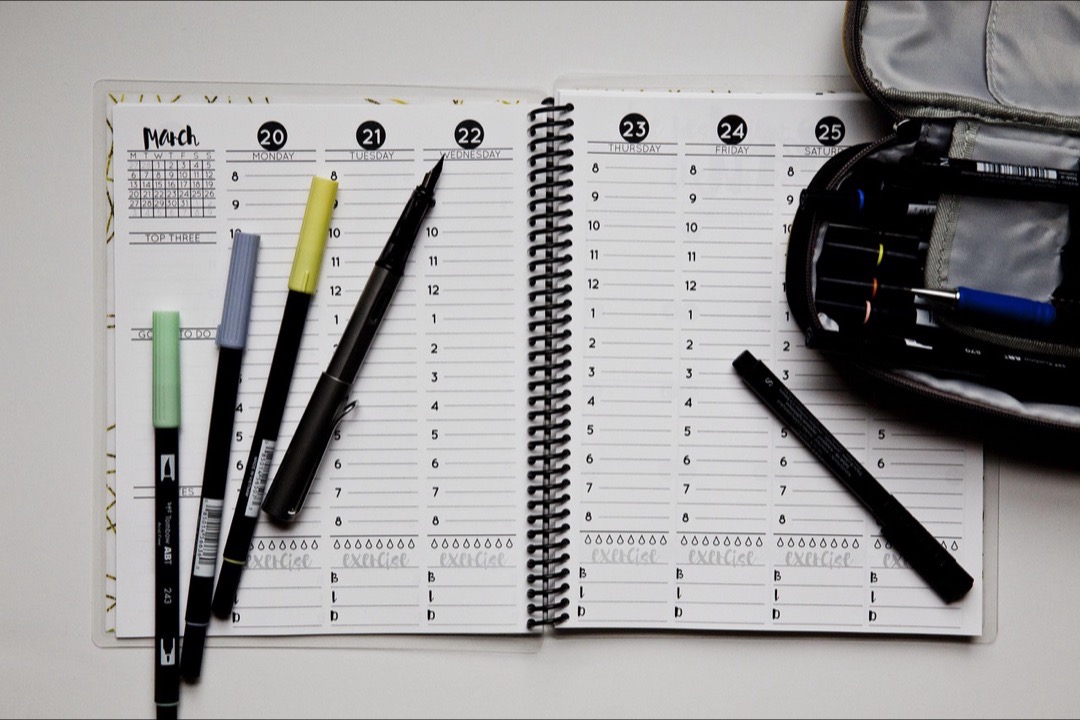
Every planner comparison on the internet follows the same script: lifestyle blogger picks her favorite, writes a few paragraphs about how cute the covers are, and declares a winner based on vibes. This is not that comparison.
I have managed projects with both of these planners on my desk — simultaneously, during a period when I was genuinely trying to decide which system deserved to be my daily driver. I tracked the same projects, the same deadlines, and the same meeting notes in both for three months. What follows is what I learned about where each system genuinely excels and where it falls short, based on daily professional use rather than a first-impressions unboxing.
The Core Difference: Disc-Bound vs Coil Binding
Before comparing anything else, you need to understand the fundamental architectural difference between these two planners, because it affects everything downstream — durability, customization, page quality, and how you interact with the planner daily.
Happy Planner uses a disc-bound system. Pages have a row of pre-punched mushroom-shaped holes along the binding edge that snap onto plastic or metal discs. The pages are not permanently attached — they lift off the discs, slide into new positions, and snap back on. You can add pages from other Happy Planner products, insert custom pages you punch yourself, remove pages you do not need, and rearrange sections at will. The planner is essentially a modular binder that looks like a book.
Erin Condren uses coil binding — a metal or plastic spiral that winds through holes punched along the binding edge, permanently attaching every page. Pages cannot be added, removed, or rearranged without physically cutting them from the coil or disassembling the binding entirely. What you receive is what you use, in the order it was designed.
This is not a minor aesthetic difference. It determines your entire relationship with the planner. If you are someone who tweaks, reorganizes, and customizes your planning system throughout the year — adding project sections when new work starts, pulling out completed months, inserting specialized trackers — the disc-bound system gives you that freedom. If you want a planner that works perfectly out of the box with zero setup or maintenance, and you trust the manufacturer’s layout decisions, coil binding delivers a more reliable daily experience.
Size Options: A Direct Comparison
Both brands offer three core sizes, but the dimensions do not align perfectly:
| Size Category | Happy Planner | Erin Condren |
|---|---|---|
| Small | Mini — 4.6 x 7 inches | A5 — 5.5 x 8.5 inches |
| Medium | Classic — 7 x 9.25 inches | Standard — 7 x 9 inches |
| Large | Big — 8.5 x 11 inches | Large — 8.5 x 11 inches |
The medium sizes are nearly identical and represent the most popular option from both brands. Happy Planner’s Mini is noticeably smaller than Erin Condren’s A5 — better for purse carry but with significantly less writing space. The large sizes from both brands are full letter-size and offer the most room for detailed daily planning but are too bulky for most bags.
If you are choosing between the two for desk use, the medium size from either brand is the right starting point. If portability matters and you need the planner in your bag daily, Erin Condren’s A5 offers a better balance of writing space and compact size than Happy Planner’s Mini.
Paper Quality and Pen Compatibility
Paper quality matters more than most comparison articles acknowledge, because it determines which pens you can use without bleed-through, ghosting, or feathering — and your pen choice affects how efficiently you capture information.
Erin Condren LifePlanner pages use a heavier, coated stock that handles a wider range of writing instruments. Gel pens glide smoothly without skipping. Fine-tip markers lay down clean lines without feathering. Highlighters add color without bleeding through to the reverse side. Even brush pens and some fountain pen inks perform acceptably, though very wet inks will show ghosting on the reverse page.
Happy Planner paper is thinner and uncoated. Standard ballpoint pens and most gel pens work fine. But heavier ink application — thick highlighter strokes, marker annotations, or wet gel ink — can bleed through or ghost visibly on the reverse page. If your planning style involves color coding with multiple pen types across every day’s entry, you will hit the paper’s limitations more frequently.
For single-pen users who write with a ballpoint or a fine gel pen, both planners perform well enough that paper quality alone should not drive your decision. For multi-pen planners who color code, annotate, and decorate, Erin Condren’s paper is meaningfully better.
Weekly Layout Options
Layout is where personal workflow preferences dominate the decision. Both brands offer multiple options, and the right choice depends entirely on how you structure your days.
Happy Planner Layouts
- Vertical — Three boxes stacked vertically for each day (morning, afternoon, evening or custom categories). Good for segmenting your day into time blocks or priority tiers.
- Horizontal — Full-width rows for each day, reading left to right. Better for to-do lists and people who write in sentences rather than short notes.
- Dashboard — A hybrid layout with smaller daily boxes on one side and larger sections for weekly goals, priorities, to-dos, and notes on the other. Best for people who think in weekly terms rather than daily.
Erin Condren Layouts
- Vertical — The signature LifePlanner layout. Three columns per day labeled with customizable headers (commonly Morning, Day, Night). Similar to Happy Planner’s vertical but with a different visual weight and spacing.
- Horizontal — Full-width rows for each day, similar to Happy Planner’s version.
- Hourly — Time-blocked columns showing hours from 6 AM to 9 PM. Each day gets a narrow column with lined time slots. This is the layout that professionals who schedule back-to-back meetings and time-block their workdays tend to prefer.
The hourly layout is Erin Condren’s strongest differentiator for professional use. No Happy Planner layout offers the same granular time-blocking capability out of the box. You can approximate it in a Happy Planner by printing custom hourly inserts and punching them in, but that requires effort and a disc-bound punch — it is not built into the system.
Happy Planner’s dashboard layout is unique to their line and is the best option for people who find daily planning too granular and prefer a weekly overview with space for big-picture thinking.
Customization and Personalization
Happy Planner: Modular Freedom
The disc-bound system is inherently customizable. You can:
- Add pages from any Happy Planner extension pack or compatible insert
- Punch and insert your own custom pages using a disc-bound punch
- Remove pages or entire sections you do not use
- Rearrange sections in any order
- Swap covers by lifting the old cover off the discs and snapping on a new one
- Upgrade discs to larger sizes to accommodate more pages
This flexibility is the system’s greatest strength and its greatest time sink. Some users spend more time customizing their planner than actually planning in it. If you enjoy the setup process as part of your productivity ritual, the Happy Planner system rewards that investment. If you want to open your planner and immediately start writing, the required setup time is a legitimate downside.
Erin Condren: Designed Customization
Erin Condren’s customization happens primarily at the point of purchase rather than throughout the year:
- Custom cover designs — upload photos, choose patterns, add monograms
- Coil color selection
- Layout choice (vertical, horizontal, hourly)
- Color theme for interior design elements
- Add-on pages at purchase (additional note pages, goal-setting sections)
After purchase, customization is limited to what you can attach to the coil (snap-in bookmarks, coil clips) or stick onto the pages (stickers, washi tape). You cannot add, remove, or rearrange the pages themselves.
This is a feature, not a limitation, for many users. The planner arrives ready to use without any setup, decision-making, or assembly. You open it and start writing. For professionals who want their planner to be a tool rather than a project, this out-of-the-box completeness has real value.
The Accessories Arms Race
Both brands have spawned enormous accessory ecosystems, but the shopping experience differs significantly.
Happy Planner accessories are available at major craft retailers — Michaels, Hobby Lobby, Walmart, and Amazon. MAMBI (the parent company) produces sticker books, washi tape sets, page inserts, dashboard cards, divider tabs, storage pouches, pen holders, and seasonal themed kits. Walking through the planner aisle at Michaels during back-to-school or New Year season is an experience — entire endcaps dedicated to Happy Planner products. The in-store browsing experience is a genuine differentiator for people who enjoy the tactile shopping ritual. Our best planners guide covers the top Happy Planner editions currently available if you want specific model recommendations.
Erin Condren accessories are sold primarily through erincondren.com, with limited availability at retailers like Target for select products. The first-party accessory line is curated — interchangeable covers, snap-in dashboards and bookmarks, designer sticker sheets, and petite planners that complement the LifePlanner. The online-only model means no impulse buying at craft stores, which is either a financial advantage or a missed experience depending on your perspective.
The Etsy third-party market for both systems is massive. Independent creators sell custom sticker kits, functional inserts, dashboard cards, and decorative elements for both planner sizes. Erin Condren’s column width (1.9 inches) has become the de facto standard for planner sticker designers, making EC-compatible stickers slightly easier to find than HP-specific sizes. Happy Planner’s broader retail presence and disc-bound compatibility with any punched insert offsets this with sheer volume of options.
Price Breakdown: What You Actually Spend
| Item | Happy Planner | Erin Condren |
|---|---|---|
| Base planner | 15 to 30 dollars | 55 to 75 dollars |
| Disc-bound punch | 20 to 30 dollars (one-time) | N/A |
| Metal disc upgrade | 8 to 15 dollars (one-time) | N/A |
| Sticker books (per year) | 30 to 80 dollars | 25 to 60 dollars |
| Extension packs / inserts | 15 to 40 dollars | 10 to 25 dollars |
| Cover upgrade | 8 to 15 dollars | Included at purchase |
| Realistic first-year total | 60 to 120 dollars | 80 to 150 dollars |
| Subsequent years | 40 to 90 dollars | 70 to 130 dollars |
Happy Planner has a lower entry price and a lower ongoing cost, but the gap is smaller than the base planner prices suggest. The punch and disc upgrades are one-time purchases that amortize over years, and the sticker and accessory spend — driven by how deeply you invest in the decorating side of planning — is comparable between the two systems.
If budget is a hard constraint, Happy Planner is the more accessible starting point. If you are buying a planner as a professional tool and the 30-to-50-dollar price difference is not a deciding factor, choose based on features and workflow fit rather than price.
Availability and Where to Buy
Happy Planner wins on availability. You can purchase planners, refills, and accessories at Michaels, Hobby Lobby, Walmart, Target, Amazon, and the MAMBI website. In-store availability means you can see, touch, and flip through planners before buying — valuable when layout choice matters. Amazon availability means you can have a planner on your desk in two days with Prime shipping.
Erin Condren sells primarily through erincondren.com. Select products appear at Target and Amazon, but the full product line — including cover customization, layout selection, and the complete accessory range — is only available on the Erin Condren website. Shipping times vary, and customized planners take additional production time.
For last-minute planner purchases, replacement supplies, or people who want to browse before buying, Happy Planner’s retail footprint is a practical advantage.
Which Planner Fits Your Workflow?
After using both systems extensively, the decision comes down to what kind of planner user you are:
Choose Happy Planner if:
- You want to customize, rearrange, and evolve your planner throughout the year
- Budget is a significant factor
- You enjoy the setup and personalization process as part of your productivity system
- You shop for planner supplies in-store at craft retailers
- You use primarily ballpoint or gel pens and do not need premium paper performance
- You want the flexibility to add custom pages, trackers, and inserts as your needs change
Choose Erin Condren if:
- You want a planner that is ready to use out of the box with zero setup
- Paper quality matters because you use multiple pen types, markers, or highlighters
- You time-block your days and want the hourly layout option
- Durability under heavy daily professional use is a priority
- You prefer a curated, designed experience over modular customization
- You are willing to pay a premium for better materials and build quality
The overlap choice — if you genuinely cannot decide, start with a Happy Planner Classic. The lower price means less financial commitment while you figure out your planning style, and the disc-bound system lets you experiment with different layouts and configurations. If after a few months you find yourself wanting better paper, more durability, and less fiddling with the binding, move to an Erin Condren LifePlanner for your next planner year with a clear understanding of what you need.
Neither planner is objectively better. Both are well-made products with passionate communities and extensive accessory ecosystems. The right choice is the one that matches how you actually plan — not how you aspire to plan, but how you realistically use a planner on a Tuesday afternoon when three meetings just got rescheduled.
For specific planner recommendations including models from both brands and other options, see our best planners roundup. If you are setting up a complete desk organization system alongside your planner, our guides to desk calendars for wall or desk reference, gel pens for smooth writing, and mechanical pencils for precise annotation cover the tools that pair best with a planning workflow. And if you keep important planning pages, project records, or reference sheets that need to survive beyond the planner year, a quality laminator turns any printed page into a durable reference card.
Buyer's Guide
The right planner depends less on which brand is objectively superior and more on how you actually plan. These six factors separate the two systems in ways that matter for daily use.
Binding System and Page Flexibility
This is the most fundamental difference between the two brands and the factor most likely to determine your satisfaction. Happy Planner uses a disc-bound system — pages have pre-punched holes that snap onto plastic or metal discs, allowing you to add, remove, and rearrange pages at will. You can insert custom sections, move a page from March to June, or pull out a page to photocopy without affecting the rest of the planner. Erin Condren uses coil binding — pages are permanently wound onto a metal or plastic coil in fixed order. You cannot add, remove, or rearrange pages without cutting them out. Coil binding is more durable under heavy daily use and keeps pages securely attached through months of flipping. If customization and flexibility matter most to your workflow, disc-bound wins. If you want a planner that stays intact and requires zero maintenance, coil binding wins.
Paper Quality and Pen Performance
Paper weight and coating affect every writing session. Erin Condren LifePlanner pages use a thicker, smoother stock with a slight coating that resists feathering and bleed-through from most pens, including many markers and brush pens. Fountain pen users report good performance on EC paper with most ink types. Happy Planner paper is adequate for ballpoint and gel pens but shows more feathering with wet inks and some bleed-through with markers and highlighters. If your planning style involves color coding with multiple pen types — gel pens, felt-tips, highlighters, and markers — Erin Condren's paper handles the variety better. If you use a single ballpoint or gel pen, both papers perform well enough that the difference is negligible.
Cost of Ownership Over a Full Year
The sticker price of each planner tells only part of the cost story. A Happy Planner Classic runs 15 to 30 dollars depending on the edition and retailer. An Erin Condren LifePlanner starts at 55 dollars and climbs past 70 with cover customization. But the annual cost includes refills, accessories, and consumables. Happy Planner's lower base price is offset by the accessories that make the system work well — a disc-bound punch (20 to 30 dollars) if you want to add custom pages, extension disc packs, and sticker books that add 5 to 15 dollars each. Erin Condren includes more out of the box — sticker sheets, note pages, and organizational dividers — but charges a premium for additional accessories. A realistic first-year cost for a moderately accessorized Happy Planner setup is 60 to 120 dollars. For Erin Condren, expect 80 to 150 dollars. The gap narrows in subsequent years since the Happy Planner punch and discs are reusable.
Layout Options and Planning Styles
Both brands offer multiple weekly layout styles, but the options differ. Happy Planner offers vertical (three boxes per day stacked vertically), horizontal (days listed left to right with full-width rows), and dashboard (a hybrid with smaller daily boxes plus larger weekly priority and notes sections). Erin Condren offers vertical (their signature three-section columns for morning, day, and evening), horizontal (full-width day rows), and hourly (time-blocked columns from 6 AM to 9 PM). The hourly layout is unique to Erin Condren and is the strongest option for professionals who time-block their schedules. Happy Planner's dashboard layout is unique to their line and works well for people who want a weekly overview without granular daily scheduling. Both brands also offer undated versions for users who start planning mid-year or want to skip weeks without wasting pages.
Accessories and Customization Ecosystem
The accessory ecosystems around both planners are massive, driven by both official products and a thriving Etsy and independent creator market. Happy Planner's parent company, MAMBI, produces an extensive line of sticker books, washi tape, page inserts, dividers, pouches, and seasonal kits available at craft stores like Michaels, Hobby Lobby, and Walmart. The disc-bound format also means any hole-punched insert from a third-party creator works with the system. Erin Condren's first-party accessory line is smaller but curated — snap-in bookmarks, coil clips, interchangeable covers, and designer sticker packs sold through their website. The Etsy ecosystem for both brands is enormous, but Erin Condren's column dimensions have become a de facto standard for planner sticker designers, meaning EC-sized stickers are slightly easier to find. If in-store browsing and impulse accessory buying is part of your planning ritual, Happy Planner's retail presence is unmatched.
Durability and Long-Term Use
Erin Condren planners are built to survive a full year of daily professional use without structural issues. The coil binding keeps pages permanently attached through thousands of page flips, the laminated covers resist scratching and corner damage, and the overall construction feels solid in hand. Happy Planner's durability depends heavily on how it is configured. Stock plastic discs are the weak point — they can warp under heat or pressure, causing pages to detach during use. Upgrading to metal discs and using a sturdy cover eliminates most durability concerns. The laminated covers on both brands hold up well. If you plan to carry your planner daily in a bag, toss it on desks, and flip through it dozens of times a day, Erin Condren's coil binding requires less maintenance. If you set up a Happy Planner with metal discs and treat the binding with reasonable care, durability is comparable.
Frequently Asked Questions
Can you use Erin Condren stickers in a Happy Planner?
Is the Erin Condren LifePlanner worth the higher price?
Which planner is better for work and project management?
Do Happy Planner discs break or warp over time?
Can you add or remove pages in an Erin Condren planner?
Related Articles
About the Reviewer

Sarah Chen, CAP, PMP
B.A. Business Administration, UCLA
Sarah Chen spent 10 years in office management and operations at Fortune 500 companies before founding DeskRated in 2026. After managing supply budgets for teams of 50+ people and testing thousands of products through daily use, she started writing the honest, no-fluff supply reviews that office professionals actually need. Sarah holds both CAP and PMP certifications and is based in Los Angeles.