Mechanical vs Wooden Pencils: Which Should You Actually Use?
Sarah Chen compares mechanical pencils and wooden pencils on precision, cost, line consistency, standardized-test rules, sustainability, and best use cases in 2026.
Updated
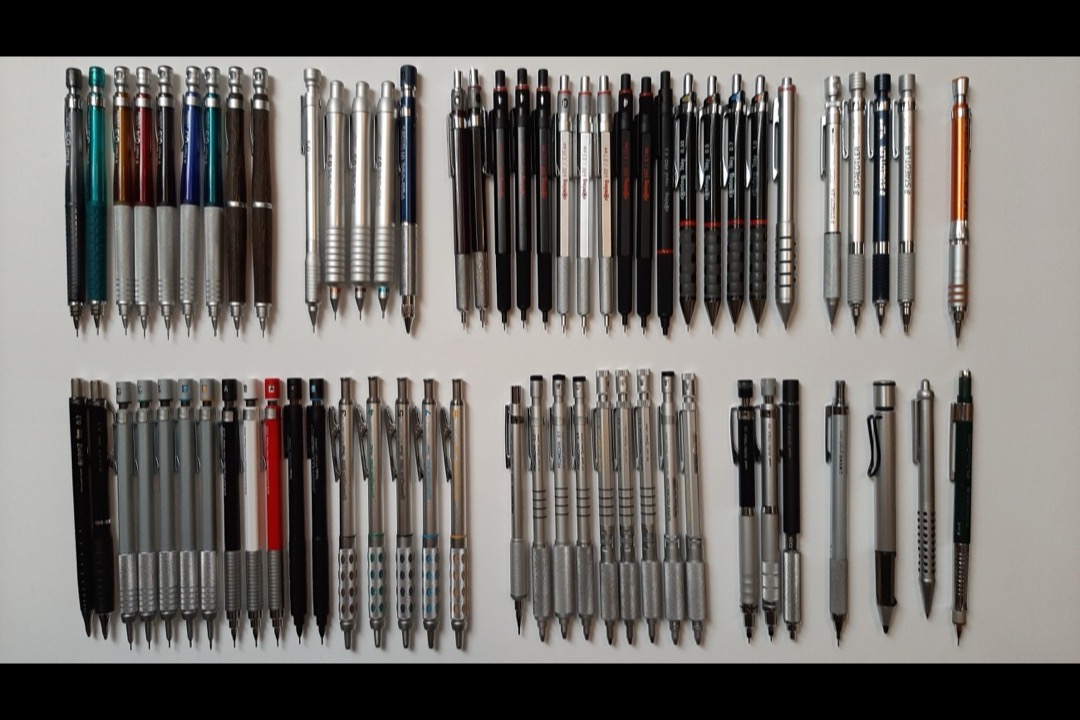
I keep both on my desk. A tin of Palomino Blackwing 602s sits next to a rOtring 600 in 0.5mm, and I reach for them in roughly equal proportion depending on what I am working on. In my admin work I spend a lot of time taking notes in meetings, annotating printed reports, working through project plans, and drafting outlines by hand before typing anything up. Some of that work rewards the unchanging line consistency of a mechanical pencil. Some of it — especially the first-draft thinking and the quick sketched diagrams — is better served by a freshly sharpened wooden pencil that lets me shift from a hairline to a broad stroke without switching tools.
The mechanical-versus-wooden question is one of those comparisons where the easy answer (“just pick one”) is wrong. These are genuinely different tools with different strengths, and the right choice depends on what you are actually writing, who is using the pencil, and under what conditions. The price gap between a pack of Ticonderogas and a quality refillable mechanical is not huge, but the use cases diverge more than most buyers realize.
If you came here primarily looking for specific product recommendations rather than a category comparison, our best mechanical pencils roundup covers the full range from student workhorses to premium drafting tools. This article is the framework for deciding which category is right for you in the first place.
The Core Difference (30-Second Version)
A wooden pencil is a single-use tool: a hexagonal or round cedar barrel wrapped around a fused graphite-clay core. You sharpen it to expose more core. When the core is used up, the pencil is gone.
A mechanical pencil is a holder with a replaceable lead. The body contains a mechanism — push-click, twist, or shake — that advances a thin cylindrical graphite lead from a reservoir. When the lead runs out, you refill the reservoir from a tube of leads that costs a few dollars.
That single structural difference drives every other distinction: wooden pencils give you variable line width at the cost of frequent sharpening; mechanical pencils give you consistent line width at the cost of more complex construction and occasional lead breakage. Everything else is downstream of that choice.
How Mechanical Pencils Work
A mechanical pencil is a surprisingly clever piece of engineering for something you can buy for a few dollars. Inside the plastic or metal barrel is a small mechanism — usually a spring-loaded clutch with metal jaws — that grips a lead and advances it incrementally through a guide sleeve at the tip.
Click, Twist, Shake Mechanisms
Most mechanical pencils use one of three advance mechanisms. The click mechanism is the most common: a push on the top or side of the pencil extends a few tenths of a millimeter of lead through the sleeve. Pentel, Bic, Paper Mate, and most entry-level mechanical pencils use click advance. Twist mechanisms are found on older classic pencils and on some premium European designs — a twist of the barrel advances lead, often with finer resolution than a click. Shake mechanisms appeared in the early 2000s and let you advance lead by flicking the pencil downward; they are polarizing because the mechanism sometimes advances lead when you did not intend it to.
One modern refinement worth knowing is the Uni Kuru Toga’s auto-rotation system: a small internal gear rotates the lead a fraction of a turn every time you lift the pencil from the paper. The result is that the lead wears evenly around its entire circumference instead of developing a chiseled flat spot on one side, which keeps the line width consistent and dramatically reduces breakage. Once you have used a Kuru Toga for a few days, going back to a standard mechanical pencil feels noticeably worse for extended writing.
Lead Diameters and Use Cases
Mechanical pencils come in four standard lead diameters, and the right one depends entirely on what you are doing:
| Diameter | Best For | Notes |
|---|---|---|
| 0.3mm | Technical drafting, small handwriting, fine illustration | Breaks easily; pair with a retractable sleeve |
| 0.5mm | Professional and academic writing, math, office notes | The correct default for most buyers |
| 0.7mm | Heavy-handed writers, general office use, students | Higher breakage resistance than 0.5mm |
| 0.9mm / 1.3mm | Sketching, rough drafting, carpentry-style marking | Thick lines, near-zero breakage |
Most buyers should start with 0.5mm unless they have a specific reason to go narrower or wider. If you are a heavy-handed writer who finds yourself snapping 0.5mm leads regularly, 0.7mm eliminates that problem without a meaningful downgrade in line quality for most writing tasks.
How Wooden Pencils Work
Wooden pencils are structurally simple compared to mechanical pencils, but the manufacturing process has been refined over more than a century. A standard pencil is made from two grooved slats of cedar or basswood, each slat gets a fused graphite-clay core laid into its groove, the slats are glued together around the cores, and the finished block is milled and cut into individual hexagonal or round pencils.
Graphite-Clay Core and the H/B Hardness Scale
The core of a wooden pencil is not pure graphite — it is a fused mixture of graphite and clay. The ratio of graphite to clay determines how hard or soft the core is and therefore how dark and waxy the line it produces. More graphite and less clay makes a softer, darker core. More clay and less graphite makes a harder, lighter core.
The hardness grade is printed on the barrel using the H/B scale. H stands for “hard,” B stands for “black” (soft and dark). HB sits in the middle — the standard writing default, equivalent to the American #2 pencil. The full range in a professional drawing set typically goes from 9H (very hard, very light, like construction lines) through 2H, H, HB, B, 2B, 4B, 6B, to 9B (very soft, very dark, heavy graphite deposit). A #1 pencil in the American system is softer than #2; a #3 is harder. Most people never need anything but HB for writing, but artists routinely keep five or six different grades on hand for different layers of a single drawing.
Why Sharpening Changes More Than the Point
Sharpening a wooden pencil is not just about restoring the tip — it changes the writing experience across the next session of use. A freshly sharpened pencil produces a fine hairline with a crisp, precise feel. As you write, the tip wears down and the line gradually broadens; the pencil also starts to feel slightly different in the hand as the point becomes rounder and the drag on the paper increases. By the time you have written a couple of pages, the line is noticeably broader than when you started.
For artists, this is a feature, not a bug. You can deliberately dull a pencil to lay down broad tonal strokes, then sharpen it again for fine details. For office writing and math work, it is a minor frustration that drives most everyday users toward mechanical pencils where the line stays constant. A good hand-crank sharpener (Classroom Friendly is the most-recommended model) or a small pocket sharpener solves the sharpening friction for most wooden pencil users.
Head-to-Head Comparison
Line Consistency and Precision
Mechanical pencils win on line consistency by a wide margin. The line width does not change from the first word of the morning to the last word of the afternoon. For technical work, detailed notation, math, and any context where a consistent stroke is a functional requirement, that is a decisive advantage. Wooden pencils produce variable line width across a single sharpening cycle, which is why drafting on a wooden pencil requires frequent sharpening (or a dedicated lead holder and a lead pointer, which is effectively a manual mechanical-pencil workflow).
Comfort and Ergonomics
This is more subjective. Wooden pencils are light, balanced, and have a natural grip on the bare wood. Mechanical pencils range from cheap slick plastic (uncomfortable after an hour) to premium knurled metal (comfortable all day). The best premium mechanical pencils — rOtring 600, Pentel GraphGear 1000, Lamy 2000 — have better grip and weight distribution than any wooden pencil, but at a price that puts them in a different conversation than a pack of Ticonderogas.
Lead Breakage vs. Tip Fracture
Both pencil types have failure modes. Mechanical pencil leads snap under too much writing pressure, especially in 0.3mm and 0.5mm diameters. The fix is a thicker lead diameter, premium lead brands (Pentel Ain, Uni NanoDia), and keeping lead extension short. Wooden pencil tips fracture when dropped or when sharpened too aggressively, and a fractured tip can mean re-sharpening and losing a couple of millimeters of usable pencil. Neither failure is catastrophic, but both are annoying, and each category’s fix is different.
Erasability
Both erase well with a good eraser. The built-in erasers on mechanical pencils are usually small, harder, and lower-quality — fine for a small correction but not adequate for serious erasing. The built-in erasers on wooden pencils (Ticonderoga, Palomino Blackwing) are larger and generally of better quality. For any serious erasing work, a dedicated block eraser (Staedtler Mars Plastic, Pentel Hi-Polymer) outperforms either built-in option regardless of pencil category.
Cost Per Use
| Setup | Approx. Upfront | Approx. Lifetime | Cost Per Hour of Writing |
|---|---|---|---|
| Box of 24 Ticonderogas | Low | ~1 year daily use | Very low |
| Mid-range mechanical + lead refills | Medium | 3–5 years | Low |
| Pentel GraphGear 1000 + refills | Higher | 5–10+ years | Lowest |
| Disposable plastic mechanical | Low | Weeks | High per word |
| Palomino Blackwing box of 12 | Higher | ~6 months daily use | Medium-high |
A quality refillable mechanical pencil has the lowest cost per hour of writing over its lifetime. A box of standard wooden pencils is the cheapest entry point. Disposable plastic mechanical pencils are the worst value in either category.
Which Is Better for the Environment?
A 2025 life-cycle assessment examining standard wooden pencils and refillable mechanical pencils found that a single wooden pencil produces roughly 0.16 kg CO2 equivalent across its full life cycle — sourcing the wood, milling, inserting the graphite-clay core, finishing, shipping, and eventual disposal. Wooden pencils are largely biodegradable, and FSC-certified options from brands like Palomino Blackwing and Faber-Castell use sustainably managed forest wood.
Mechanical pencils carry substantially higher upfront manufacturing emissions — plastic and metal bodies, complex internal mechanisms, more energy-intensive assembly. But a refillable mechanical pencil that lasts three to five years amortizes that upfront footprint across an enormous volume of writing. A rOtring 600 used for a decade with periodic refills has a very low per-page footprint compared to the wooden pencils you would have used to produce the same volume of writing.
The genuinely bad environmental choice is the cheap disposable plastic mechanical pencil — it combines the higher manufacturing footprint with a short single-use lifecycle. If sustainability matters, pick either FSC-certified wooden pencils you will use until sharpened to nubs, or one quality refillable mechanical pencil you will keep in service for years. Avoid the disposable middle ground.
Standardized Tests: Why Mechanical Pencils Are Banned on the SAT and ACT
The SAT and ACT banned mechanical pencils on their paper-based bubble sheets for a technical reason that most students never hear explained: the optical mark recognition (OMR) scanners that grade the bubble sheets are calibrated to the specific graphite density of a #2 HB wooden pencil. Mechanical pencil leads are manufactured to slightly different formulas — density, binder composition, and core diameter all vary across brands — and the scanners can misread or outright reject bubbles filled in with a mechanical pencil. A missed bubble on a standardized test is not a risk worth taking.
In March 2024 the College Board moved the SAT fully digital in the United States, which eliminated the paper bubble sheet and therefore the mechanical-pencil prohibition for that test. The ACT still runs paper-based testing for most administrations, and the #2 wooden pencil rule still applies there. AP exams, the paper GRE, MCAT sections that include hand-scored paper components, and most state-administered standardized school testing all use the same optical-scan setup and the same wooden-pencil requirement.
For any paper standardized test, the advice is unchanged: bring a handful of sharpened #2 wooden pencils (Ticonderoga is the universally-recommended standard) and a separate block eraser. Use your mechanical pencil for scratch work in the test booklet margins if you prefer it for math, but fill the bubble sheet with a wooden pencil.
Use-Case Decision Guide
Drafting and Technical Work
Mechanical pencils dominate. A 0.5mm or 0.3mm mechanical pencil with a retractable sleeve — Pentel GraphGear 1000, Staedtler Mars 925, rOtring 600 — is the standard tool for engineering, architectural drafting, and technical illustration. Consistent line weight is a functional requirement, and sharpening is friction that interrupts workflow. The best mechanical pencils for technical work are a specific subset of the broader category — look for metal sleeves, knurled grips, and 0.3mm or 0.5mm leads.
Office Note-Taking
Mechanical pencils hold a slight edge for most office note-taking because you never stop to sharpen, the line stays consistent, and the barrel fits well in a shirt pocket. That said, some writers prefer the feel of a Ticonderoga or a Palomino Blackwing for extended journaling or analog thinking. If you want a permanent mark instead of pencil, a good gel pen or fountain pen is the right tool — pencils are for work that needs to be erasable.
Sketching and Fine Art
Wooden pencils win decisively. Tonal range, line variation, the ability to use the side of an exposed lead for broad strokes — these are all wooden-pencil strengths that mechanical pencils cannot match. A set of Faber-Castell 9000 or Staedtler Mars Lumograph pencils in grades 2H through 6B is the standard starter setup. For a premium experience, Palomino Blackwing 602s (for writing and soft sketching) or Mitsubishi Hi-Uni (for fine drawing) are worth the premium.
Classroom and Testing
Wooden pencils, no debate. Schools specify #2 HB wooden pencils for a reason, and standardized tests require them. Ticonderoga is the de facto standard. For younger children, triangular-cross-section pencils like the Staedtler Noris Triplus can make grip easier.
Left-Handed Writers
Mechanical pencils often have a slight edge for left-handed writers because the retractable tip on higher-end models (Pentel GraphGear 1000) reduces graphite smudging as the hand drags across fresh marks. Some left-handed writers also find the consistent, lighter mark of a 0.5mm mechanical pencil easier to work with than a wooden pencil tip that gets progressively broader and more smudge-prone as it wears.
Brands Worth Knowing
A short list of the brands that come up repeatedly in serious pencil discussion:
Wooden pencils: Ticonderoga (the American classroom standard, reliable and cheap); Palomino Blackwing (premium cedar-bodied writing pencils — the 602, the Pearl, and the 811); Faber-Castell 9000 (German drawing pencil, consistent across hardness grades); Staedtler Mars Lumograph (the other German drawing standard); Tombow Mono 100 (Japanese premium writing pencil, extraordinary smoothness); Mitsubishi Hi-Uni (another Japanese premium option).
Mechanical pencils: Pentel GraphGear 1000 (retractable metal sleeve, knurled grip, the drafting workhorse); rOtring 600 (solid brass barrel, knurled grip, the professional classic); Uni Kuru Toga and Kuru Toga Roulette (auto-rotating lead mechanism, the single best recent innovation in mechanical pencils); Lamy 2000 (design classic, 0.5mm and 0.7mm, minimalist German construction); Pentel Sharp (budget workhorse, available everywhere, solid quality for the price). Our best mechanical pencils roundup goes into specifics on current models and where each earns its place.
For any serious writing setup, keeping both categories accessible and well-organized matters. A good desk organizer with vertical pencil cups protects wooden pencils from rolling and keeps mechanical pencils upright so the mechanisms do not jam from stored grit. A set of quality highlighters paired with pencil-marked printouts is one of the most effective analog study setups I use regularly — pencil for annotation, highlighter for emphasis, and each tool earns its keep by doing what the other one cannot.
Verdict: The Decision Framework
The question is not which category is better. It is which category is right for what you are actually doing.
Buy mechanical pencils if your primary use case is office note-taking, math work, technical drafting, or any writing task that benefits from consistent line width and uninterrupted workflow. Start with a 0.5mm mid-range model (Pentel Sharp or Uni Kuru Toga), and upgrade to a rOtring 600 or Pentel GraphGear 1000 if you write daily and want the best long-term tool. The per-year cost is very low once you factor in refill economics.
Buy wooden pencils if your primary use case is sketching, drawing, classroom work, standardized testing, carpentry marking, or expressive handwriting. Start with a pack of Ticonderogas for general use and add Palomino Blackwings or Faber-Castell 9000s if you want a premium experience. For artwork, keep a range of hardness grades (2H, HB, 2B, 4B, 6B) on hand.
Buy both — honestly, this is what most serious writers end up doing. A mechanical pencil for most daily office writing, and a small cup of sharpened wooden pencils for sketching, margin notes, and the occasional standardized test. They are not competing products. They are different tools that solve different problems, and a good desk has both.
Buyer's Guide
The right pencil for you depends on what you are writing, how much you write, and where you write it. These six factors are the ones that actually change the decision — cutting through the marketing copy and the nostalgia on both sides of the wooden-versus-mechanical argument.
Primary Use Case and Writing Environment
The single most decisive question is what you are actually doing with the pencil. For drafting, engineering drawings, and technical work that requires perfectly consistent line weight, mechanical pencils are the correct tool — the cylindrical lead produces a uniform stroke that a sharpened wooden tip cannot match over extended use. For office note-taking, crossword puzzles, journaling, and day-to-day writing tasks in a controlled environment, mechanical pencils hold a slight edge because you never stop to sharpen and the line stays consistent. For classroom work and any standardized testing with optical-scan bubble sheets (ACT paper, many state tests, AP exams), wooden #2 pencils are required or strongly recommended — the scanners are calibrated to HB graphite density. For sketching, drawing, portraiture, and any artwork involving tonal range or shading, wooden pencils win decisively because you can control line width, value, and texture by rotating the pencil, varying pressure, and using the side of an exposed lead. For rough carpentry marking, wooden carpenter pencils dominate — they are durable, cheap, and survive being stored in a toolbelt. Matching the pencil to the environment matters more than loyalty to either category. Many people — myself included — end up with both on the desk, each reserved for the tasks where it genuinely wins.
Line Consistency and Precision Requirements
Mechanical pencils produce the same line width from the first word of the day to the last, because the lead diameter never changes. For math work, detailed annotation, technical drawing, and any context where line consistency is a functional requirement, that is a real advantage. A wooden pencil writes a hairline when freshly sharpened and a progressively broader line as the tip wears down — which is why drafting on a wooden pencil requires sharpening every few minutes to maintain precision. On the other hand, that same variability is a feature for artists. Tonal drawing depends on the ability to lay down a fine line with a sharp tip and a broad soft stroke with a blunt side, often within the same sketch. The Uni Kuru Toga's auto-rotation mechanism partially addresses the wooden-pencil wear issue by rotating the mechanical lead as you write, which keeps the writing angle consistent and prevents the chiseled flat spot that develops on static leads. For the most demanding precision work — engineering, architectural drafting, fine illustration — a 0.3mm or 0.5mm mechanical pencil is the standard tool, often used alongside a drafting eraser and a dedicated lead holder. If your work depends on precision, mechanical pencils almost always win. If it depends on expressive line variation, wooden pencils do.
Lead Diameter and Hardness Grade
Lead diameter and hardness grade are the two variables that most directly determine how a pencil feels and performs. For mechanical pencils, diameter options are 0.3mm (fine technical work and small handwriting), 0.5mm (the professional and academic default), 0.7mm (general office use and heavier-handed writers), and 0.9mm or 1.3mm (sketching, rough work). 0.5mm is the right starting point unless you have a specific reason to deviate. Lead hardness in mechanical pencils is most commonly HB, with 2B and 2H options available from brands like Pentel Ain and Uni NanoDia. For wooden pencils, the equivalent scale runs from 9H (very hard, very light) through H, HB (the standard #2 equivalent), B, 2B, and onward to 9B (very soft, very dark). HB is the writing default. 2B is a good choice for sketching and for writers who want slightly darker line color without switching to a pen. Technical drafting often uses 2H or 3H for construction lines. Artists typically keep a range of grades — 2H, HB, 2B, 4B, 6B — on hand for different layers of a single drawing. Match the hardness grade to the job, not to a general preference. Getting diameter and grade right is what turns a frustrating pencil into a pleasant one.
Comfort, Grip, and Extended Writing Sessions
For long writing sessions — two hours of meeting notes, a full afternoon of studying, or an extended journaling session — grip comfort and pencil weight matter more than most buyers expect. Mechanical pencils vary widely here. Cheap plastic mechanical pencils are light and slick, which encourages overgrip and leads to hand fatigue. Premium options like the rOtring 600 have knurled metal grips and deliberate weight distribution that lets the pencil rest naturally in the hand without squeezing. The Pentel GraphGear 1000 uses a metal mesh grip pattern that provides traction without pressure. The Uni Kuru Toga Roulette adds a metal knurled grip to the standard Kuru Toga mechanism. Wooden pencils are universally light and unweighted, which works fine for short sessions but can encourage a tighter grip during extended writing as you instinctively compensate for the lack of feedback. Some writers add a rubber grip accessory — the kind sold for children's pencils — to wooden pencils for extended use. Triangular-cross-section wooden pencils like the Staedtler Noris Triplus or the Faber-Castell Grip 2001 solve the grip problem at the source with a shape that naturally positions the fingers. For anyone writing more than an hour a day on a regular basis, a good grip is worth paying for. Hand fatigue compounds over time, and cheap pencils exact a real cost on wrists and fingers.
Cost Over Time — Upfront vs. Refills vs. Sharpening
The economics of the two categories look different upfront than they do over years of use. A box of 24 standard Ticonderoga wooden pencils costs about the same as a mid-range mechanical pencil. Each wooden pencil delivers roughly 45,000 words of writing before it is sharpened away to a nub, giving the box well over a million words total. A mechanical pencil, in contrast, is a one-time purchase — plus ongoing lead and eraser refills that cost only a few cents per hundred leads. A single Pentel GraphGear 1000 or rOtring 600 used daily will last five to ten years or longer with refills; the per-year cost is very low. A disposable plastic mechanical pencil thrown away after the lead runs out is the worst-case economy — higher upfront cost than a wooden pencil, less writing per unit, and no refill amortization. For a hobbyist artist using dozens of wooden pencils a year across multiple hardness grades, the wooden-pencil cost is genuinely meaningful, and premium brands like Palomino Blackwing push the per-pencil price high enough that the total can exceed a good mechanical pencil within a year or two. For casual office use, the long-term cost favors a quality refillable mechanical pencil. For testing, classroom, and general-purpose personal writing, a pack of wooden pencils is the cheapest possible setup. Neither answer is universal — the honest approach is to estimate your actual annual usage and do the math.
Sustainability and End-of-Life Considerations
Neither category is obviously greener than the other, and the honest answer requires thinking in terms of use duration rather than category loyalty. A 2025 life-cycle assessment measured a single standard wooden pencil at roughly 0.16 kg CO2 equivalent across its full life cycle — sourcing cedar or basswood, milling the barrel, manufacturing and inserting the graphite-clay core, applying finish, shipping, and disposal. Wooden pencils are largely biodegradable, and certified options from brands using FSC-certified wood (Palomino Blackwing, Faber-Castell, some Staedtler lines) are grown in sustainably managed forests. Mechanical pencils carry substantially higher upfront manufacturing emissions — plastic and metal bodies, complex internal mechanisms, more energy-intensive assembly. However, a quality refillable mechanical pencil that lasts three to five years amortizes that upfront footprint across an enormous volume of writing, and lead refills themselves have a small per-use footprint. The worst case for sustainability is a cheap disposable mechanical pencil used briefly and thrown away — it combines the higher manufacturing emissions with a short single-use lifecycle. If sustainability is a buying criterion, the two genuinely good answers are either FSC-certified wooden pencils that will be used until sharpened to a nub, or a single quality refillable mechanical pencil — rOtring 600, Pentel GraphGear 1000, a good Lamy or Kaweco mechanical — kept in service for years. Avoid the middle ground of disposable mechanicals.
Frequently Asked Questions
Can you use a mechanical pencil on the SAT or ACT?
Which pencil is better for drawing and sketching?
Are mechanical pencils more environmentally friendly than wooden pencils?
What lead diameter should I choose: 0.3mm, 0.5mm, 0.7mm, or 0.9mm?
Why do mechanical pencil leads break so often?
Related Articles
About the Reviewer

Sarah Chen, CAP, PMP
B.A. Business Administration, UCLA
Sarah Chen spent 10 years in office management and operations at Fortune 500 companies before founding DeskRated in 2026. After managing supply budgets for teams of 50+ people and testing thousands of products through daily use, she started writing the honest, no-fluff supply reviews that office professionals actually need. Sarah holds both CAP and PMP certifications and is based in Los Angeles.