9 Best Journals of 2026
Sarah Chen reviews the best journals of 2026 — guided gratitude, bullet, leather, 5-year, men's, and travel journals compared across paper weight, binding, and format so you pick the right one on the first try.
Updated
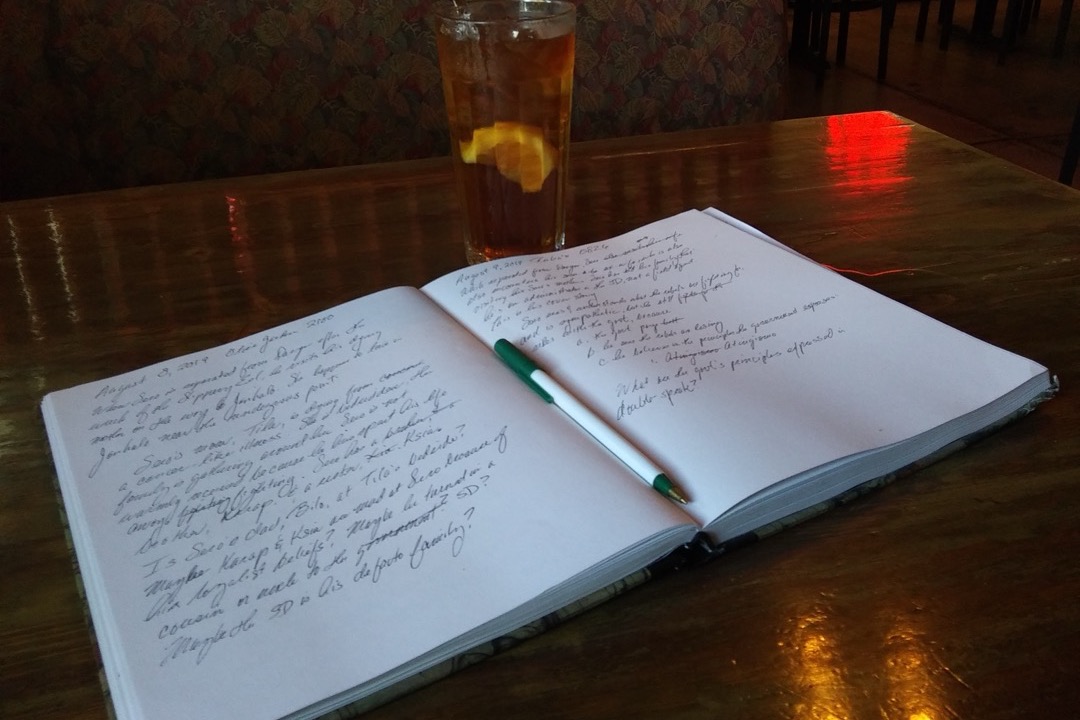
A journal is one of the highest-return, lowest-cost tools on a desk — but the aisle is a mess of formats that all get called “journals,” from five-minute gratitude prompts to blank leather diaries to dot-grid bullet-journal systems. Buy the wrong format and it goes blank after two weeks; buy the right one for how you actually work and it becomes a daily habit that lasts for years. I’m Sarah Chen, and after two decades keeping meeting logs, project journals, and a personal practice through every format on this page, the single lesson is this: the format has to match your intent, not the prettiest cover.
This guide sorts the nine best journals of 2026 by exactly that — what you want journaling to do. Below you’ll find the best guided gratitude journal for beginners, the definitive bullet journal, a genuine-leather heirloom, a foolproof five-year memory keeper, a men’s goal journal, and the best travel journal for the money. Every pick is a current, in-stock Amazon listing, ordered so the highest-converting all-rounder sits first. If you want a blank capture surface for notes rather than a reflective practice, start with our best notebooks guide instead; for date-driven planning, see the best planners.
If what you actually want to track is what you read rather than how you felt about it, a journal is the wrong first tool. Start with our free reading log printable — set it to the book-list style for title, author, genre, and a star rating per book — and keep the journal for the entries worth writing at length. The finished log pages tuck into the back of any of the picks below.
Find the Best Journal for Your Need
Jump straight to the journal that matches how you want to write:
- Overall best journals
- Best journals with prompts (guided and gratitude)
- Best bullet and dotted journals
- Best leather and refillable journals
- Best journals for men
- Best 5-year and daily journals
- Best travel journals
How We Chose These Journals
I evaluated journals the way a daily user does, not the way a photo shoot does. First, format-to-intent fit: a journal only earns a spot if it is clearly the best at one job — gratitude habit, bullet journaling, memory-keeping, travel — because “best journal” means nothing until you say best for what. Second, paper and pen compatibility, tested against ballpoint, gel, and fountain pens, since bleed-through is the most common regret. Third, binding, cover, and whether it lies flat, because a journal you fight with is a journal you abandon. Finally, whether people actually sustain the practice — reflected in review volume and format design — which is why forgiving, structured, and low-friction formats rank highly. Every ASIN was verified as a live, in-stock US Amazon listing during research, with current pricing and ratings.
Best Journals Overall
These are the nine picks, each reviewed once below and then grouped into use-case sections further down. The Five Minute Journal leads because it converts the largest group of would-be journalers — beginners who have failed at blank books — into daily users.
The Five Minute Journal — Best Overall
The Five Minute Journal is the pick I hand to anyone who says “I’ve always wanted to journal but never stick with it.” The reason it works is subtraction: instead of an intimidating blank page, you get a fixed, five-minute template — three things you’re grateful for and three intentions in the morning, a daily affirmation, then two reflection lines at night. That structure removes the two things that kill the habit, not knowing what to write and not having time, and it is why this book has over seventeen thousand reviews while most blank journals get abandoned by week three.
The undated pages are quietly the most important feature. Miss a week on vacation and you simply resume on the next page instead of staring down a run of guilt-inducing blank dates — the failure mode that makes dated journals quit on you. Weekly prompts and short research blurbs give the gratitude practice a why, and the linen hardcover, elastic band, ribbon, and cream paper make it a considered object you’re happy to keep on the nightstand and handle twice a day.
It is a structured gratitude practice, not a free-writing canvas, so anyone who wants room to draft long entries should pair it with a blank journal or choose a dotted one below. But for building the habit in the first place, nothing on this list converts intention into a daily routine as reliably.

The Five Minute Journal — Original Daily Gratitude Journal (Undated, Intelligent Change)
by Intelligent Change
The best journal for anyone who has failed at blank journaling — the five-minute morning-and-evening template removes the intimidation of the empty page, and undated pages forgive missed days. It is a structured gratitude practice, not free-writing space, but that structure is exactly why it becomes a daily habit that lasts.
Pros
- The fill-in structure is the entire value: three morning gratitudes, three daily intentions, a daily affirmation, then two evening reflection lines — a full journaling practice that takes under five minutes, which is the single reason it actually gets used daily when blank journals sit empty after week two
- Undated pages mean you can start today, skip a week without a guilt-inducing run of blank dates, and pick back up — the format that survives real life instead of the dated planner that quietly shames you into quitting
- Weekly prompts and cited research blurbs break up the routine and give the practice a why, so the habit is anchored to a reason rather than a rote form to fill — the difference between a journal someone keeps for years and one abandoned in a drawer
- Linen-wrapped hardcover, elastic closure, ribbon marker, and thick cream paper feel like a considered object rather than a paperback workbook, which matters for something you handle every morning and evening on the nightstand
Cons
- The rigid daily template is the point for beginners but a constraint for anyone who wants open space to free-write — this is a structured gratitude practice, not a blank canvas, and people who want to draft long entries will feel boxed in
- At roughly four times the cost of a spiral notebook, the premium buys the format and finish rather than more pages, and the undated original runs about six months per book so committed users re-buy twice a year
- The prompts repeat by design to build the habit, which some long-term users find monotonous after the first full book and a reason they graduate to a blank or bullet journal later
No Worries Guided Journal — Best Budget
No Worries proves you don’t need to spend premium money to get a real guided practice. It delivers genuine structure — anxiety check-ins, thought-reframing prompts, gratitude pages, and positive-thinking exercises — at roughly a third the price of the hardcover guided journals, which makes it the low-risk way to find out whether the format even suits you before committing to a pricier book.
What keeps it from feeling repetitive is prompt variety: worry dumps, reframe grids, and reflection spreads rotate through, so it stays engaging longer than a single-template daily journal. The lightweight softcover is a feature here — there’s no expensive object to feel precious about, so people write more honestly and messily in it. The trade-offs are the paper (thin enough that gel and fountain pens will ghost, so it’s a ballpoint-and-pencil book) and the softcover build, which is a consumable rather than a keepsake.
For a first guided journal, or for anyone who wants stress-relief structure without the investment, it’s the smart, cheap starting point. Pair it with a gel pen that doesn’t bleed and it does the whole job.

No Worries: A Guided Journal to Help You Calm Anxiety, Relieve Stress, and Practice Positive Thinking
by Bella Mente Press
The best budget entry into guided journaling — a real, varied prompt structure for stress relief and positive thinking at a fraction of the premium price. Paper is thin and the softcover is a consumable, but for testing whether guided journaling fits your routine, nothing else costs this little while still doing the job.
Pros
- Delivers a genuine guided-journaling practice — anxiety check-ins, reframing prompts, gratitude pages, and positive-thinking exercises — at roughly a third the price of the premium guided journals, which makes it the low-risk way to test whether the format works for you before committing to a pricier book
- Prompt variety keeps it from feeling like the same page every day: worry dumps, thought-reframe grids, and reflection spreads rotate, so the practice stays engaging longer than a single-template daily journal
- Softcover paperback format is light and unintimidating — there is no expensive object to feel precious about, which paradoxically makes people more willing to write messily and honestly in it
- The stress-relief and CBT-adjacent framing is beginner-friendly and self-guided, with enough hand-holding that someone who has never journaled knows exactly what to write on each page
Cons
- Standard paperback paper is thin — ballpoint and pencil are fine, but gel pens and any fountain pen will ghost or bleed through, so ink-heavy writers should size up to a hardcover guided journal
- The softcover binding and lighter build will not survive years of daily carry the way a hardcover or leather journal does — this is a consumable you finish and replace, not a keepsake
- Being finite and prompt-driven, it eventually runs out; committed daily users will fill it and need a next book rather than refilling it
Clever Fox Mental Health Journal — Upgrade Pick
When journaling is a deliberate mental-health tool rather than a calm morning ritual, the Clever Fox Mental Health and Anxiety Journal is the upgrade. It’s the most structured book on this list for self-directed work: CBT-style prompts, a repeating mood and feelings tracker, trigger and coping-strategy pages, and weekly reflections give you a genuine framework instead of an open page and a vague instruction to write about your feelings.
The mood-tracking spreads are the standout. They turn journaling into reviewable data — patterns across weeks become visible, which is exactly what makes the book useful to bring to a therapist or to catch your own triggers before they compound. Clever Fox’s planner-grade build carries over too: hardcover, thick low-ghosting paper, elastic closure, ribbon, and a back pocket, so it reads as a wellness tool rather than a workbook and survives daily handling. It’s undated, so it flexes around therapy schedules and rough weeks without dead-date guilt.
The density is the catch — it’s ideal for structured self-work and overkill for someone who just wants a gratitude habit. But for that specific job, nothing here is better equipped.

Clever Fox Mental Health and Anxiety Journal — Guided CBT Self-Care Diary with Mood Tracker
by Clever Fox
The upgrade pick for anyone using journaling as a mental-health tool — CBT prompts plus a real mood tracker make patterns visible over time, and the Clever Fox build quality means it holds up to daily use. It is more structured than a gratitude journal, which is the point for self-directed anxiety work, and useful to bring to therapy.
Pros
- This is the most structured mental-health journal on the list: CBT-style prompts, a repeating mood and feelings tracker, trigger and coping-strategy pages, and weekly reflections give someone managing anxiety a genuine framework rather than an open page and a vague instruction to write about their feelings
- Clever Fox's build quality carries over from their well-regarded planners — hardcover, thick paper, elastic closure, ribbon, and a back pocket — so it survives daily handling and looks like a wellness tool rather than a workbook
- The mood-tracking spreads turn journaling into data you can actually review: patterns across weeks become visible, which is exactly what makes it useful to bring to a therapist or to spot your own triggers
- Undated and self-paced, so it flexes around therapy schedules and bad weeks without the dead-date guilt of a fixed planner
Cons
- The clinical, tracker-heavy layout is ideal for structured self-work but overkill for someone who just wants a calm gratitude ritual — the density can feel like homework rather than reflection
- It is a guided book with a finite page count, not a refillable system, so heavy daily users will finish it and re-buy rather than swap an insert
- The lower review count versus the market leaders reflects a newer, more specialized SKU — the format is proven across Clever Fox's catalog, but this specific edition has less of a review track record
LEUCHTTURM1917 Bullet Journal Edition 2 — Best for Bullet Journaling
If you’re running the Bullet Journal method, this is the book it was standardized on. Co-developed with BuJo creator Ryder Carroll, the Official Bullet Journal Edition 2 ships with the correct dot grid and the scaffolding pre-built — a pre-numbered index, key pages, and three bullet-journal legends — so you start rapid-logging on day one instead of hand-ruling your own structure across the first ten pages.
Edition 2’s headline upgrade is 120gsm paper, the heaviest on this list, which handles fountain pens, brush pens, and saturated markers with minimal ghosting. That single spec is what separates a serious bullet journal from a notebook that bleeds through every spread. The numbered pages plus pre-built index are what make a bullet journal actually searchable months later — log a collection, note its page, find it again — the systematic backbone free-form notebooks never deliver out of the box. Two ribbons, an elastic closure, a back pocket, and a lay-flat sewn binding round out a complete daily-carry system.
It’s the most expensive book here, and the premium buys paper and BuJo scaffolding rather than more pages. Casual note-takers don’t need it — but committed bullet journalers won’t want anything else.
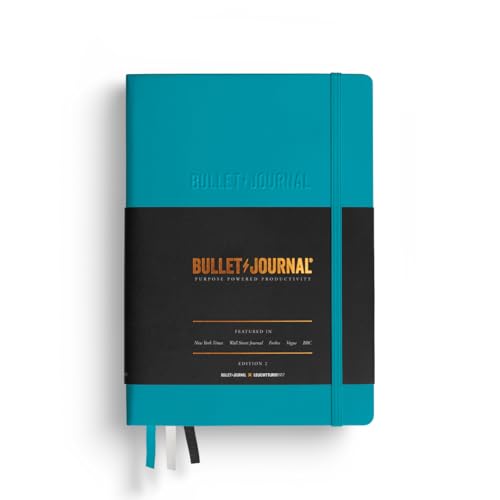
LEUCHTTURM1917 The Official Bullet Journal Edition 2 — Medium A5 Dotted, 204 Pages
by Leuchtturm1917
The definitive bullet journal — the official BuJo edition ships with the index, key, and legends pre-built and pairs them with the heaviest paper on this list. It is the priciest pick, but for anyone committing to the Bullet Journal method it removes all the setup friction and handles any pen you throw at it.
Pros
- This is the notebook the Bullet Journal method was standardized on, co-developed with Ryder Carroll — it ships with the correct dot grid, pre-printed and pre-numbered index and key pages, and three built-in bullet-journal legends, so you can start rapid-logging on day one instead of hand-ruling your own scaffolding
- Edition 2 upgrades to 120gsm paper, the heaviest on this list, which handles fountain pens, brush pens, and saturated markers with minimal ghosting — the single spec that separates a serious bullet journal from a notebook that bleeds through every spread
- Numbered pages plus the pre-built index are what make a bullet journal actually searchable months later: log a collection, note the page in the index, and find it again — the systematic backbone that free-form notebooks never deliver out of the box
- Two ribbon markers, an elastic closure, an expandable back pocket, and a lay-flat thread-sewn binding turn it into a complete daily-carry system that opens flat for writing across the gutter
Cons
- It is the most expensive book on this list, and the premium buys paper weight and the pre-built BuJo scaffolding rather than more pages — casual note-takers do not need it
- The dot grid and bullet-journal framework assume you want to build your own layouts; someone who wants a ready-made guided practice should choose a fill-in journal instead of a blank system
- At A5 hardcover with 120gsm paper it is heavier and stiffer than a softcover, a fair trade for durability but less pocketable than a slim travel journal
Dingbats Wildlife Dotted Journal — Runner-Up (Value Dotted)
The Dingbats Wildlife is the dotted journal I recommend to anyone who wants Leuchtturm-grade ink performance without the Leuchtturm price. Its 100gsm cream paper is genuinely fountain-pen-friendly — it resists the feathering and bleed that plague most mid-tier dotted journals — making it the value pick for ink writers building their own layouts.
The soft vegan-leather hardcover is the other draw: a distinctive tactile finish with an understated, masculine aesthetic that reads well on a desk or in a meeting, which is why it doubles as a strong men’s and gifting choice. For the price the built-ins are unusually complete — numbered pages, a pen loop, an inner document pocket, an elastic closure, a ribbon, and a micro-perforated tear-out last page — matching journals that cost more. The A5 dot grid flexes across bullet journaling, sketching, and lined-free notes.
The honest limits: PU leather won’t patina like genuine hide, and it’s a fixed hardcover rather than a refillable system. But as a do-everything dotted journal that punches above its price, it’s the value champion.

Dingbats Wildlife Dotted Journal A5 — Vegan Leather Hardcover, Numbered Pages
by Dingbats
The value dotted journal — 100gsm paper that actually handles fountain pens, wrapped in a soft vegan-leather hardcover loaded with a pen loop, pocket, and numbered pages. It undercuts the premium bullet journals while matching most of their build, and its understated look makes it a strong men's and gift pick too.
Pros
- The 100gsm cream paper is genuinely fountain-pen-friendly — it resists feathering and bleed the way most sub-premium dotted journals cannot, making this the value pick for ink writers who do not want to pay the Leuchtturm premium
- The soft vegan-leather hardcover has a distinctive tactile finish and a masculine, understated aesthetic that reads well in a meeting or on a desk, which is why it doubles as a strong men's and gifting pick
- Thoughtful built-ins for the price: numbered pages, a pen loop, an inner document pocket, an elastic closure, a ribbon, and a micro-perforated last-page tear-out — a feature set that matches journals costing more
- The A5 dot grid works equally well for bullet journaling, sketching, and lined-free note-taking, so it is the flexible middle ground between a rigid guided journal and a bare notebook
Cons
- Vegan (PU) leather does not develop the patina or decades-long durability of genuine leather — it looks great for years but will not age into an heirloom the way a full-grain cover does
- It is a fixed hardcover, not a refillable system, so once the 192 pages are full you buy a new book rather than swapping an insert
- The dotted-only format assumes you want to build your own structure; it offers none of the fill-in guidance a beginner reflective journaler might want
MOONSTER Refillable Leather Journal — Upgrade (Leather Keepsake)
The Moonster is the journal to buy when you want an object that lasts. This is genuine handmade buffalo leather — not PU — so it softens, darkens, and develops a personal patina over years of handling, which is the entire point of a leather journal and something no vegan-leather or hardcover book replicates.
Crucially, it’s refillable. Fill the 400-page insert and you slide in a fresh one while keeping the cover you’ve broken in, so one well-loved cover can outlast a decade of inserts — flipping the economics versus fixed journals you discard when full. The wrap-strap closure, embossed Tree of Life cover, and deckle-edged paper make it the giftable, keepsake-grade pick: the journal people write in on trips and keep on a shelf, not a workbook they throw away.
Genuine leather means natural grain, slight color variation, and a real leather smell — character to enthusiasts, but worth knowing each one is a little different. The stock insert’s paper is writing-grade but lighter than a 120gsm premium notebook, so heavy fountain-pen users may want a higher-weight refill. For everyone who wants a journal that ages beautifully, it’s the best leather pick here.

MOONSTER Refillable Leather Journal — Handmade Genuine Leather, Embossed Tree of Life, 400 Pages
by Moonster
The best leather journal on the list and the one to buy if you want an object that lasts — genuine buffalo leather that patinas with use, wrapped around a refillable 400-page insert so the cover outlives many refills. It is the keepsake, gift, and travel pick, with lighter stock paper that fountain-pen devotees can upgrade via a heavier insert.
Pros
- This is genuine handmade buffalo leather, not PU — it softens, darkens, and develops a personal patina over years of handling, which is the entire appeal of a leather journal and something no vegan-leather or hardcover book replicates
- It is refillable: when you fill the 400-page insert you slide in a fresh one and keep the cover you have broken in, so a single well-loved cover can outlast a decade of inserts, which flips the economics versus fixed journals you throw away when full
- The wrap strap closure, unlined-or-lined insert options, and rustic embossed cover make it the giftable, keepsake-grade pick — it is the journal people write in on trips and keep on a shelf, not a workbook they discard
- Handmade construction and deckle-edged paper give it a distinctive analog character that appeals to writers, travelers, and sketchers who want the object itself to feel meaningful
Cons
- Genuine leather carries natural grain marks, slight color variation, and a real leather smell out of the box — character to enthusiasts, but buyers expecting a uniform factory finish should know each one is a little different
- The paper in the stock insert is writing-grade but lighter than a 120gsm premium notebook, so heavy fountain-pen users may want to buy a higher-weight refill insert
- The wrap-strap-and-soft-cover format does not stand up or lie perfectly flat like a rigid hardcover, a deliberate trade for the supple leather feel
Self-Mastery Journal for Men — Runner-Up (Men’s Goals)
The Self-Mastery Journal is built for the reader who bounces off gratitude-first books. Its framing is goals and discipline: daily priorities, wins, lessons learned, and a morning-and-evening structure aimed at productivity and self-improvement rather than feelings-first reflection — the angle that finally makes journaling stick for a lot of first-time male journalers.
The 13-week format is a defined commitment with a finish line, which is far more motivating than an open-ended blank book — you complete a quarter and can see the streak you built. The prompts are direct and action-oriented (what will make today a win, what did I learn, what am I grateful for), tying reflection to daily execution instead of mood alone. The hardcover build is clean and non-precious, easy to keep on a desk without feeling like a diary.
The masculine, productivity-forward framing is exactly why it works for its reader and exactly why it’s a mismatch for anyone wanting a calm, open-ended practice. And at 13 weeks it’s a short cycle by design, so committed users re-buy quarterly. For goal-driven men, it’s the best on-ramp here.

Self-Mastery Journal for Men — 13-Week Guided Gratitude and Goal-Setting Journal with Prompts
by Realizations
The best journal for men who have never stuck with journaling — a goal-and-discipline framing with a defined 13-week finish line, direct action-oriented prompts, and a non-precious hardcover build. It ties daily reflection to execution, which is what makes it click for first-time male journalers who find gratitude-first books unappealing.
Pros
- Built specifically around a goal-and-discipline framing that lands with men who bounce off gratitude-first journals — daily priorities, wins, lessons, and a morning-and-evening structure aimed at productivity and self-improvement rather than feelings-first reflection
- The 13-week format is a defined commitment with a finish line, which is far more motivating for a first-time male journaler than an open-ended blank book — you complete a quarter and can see the streak
- Prompts are direct and action-oriented (what will make today a win, what did I learn, what am I grateful for) so the practice ties reflection to daily execution, not just mood
- Hardcover build with a clean, non-precious aesthetic makes it easy to keep on a desk or nightstand without feeling like a diary
Cons
- The masculine, productivity-forward framing is a feature for its target reader and a mismatch for anyone who wants a calm, open-ended reflective practice
- At 13 weeks it is a short cycle by design — committed users re-buy quarterly rather than journaling in one book for a year
- It is a guided book, not a blank or refillable one, so there is no room to free-write at length beyond the prompt spaces
One Line a Day Five-Year Memory Book — Runner-Up (Daily Habit)
One Line a Day is the journal for people who are certain they don’t have time to journal. Each dated page holds five short entries stacked by year, so a single line a day compounds into a side-by-side record of the same date across five years — the lowest-effort habit on this list and the one people genuinely sustain, which is why it carries more than ten thousand reviews.
The magic is the tiny commitment. Because it’s one line, it survives the busy seasons that kill every ambitious blank journal: thirty seconds before bed keeps a multi-year record alive. The dated structure removes every decision — one small space per day, no blank-page paralysis, no catching up — you write your line and close it. The compact hardcover with a ribbon marker makes a durable bedside keepsake that only gets better as the years fill in and you can read this-day-last-year at a glance.
The space is deliberately small, so it’s a memory log rather than a place to process a hard day — pair it with a blank journal if you want room to write. But as a foolproof, giftable habit-builder, nothing else is this easy to keep up.

One Line a Day: A Five-Year Memory Book (Chronicle Books)
by Chronicle Books
The best daily journal for people who do not think they have time to journal — one dated line a day compounds into a five-year, side-by-side memory record, and the thirty-second commitment is why it actually gets sustained. It is a memory keeper, not a place to write at length, and it is the most giftable, foolproof habit-builder here.
Pros
- The five-year format is the genius of it: each dated page holds five short entries stacked by year, so one line a day builds into a side-by-side record of the same date across five years — the lowest-effort journaling habit on this list and the one people actually sustain for years
- Because the daily commitment is a single line, it survives busy seasons that kill every ambitious blank journal — thirty seconds before bed keeps a multi-year record alive, which is why it has over ten thousand reviews
- The dated structure removes all decisions: there is exactly one small space per day, so there is no blank-page paralysis and no catching up — you write your line and close it
- Compact hardcover build with a ribbon marker makes it a durable bedside keepsake that genuinely improves as the years fill in and you can read this-day-last-year at a glance
Cons
- The one-line-per-day space is deliberately tiny — this is a memory log, not a place to process a hard day at length, and anyone who wants room to write should pair it with a blank journal
- It is dated and fixed at five years, so it is a five-year commitment object rather than a flexible or refillable system
- Missing several days leaves visible gaps in the grid, which some people find motivating and others find mildly guilt-inducing
MALEDEN Vintage Leather Travel Journal — Best Budget Travel
The MALEDEN carries over seventeen thousand reviews, a record on this list beaten only by the Five Minute Journal, and it earns that on value. The embossed leather-look cover, wrap strap, and kraft-paper feel deliver a vintage travel-diary aesthetic that normally costs three times as much, which makes it the guilt-free pick to take on a trip, sketch in, and not fret over.
It’s refillable, and the blank unlined kraft pages are ideal for the mixed use travel demands — longhand entries, quick sketches, taped-in ticket stubs and washi, hand-drawn maps — without ruled lines boxing you in. The strap-wrap closure keeps loose mementos and pages secured in a bag, and the soft cover flexes to survive being crammed into a backpack pocket, which is exactly the abuse a travel journal has to take.
It’s PU leather on travel-grade paper, so it won’t patina like the Moonster and fountain pens will show through the thin kraft stock. But for a knockabout companion you can buy several of and hand out as gifts, the value is unmatched.

MALEDEN Vintage Refillable Leather Travel Journal — Embossed PU Leather, Kraft Paper, Strap Closure
by MALEDEN
The best travel journal for the money — a vintage embossed cover, wrap-strap closure, and refillable kraft pages that handle sketches, keepsakes, and longhand alike, backed by one of the two deepest review records on this list. It is faux leather on travel-grade paper, but for a knockabout trip companion you will not fret over, nothing beats the value.
Pros
- With over seventeen thousand reviews it has one of the two deepest review records on this list, and for good reason: the embossed leather-look cover, wrap strap, and kraft-paper feel deliver a vintage travel-diary aesthetic that normally costs three times as much
- It is refillable and the blank, unlined kraft pages are ideal for mixed use on the road — sketches, ticket stubs and washi taped in, longhand entries, and maps — without the constraint of ruled lines
- The strap-wrap closure keeps loose mementos and pages secured in a bag, and the soft cover flexes to survive being crammed into a backpack pocket, which is exactly what a travel journal has to endure
- At its price it is the guilt-free travel and gifting pick — cheap enough to buy several, take on trips, and hand out, without feeling precious about a premium book
Cons
- This is PU (faux) leather, not genuine hide — it looks the part but will not patina or last decades the way the Moonster's real leather does
- Unlined kraft paper is characterful but not for everyone; writers who want straight lines or bright-white pages for fine ink work should look elsewhere
- The paper is travel-grade rather than premium — fountain-pen and heavy gel-pen users will see some show-through on the thin kraft stock
Best Journals With Prompts (Guided and Gratitude)
Guided journals are the right call for beginners and for anyone who stalls at a blank page — the prompts tell you exactly what to write. The decision here is how much structure you want: a light five-minute gratitude ritual, a cheap way to test the format, or a clinical mental-health framework. All three below are fill-in books, so you can start on day one.
| Product | Price | Buy |
|---|---|---|
| The Five Minute Journal — Original Daily Gratitude Journal (Undated, Intelligent Change)Best overall guided 5-minute gratitude template that builds a lasting daily habit | $24.72 | View on Amazon |
| No Worries: A Guided Journal to Help You Calm Anxiety, Relieve Stress, and Practice Positive ThinkingBest budget guided Real guided practice at the lowest price — a low-risk way to try the format | $9.01 | View on Amazon |
| Clever Fox Mental Health and Anxiety Journal — Guided CBT Self-Care Diary with Mood TrackerBest for mental health CBT prompts plus a mood tracker for structured, therapist-friendly self-work | $19.99 | View on Amazon |
Best Bullet and Dotted Journals
Dotted journals are blank systems: the dot grid gives you alignment for building your own layouts, trackers, and rapid logs without ruled lines dictating the page. The two that matter are the official bullet-journal book and the value option that nearly matches its paper. Both take fountain pens well — the spec that makes or breaks a dotted journal.
| Product | Price | Buy |
|---|---|---|
| LEUCHTTURM1917 The Official Bullet Journal Edition 2 — Medium A5 Dotted, 204 PagesBest for the BuJo method Official BuJo edition with pre-built index and 120gsm ink-proof paper | $31.95 | View on Amazon |
| Dingbats Wildlife Dotted Journal A5 — Vegan Leather Hardcover, Numbered PagesBest value dotted 100gsm fountain-pen-friendly paper and full built-ins at a lower price | $22.99 | View on Amazon |
Best Leather and Refillable Journals
Leather journals are the keepsake end of the category — bought to last and, when refillable, to keep a broken-in cover for years while swapping inserts. The split is genuine leather that patinas versus faux leather that nails the look for far less. Both here are refillable, so the cover outlives many refills.
| Product | Price | Buy |
|---|---|---|
| MOONSTER Refillable Leather Journal — Handmade Genuine Leather, Embossed Tree of Life, 400 PagesBest genuine-leather keepsake Real buffalo leather that patinas, with a refillable 400-page insert | $29.95 | View on Amazon |
| MALEDEN Vintage Refillable Leather Travel Journal — Embossed PU Leather, Kraft Paper, Strap ClosureBest budget faux-leather Vintage embossed look and refillable kraft pages for a fraction of the price | $8.97 | View on Amazon |
| Dingbats Wildlife Dotted Journal A5 — Vegan Leather Hardcover, Numbered PagesBest vegan-leather dotted Soft vegan-leather hardcover if you want a dotted grid in a leather feel | $22.99 | View on Amazon |
Best Journals for Men
The best men’s journals aren’t a separate product category so much as a matter of framing and aesthetic: goal-and-discipline structure over feelings-first prompts, and understated leather or vegan-leather covers over florals. These three cover the guided-goals angle and the two most masculine blank options.
| Product | Price | Buy |
|---|---|---|
| Self-Mastery Journal for Men — 13-Week Guided Gratitude and Goal-Setting Journal with PromptsBest guided for men Goal-and-discipline 13-week program that lands with first-time male journalers | $20.97 | View on Amazon |
| Dingbats Wildlife Dotted Journal A5 — Vegan Leather Hardcover, Numbered PagesBest dotted for men Understated vegan-leather dotted journal for building your own system | $22.99 | View on Amazon |
| MOONSTER Refillable Leather Journal — Handmade Genuine Leather, Embossed Tree of Life, 400 PagesBest leather for men Rugged genuine-leather keepsake that ages into a personal patina | $29.95 | View on Amazon |
Best 5-Year and Daily Journals
Daily journals win on low friction: the smaller the commitment, the more likely you are to keep it. The five-year memory book is the extreme of that idea — one line a day — while a five-minute guided book adds light gratitude structure to the daily routine.
| Product | Price | Buy |
|---|---|---|
| One Line a Day: A Five-Year Memory Book (Chronicle Books)Best 5-year memory keeper One dated line a day compounds into a five-year side-by-side record | $12.11 | View on Amazon |
| The Five Minute Journal — Original Daily Gratitude Journal (Undated, Intelligent Change)Best daily gratitude Five-minute morning-and-evening template for a sustainable daily habit | $24.72 | View on Amazon |
Best Travel Journals
A travel journal has to survive a backpack, welcome sketches and taped-in mementos, and not be so precious you’re afraid to use it. Refillable covers and secure closures matter more here than fine paper. The budget faux-leather pick is the everyday trip companion; the genuine-leather one is the keepsake you’ll still have decades later.
| Product | Price | Buy |
|---|---|---|
| MALEDEN Vintage Refillable Leather Travel Journal — Embossed PU Leather, Kraft Paper, Strap ClosureBest value travel journal Refillable kraft pages and a wrap strap that shrug off backpack abuse | $8.97 | View on Amazon |
| MOONSTER Refillable Leather Journal — Handmade Genuine Leather, Embossed Tree of Life, 400 PagesBest keepsake travel journal Genuine leather that ages beautifully as a lifelong travel companion | $29.95 | View on Amazon |
| One Line a Day: A Five-Year Memory Book (Chronicle Books)Best travel memory keeper Compact five-year book to log one line from each day on the road | $12.11 | View on Amazon |
Buyer's Guide
The right journal depends almost entirely on what you want journaling to do for you — build a gratitude habit, run the Bullet Journal method, keep a five-year memory record, or carry a keepsake on trips. These six factors are what separate a journal you use daily from one that goes blank after two weeks.
Format: guided vs. blank vs. dotted vs. dated
This is the first and most important decision. Guided journals (Five Minute Journal, Clever Fox, No Worries) hand you prompts and structure — best for beginners and anyone who stalls on a blank page. Dotted journals (Leuchtturm1917, Dingbats) are blank systems for bullet journaling and custom layouts. Dated journals (One Line a Day) enforce a tiny daily habit. Blank leather journals (Moonster, MALEDEN) are open canvases for free-writing and travel. Pick the format that matches how much structure you want.
Paper weight and bleed resistance
Paper weight determines which pens you can use. 70–80gsm handles pencil and ballpoint; 90gsm suits gel pens; 100–120gsm is needed for fountain pens, brush pens, and markers. The Leuchtturm's 120gsm and the Dingbats' 100gsm are the ink-friendly picks. Thin paperback and kraft travel paper will ghost or bleed with wet ink — match the paper to your pen before anything else.
Binding and lay-flat behavior
Thread-sewn and lay-flat bindings (Leuchtturm, Dingbats) let you write across the center gutter without fighting the page — essential for bullet journaling and long entries. Wrap-strap leather journals trade perfect flatness for a supple feel. Softcover paperbacks are the least durable. If you write daily and across full spreads, prioritize a lay-flat sewn binding.
Cover material and durability
Genuine leather (Moonster) ages into a patina and can last decades, especially when refillable. Vegan/PU leather (Dingbats, MALEDEN) looks similar and costs less but will not patina or last as long. Hardcover linen and board (Five Minute Journal, One Line a Day) is durable and desk-friendly. Softcover paperback is the least rugged. Match the cover to whether you want a consumable or a keepsake.
Refillable vs. fixed
Refillable systems (Moonster, MALEDEN) let you keep a broken-in cover and swap a fresh insert when full, which changes the long-term economics and sustainability. Fixed journals (everything guided or hardcover-bound here) are finished and replaced. If you want one cover you love for years, buy refillable; if you like a fresh book each time, fixed is simpler.
Size and portability
A5 (roughly 5.75 x 8.25 in) is the standard journaling size — enough writing room while still bag-friendly, used by the Leuchtturm, Dingbats, and Clever Fox. Compact books like the One Line a Day and small travel journals slip into a pocket or purse for bedside and on-the-go use. Larger formats give more space but sacrifice portability. Consider where you will actually write before choosing a size.
How to Choose the Best Journal
Start with intent, not looks. If you’ve failed at journaling before, buy a guided book — the Five Minute Journal for gratitude, or No Worries to test the format cheaply — because the prompts defeat the blank-page problem that makes people quit. If you want to build your own trackers and layouts, buy a dotted journal and let paper weight decide: 120gsm (Leuchtturm) for any fountain pen, 100gsm (Dingbats) for value. If you want an object that lasts, buy a refillable leather journal. And if the barrier is time, the one-line-a-day format removes it entirely.
Then match the paper to your pen — this is the mistake I see most. A beautiful journal that bleeds through with your favorite gel pen or fountain pen gets abandoned fast. Pick the format first, confirm the paper handles your ink second, and the cover last.
Final Verdict
For most people, the Five Minute Journal is the right first journal and the best overall — its five-minute guided template is the surest way to turn “I want to journal” into a habit that actually lasts, and undated pages forgive the missed days that derail every other format. If money is tight, No Worries delivers a real guided practice for a fraction of the price. Bullet journalers should go straight to the Leuchtturm1917 Bullet Journal Edition 2; anyone who wants a keepsake should choose the refillable genuine-leather Moonster.
Whatever you pick, remember that a journal is only as good as the habit it supports — so choose the format that fits your life, pair it with the right pen for its paper, and keep it somewhere you’ll see it daily. For a blank capture surface to sit alongside your journal, our best notebooks guide has the companion picks.
Frequently Asked Questions
What is the difference between a journal and a notebook?
What kind of journal is best for fountain pens?
Are guided journals or blank journals better for beginners?
What paper weight prevents ink bleed-through?
How long does the Five Minute Journal last, and is it undated?
Related Articles
About the Reviewer

Sarah Chen, CAP, PMP
B.A. Business Administration, UCLA
Sarah Chen spent 10 years in office management and operations at Fortune 500 companies before founding DeskRated in 2026. After managing supply budgets for teams of 50+ people and testing thousands of products through daily use, she started writing the honest, no-fluff supply reviews that office professionals actually need. Sarah holds both CAP and PMP certifications and is based in Los Angeles.