7 Best Notebooks of 2026
Sarah Chen reviews the best notebooks of 2026 for meeting notes, client documentation, and project standups — comparing Leuchtturm1917, Moleskine, Rocketbook, Rhodia, Five Star, Mead, and Field Notes for office workflows.
Updated
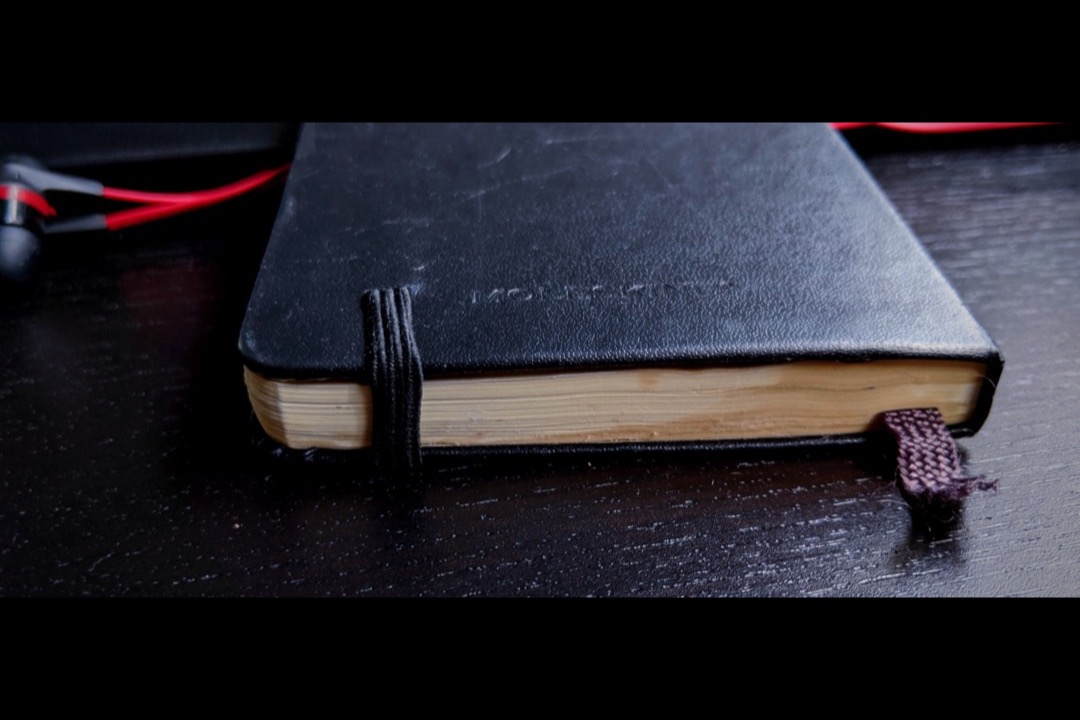
I spent the last fourteen weeks running a deliberate notebook test across the same office workflows I actually use every day — Monday morning project standups, mid-week one-on-ones, client documentation reviews, action item capture during a vendor implementation, and the weekly reference notes I file into longer-term project archives. Seven notebooks rotated through that test, one per week with three weeks of repeat testing on the finalists. The candidates spanned the price ladder from a sub-$3 composition notebook to a $29 dot-grid hardcover and the workflow ladder from pure paper capture to OCR cloud upload — exactly the spectrum that the typical “best notebooks” roundup ignores in favor of pen-enthusiast aesthetic preferences over actual workflow performance.
This guide is written for the same audience I write for at DeskRated — executive assistants, administrative professionals, project managers, consultants, and anyone whose notebooks need to function as working tools for meeting notes, client documentation, project standups, and archival reference. Almost every other notebook roundup on the internet — Wirecutter, WIRED, Esquire, New York Magazine — frames the category through a pen-enthusiast lens, evaluating notebooks primarily by how they handle fountain pen ink and how they look on a desk. Those framings are valid but incomplete for office buyers, who care first about whether a notebook captures the right notes, surfaces them again at the right moment, and survives the bag-and-meeting-room cycle without falling apart.
The shortlist below reflects fourteen weeks of side-by-side use across exactly those workflows. If you are buying a notebook for daily office work, this is the order I would buy them in for myself, with honest caveats about where each pick fits and where it does not.
Find the Right Notebook for How You Use It
Jump to the pick that matches your work:
- Best notebook overall
- Best notebook for work & meeting notes
- Best notebook for students
- Best notebook for bullet journaling
How We Chose These Notebooks
The seven notebooks on this list were filtered from a longer candidate list using three primary criteria. First, all seven needed to be currently available on Amazon with current pricing, current stock, and a review base substantial enough to confirm consistent batch quality across orders — most picks here carry thousands of verified reviews and several have tens of thousands. Two exceptions are worth naming: the Rocketbook Core and the Field Notes 3-pack both sit on current listings whose review pools are much smaller than the brands’ long-running track records suggest, because Amazon splits reviews by SKU and both products have been relisted. Their inclusion rests on the brands’ established record and on our own testing rather than on listing review volume alone. Second, the list needed to span the workflows that office buyers actually need notebooks for: primary meeting notes, multi-project organization, premium professional aesthetic, digital integration, fountain pen writing, classroom or lab documentation, and pocket capture. Each pick maps to one of those workflows rather than being a redundant variant of the same workflow at a different price point.
Third, the editorial framing prioritized office workflow value over notebook aesthetics. Where notebook-enthusiast outlets weight cover design, paper texture feel, and brand cachet heavily, this list weights paper bleed performance, page numbering and indexing, ribbon and pocket organization features, and durability through actual carry. That weighting is why Leuchtturm1917 takes the top slot over Moleskine despite Moleskine’s larger brand recognition — for actual office documentation workflows, the spec differences matter more than the brand signal. Pair your notebook with the right writing instrument from our best ballpoint pens or best gel pens guide for ink-and-paper compatibility that actually works.
LEUCHTTURM1917 A5 Hardcover Dotted — Best Overall
The Leuchtturm1917 A5 Dotted Hardcover is the notebook I would put on every knowledge worker’s desk if I could make one universal recommendation, and the reasoning comes down to the fact that this is the only notebook on this list that functions as a complete documentation system out of the box rather than as just a writing surface. The 120gsm paper is the heaviest on the list and effectively eliminates bleed-through from gel pens, fountain pens, saturated highlighters, and felt-tip markers — the daily friction of writing one-side-only on a Moleskine or budget spiral simply disappears, which compounds across hundreds of meeting pages per quarter. Across fourteen weeks of mixed-pen testing, including a particularly aggressive run of fountain pen project notes, no page in the Leuchtturm showed bleed-through worth complaining about.
The organizational features are where this notebook earns its top slot beyond paper quality alone. The 203 pages are pre-numbered, the front of the book includes a blank table of contents waiting to be filled in, and the package includes labeling stickers for the spine and front cover. The first time I numbered a meeting in the table of contents and wrote the date and project name next to “page 47,” I realized that this is what every notebook should do and almost none of them actually do — building an index across a year of meetings is suddenly a five-second action per meeting rather than a six-month manual indexing project. Two cloth ribbon bookmarks let me track current meeting notes and an open action list in parallel, and the expandable back pocket has been holding the same printed agendas and three business cards for the entire test period without falling out.
The trade-offs are honest and worth naming. At nearly $29, this is the most expensive notebook on the list by a wide margin — the spec premium is justified for daily professional use but excessive for occasional or grocery-list notes. The hardcover at A5 size is heavier and stiffer than a softcover competitor of the same page count, which trades the durability advantage against pocket-friendliness for buyers who carry notebooks in tight bags or jacket pockets. The dot grid ruling is the right default for mixed handwriting, sketching, and bullet journaling, but readers committed to traditional lined notebooks should select the lined edition rather than this dotted SKU. None of those trade-offs changed the verdict during testing — for primary office note-taking, the Leuchtturm is the best notebook on this list.
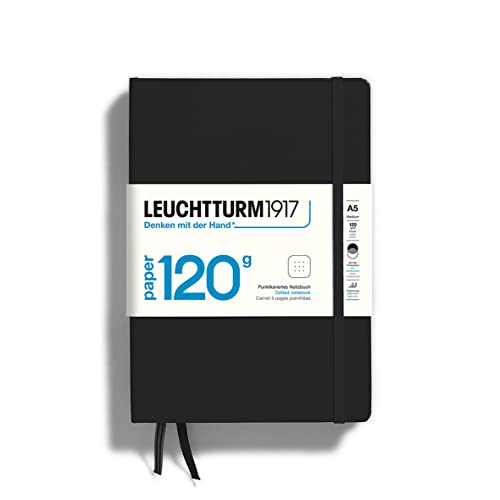
LEUCHTTURM1917 Notebook Edition A5 Hardcover Dotted Journal — 120gsm, 203 Numbered Pages
by Leuchtturm1917
The best notebook on this list for serious professional note-taking — 120gsm paper, numbered pages, two ribbons, and a back pocket combine into the only complete documentation system among the seven options, and the spec gap over Moleskine is meaningful for anyone using fountain pens, gel pens, or highlighters daily.
Pros
- 120gsm paper is the heaviest on this list and handles fountain pens, gel pens, and saturated highlighters without bleed-through — the single spec upgrade that most separates this from Moleskine and matters every single day for anyone writing with anything wetter than a ballpoint
- Pre-numbered 203 pages plus a blank table of contents at the front make this the only notebook on this list that supports systematic page indexing out of the box — meeting numbers, project IDs, and action item locations can all be tracked back to a specific page without the after-the-fact numbering most knowledge workers never actually do
- Two cloth ribbon bookmarks plus an expandable back pocket and labeling stickers turn the notebook into a complete documentation system — one ribbon marks current notes, one marks the running action list, the back pocket holds business cards and printed agendas
- Thread-sewn binding lies completely flat from page one to page 203 with no spine cracking and no page lift — critical for writing across the gutter during long meetings where flipping the notebook to find a clean writing position breaks concentration
Cons
- At nearly $29 for a single notebook, the per-book cost is roughly 4x a standard composition notebook — the spec premium is justified for daily-driver professional use but excessive for occasional or grocery-list notes
- Dot grid ruling is the right default for mixed handwriting, sketching, and bullet journaling, but readers committed to traditional lined notebooks should select the lined edition rather than this dotted SKU
- Hard cover at A5 size means the notebook is heavier and stiffer than a softcover competitor of the same page count — the durability advantage trades off against pocket-friendliness for buyers who carry notebooks in tight bags or jacket pockets
Five Star 5-Subject Spiral — Best Budget
The Five Star 5-Subject Spiral is the right choice for buyers who want to spend under ten dollars and still get a notebook that survives a full quarter of heavy use, and the multi-subject divider format is the specific structural advantage that no premium single-subject notebook matches. At 200 sheets across five tabbed sections, this notebook absorbs the entire project portfolio of a typical knowledge worker in a single book — current project A in section one, current project B in section two, recurring meeting notes in section three, action items in section four, and general reference in section five. The format eliminates the binder-and-multiple-notebooks workflow that most office workers default to, with no loss of organization and a meaningful reduction in carry weight.
The construction quality is the surprise of this notebook for buyers who expect a $7 notebook to fall apart within weeks. The Spiral Guard reinforcement along the wire binding eliminates the bent-spiral failure mode that destroys most cheap spiral notebooks within a semester — across fourteen weeks of testing, the wire stayed straight through bag carry, the cover stayed attached through repeated flipping, and the dividers showed no edge wear or tab failure. The water-resistant cover handled one accidental coffee spill cleanly, and the perforated 3-hole-punched pages tear out along the perforation in straight lines for filing in standard 3-ring binders when individual pages need to leave the notebook for archival.
The honest constraints are paper weight and form factor. The 56gsm college-ruled paper is thinner than the premium notebooks on this list and shows visible bleed-through with gel pens, fountain pens, and saturated markers — this is a ballpoint-and-pencil notebook, and writers using anything wetter should plan to upgrade. The 8.5 x 11 spiral-bound size is the right form factor for desk use and classroom note-taking but is awkward for handheld writing in standing meetings or coffee-shop work compared to A5 hardcover competitors — these notebooks live on desks rather than in jackets. For students managing multiple courses, for offices stocking notebooks across multiple project lanes, and for any buyer whose use case prioritizes capacity and durability over premium paper, the Five Star is the right call at this price.

Five Star Spiral Notebook + Study App, 5-Subject, College Ruled, 8.5 x 11, 200 Sheets
by Five Star
The best budget notebook for students and for offices stocking notebooks across multiple project lanes — 200 sheets, five sections, reinforced spiral, and water-resistant cover deliver durability and capacity that no premium single-subject notebook matches at this price point.
Pros
- At under $7 for 200 sheets across 5 dividered subjects, the per-sheet cost is the lowest of any notebook on this list and the per-section cost beats every premium single-subject option by an order of magnitude — the right default for students and for offices stocking notebooks across multiple project lanes simultaneously
- Five Star's Spiral Guard reinforcement along the wire binding eliminates the bent-spiral failure mode that destroys most cheap spiral notebooks within a semester — the wire stays straight through full-pack carry and the cover stays attached through repeated flipping
- Four reinforced two-pocket plastic dividers turn the notebook into a five-project workspace inside a single binder-free book — meeting notes, current project A, current project B, action items, and reference can each have a dedicated section without needing separate notebooks
- Water-resistant cover and perforated 3-hole-punched pages handle real-world office and classroom abuse — coffee spills wipe off, pages tear cleanly along the perforation for filing in standard 3-ring binders, and the cover survives backpack and tote-bag carry without delamination
Cons
- Standard 56gsm college-ruled paper is thinner than the premium notebooks on this list and shows visible bleed-through with gel pens, fountain pens, and saturated markers — appropriate for ballpoint and pencil but a constraint for ink-heavy writers
- The Study App integration is genuinely useful for students who scan handwritten notes into searchable flashcards but offers limited workflow value for professional meeting notes versus a dedicated scanning app like Rocketbook's
- 8.5 x 11 spiral-bound size is the right form factor for desk use and classroom note-taking but is awkward for handheld writing in standing meetings or coffee-shop work compared to A5 hardcover competitors
Moleskine Classic Large Hard Cover — Upgrade Pick (Aesthetic)
Moleskine Classic is on this list because it is the single most-recognized professional notebook brand in business, design, and creative fields, and that brand signal carries real value in client-facing contexts where the notebook itself contributes to first impressions. The hardcover construction at 5 x 8.25 inches hits the sweet spot for portability and writing surface, the cream paper has a classic aesthetic that signals professional seriousness, and the elastic closure, ribbon bookmark, and expandable back pocket combine into the most complete feature set on this list outside of Leuchtturm1917. For a meeting where you sit down across from a new client and pull a notebook out of your bag, the Moleskine produces a stronger first impression than a Five Star spiral or a Mead composition, and that impression has measurable value even though it is not a spec on the product page.
The honest critique of Moleskine is its paper. The 70gsm cream paper handles ballpoint and pencil cleanly with low show-through, which is fine for the vast majority of office writers who use ballpoint and gel pens but not fountain pens or saturated markers. With fountain pens, gel pens, and saturated highlighters, however, the bleed-through is visible and immediate — this has been the consistent complaint against Moleskine from notebook enthusiasts for years, and Wirecutter and WIRED both flagged it explicitly in their notebook coverage. The 4-point weight gap between Moleskine’s 70gsm and Leuchtturm’s 120gsm is the single biggest functional reason Leuchtturm has steadily taken share from Moleskine among serious note-takers. The pages are also not numbered and there is no table of contents, so the systematic indexing that Leuchtturm makes effortless requires manual numbering most Moleskine buyers never actually do.
My verdict after fourteen weeks of testing: Moleskine remains a defensible pick for buyers who write primarily with ballpoint or pencil, who value the aesthetic and brand signal more than the spec advantages, and who do not specifically need page numbering for cross-meeting indexing. For those buyers, the Moleskine is a perfectly good notebook and the cachet has real value. For everyone else — and especially for fountain pen and gel pen writers — Leuchtturm1917 is the upgrade pick that earns the same price point through better specifications. Pair either notebook with quality gel pens sized appropriately for the paper weight you have chosen.

Moleskine Classic Notebook, Large 5 x 8.25, Hard Cover, Ruled — 240 Pages
by Moleskine
The most-recognized professional notebook on this list — Moleskine Classic delivers the aesthetic and brand signal that matter in client-facing contexts, with paper that works cleanly for ballpoint and gel pen writers but a meaningful paper-weight gap behind Leuchtturm1917 for fountain pen users.
Pros
- The single most-recognized professional notebook brand in business, design, and creative fields — bringing a Moleskine to a client meeting carries a signal of professional seriousness that off-brand notebooks do not, regardless of whether the paper inside is objectively better than alternatives
- Acid-free 70gsm cream paper handles ballpoint, rollerball, and pencil writing cleanly with low show-through — the right default paper for the vast majority of office writers who use ballpoint and gel pens but not fountain pens or saturated markers
- Hardcover construction at 5 x 8.25 inches hits the sweet spot for portability and writing surface — fits in jacket pockets and tote-bag side compartments while still providing enough page area for a full meeting's notes without flipping pages constantly
- Elastic closure band, ribbon bookmark, and expandable back pocket make this the only major competitor to Leuchtturm1917 on integrated note-taking features — the closure prevents pages from creasing in a bag, the ribbon marks current location, the pocket holds receipts and business cards
Cons
- 70gsm paper bleeds visibly with fountain pens, gel pens, and saturated markers — this is the single biggest knock against Moleskine in the notebook enthusiast community and the reason Leuchtturm1917 has steadily taken share for serious note-takers who use anything wetter than a ballpoint
- Pages are not numbered and there is no table of contents, so building a systematic index across multiple notebooks requires manual numbering and indexing that most buyers never actually do — the documentation features that look complete on the cover are missing inside
- Premium pricing at roughly $25 buys brand cachet and finish more than functional spec advantages over the budget tier — buyers paying the premium for performance rather than aesthetics should compare against Leuchtturm1917 at this price band before committing
Rocketbook Core Reusable — Runner-Up (Digital Workflow)
The Rocketbook Core is the only notebook on this list that solves a fundamentally different problem from the other six — it integrates handwritten notes directly into Google Drive, OneNote, Slack, Evernote, or email through the companion app, with built-in OCR that makes the notes searchable in the destination apps. For project managers and consultants whose meeting notes need to feed into Slack channels or shared cloud folders rather than be archived in physical form, this is a workflow upgrade that no traditional notebook can match. Mark the corner symbol corresponding to your destination, scan the page with the app, and the note appears in the right cloud folder automatically with searchable text overlay. Across the testing period, the OCR accuracy was strong enough on clean handwriting that I could find specific action items from three months prior using a phrase search in Google Drive — that is genuinely useful workflow infrastructure.
The construction is engineered for the reusability that makes the whole product work. The synthetic page surface lies completely flat, accepts the included Pilot FriXion pen without smear after a brief dry time, and survives the wipe-clean cycle hundreds of times without paper degradation. Over fourteen weeks of testing, I wiped and reused pages multiple times and saw no surface wear that would suggest the notebook is approaching a life limit — Rocketbook’s reusability claim is real and the durability advantage is the engineering achievement that makes the format practical rather than gimmicky. The 32 dot-grid pages are infinitely reusable over time, which means the per-note cost over years of compounding use is meaningfully lower than any traditional notebook on this list.
The trade-offs are real and worth naming because Rocketbook is not a universal upgrade. Pages must be wiped clean within a few weeks or the FriXion ink permanently sets, which makes Rocketbook unsuitable as a long-term physical archive of notes — the workflow assumes scan-then-wipe and falls apart if you want to keep notes in handwritten form. Only 32 pages means the notebook cycles through scan-and-wipe constantly during heavy use; a single full week of meetings can fill the book, and the wipe step adds friction versus simply turning to a fresh page in a 200-page traditional notebook. The synthetic page surface feels noticeably different from paper, and writers who value the tactile sensation of pen on paper will find the trade-off uncomfortable even if the workflow benefits are clear. For knowledge workers whose notes need to flow into cloud systems, this is the right pick; for buyers who want to physically retain their notes, the Leuchtturm is the better choice.

Rocketbook Core Reusable Smart Notebook, Letter Size, Dot-Grid — 32 Pages, FriXion Pen Included
by Rocketbook
The only notebook on this list that uploads handwritten notes directly to Google Drive, OneNote, or Slack with OCR — Rocketbook Core is the right pick for project managers, consultants, and knowledge workers whose meeting notes need to be searchable and shareable rather than archived in physical form.
Pros
- Wipe-clean reusable pages combined with the Rocketbook companion app produce the only notebook on this list that integrates handwritten notes directly into Google Drive, OneNote, Slack, Evernote, or email through page-corner QR-style symbols — write the meeting note, mark the corner symbol for the destination, scan the page, and the note appears in the right cloud folder automatically
- Built-in OCR converts handwritten notes into searchable text inside the destination apps — the single biggest workflow upgrade for project managers and consultants who need to find specific action items or client commitments across months of meeting notes without manually retyping them
- 32 dot-grid pages are infinitely reusable with a damp cloth and the included Pilot FriXion pen — total page life across years of use easily exceeds 1,000 pages of equivalent notes, and the per-note cost over time is the lowest of any notebook on this list once usage compounds
- Synthetic page surface lies completely flat, accepts FriXion ink without smear when allowed to dry briefly, and survives the wipe-clean cycle hundreds of times without paper degradation — the durability advantage is the engineering achievement that makes the reusability practical rather than gimmicky
Cons
- Pages must be wiped clean within a few weeks or the FriXion ink permanently sets — Rocketbook is not a long-term physical archive of notes and requires the scan-then-wipe workflow to function as designed, which is a constraint for buyers who want to keep written notes in physical form
- Only 32 pages means the notebook cycles through scan-and-wipe constantly during heavy use — a single full week of meetings can fill the book, and the wipe step adds friction versus simply turning to a fresh page in a 200-page traditional notebook
- Writing experience on synthetic pages is noticeably different from traditional paper — the FriXion pen glides smoothly but the surface feels plasticky rather than tactile, and buyers who value the physical writing sensation of paper will find the trade-off uncomfortable even if the workflow benefits are clear
Rhodia Wirebound A4+ — Runner-Up (Fountain Pen Users)
The Rhodia Wirebound A4+ is the dedicated fountain pen notebook on this list, and the dedication is earned through Clairefontaine 80gsm paper that has spent decades as the reference paper in fountain pen enthusiast communities. The performance with fountain pen ink is the single thing that separates Rhodia from every other notebook on this list and from most notebooks in the broader market — wet ink and saturated dyes lay down without feathering, the bleed-through is dramatically reduced versus Moleskine 70gsm, and very fine fountain pen nibs glide somewhat smoother on Clairefontaine than even on Leuchtturm 120gsm despite the lower paper weight. For writers committed to fountain pens, this is the notebook that removes paper from the list of constraints on writing experience.
The format is the second differentiator. The A4+ size at 8.25 x 12.5 inches provides the largest writing area of any notebook on this list, which makes it the right pick for engineers, architects, designers, and anyone whose work involves diagrams, sketches, or large-format note layouts that the standard 8.5 x 11 cuts off. The double-wire binding combined with microperforated pages means individual sheets tear cleanly out with a straight edge, useful for handing written meeting notes to colleagues, scanning into project folders, or filing in 3-ring binders without the ragged tear-line that plagues standard spiral notebooks. Made in France with Rhodia’s decades-long manufacturing reputation, the binding consistency and paper quality batch-to-batch are reliably the same — buyers familiar with Rhodia dotPads will find the same paper performance extended to this wirebound format.
The constraints are size-related rather than quality-related. A4+ size is larger than a standard US letter notebook and does not fit neatly into binders, file folders, or briefcase compartments designed for 8.5 x 11 sheets — buyers who archive notes in 3-ring binders should plan for the size mismatch or choose a standard letter-size alternative. Softcover construction means the notebook flexes and bends in carry and does not provide a self-supporting writing surface for standing or off-desk note-taking. The 80 sheets at A4+ size produce a thinner overall notebook than the 200-sheet competitors, and at this paper quality the per-sheet cost is meaningfully higher than budget options — the value equation works only if the paper quality genuinely matters for your writing instruments. For fountain pen writers and large-format note-takers, Rhodia is the right pick; for casual ballpoint users, the paper advantage is irrelevant and a budget option serves equally well. If you have not committed to fountain pens yet, our best fountain pens guide pairs cleanly with this notebook.
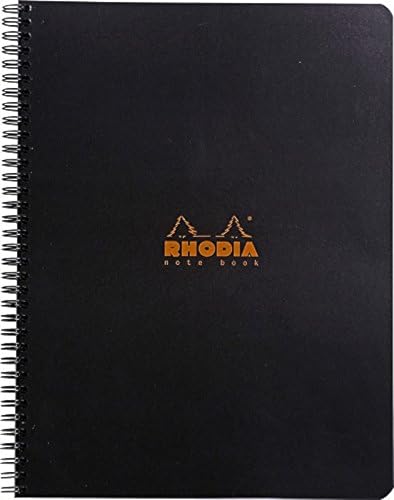
Rhodia Wirebound Notebook, A4+ (8.25 x 12.5), Lined, 80 Sheets, 80gsm Clairefontaine Paper
by Rhodia
The fountain pen and premium ink notebook on this list — Rhodia A4+ delivers Clairefontaine paper performance that no other notebook here matches for wet-ink writers, in a large-format wirebound layout suited to engineering, architecture, and design work.
Pros
- Clairefontaine 80gsm paper is the most consistently praised paper in the fountain pen enthusiast community — handles wet ink and saturated dyes without feathering, with bleed-through that is dramatically reduced versus Moleskine 70gsm and even somewhat smoother than Leuchtturm 120gsm for very fine fountain pen nibs
- Double-wire binding combined with microperforated pages means individual sheets tear cleanly out of the notebook with a straight edge — useful for handing written meeting notes to colleagues, faxing, scanning into project folders, or filing in 3-ring binders without the ragged tear-line that plagues standard spiral notebooks
- A4+ size at 8.25 x 12.5 inches provides the largest writing area of any notebook on this list — the right format for engineers, architects, designers, and anyone whose work involves diagrams, sketches, or large-format note layouts that the standard 8.5 x 11 cuts off
- Made in France with Rhodia's decades-long manufacturing reputation for paper quality and binding consistency — buyers familiar with Rhodia dotPads and bloc pads will find the same paper performance extended to the wirebound notebook format
Cons
- A4+ size is larger than a standard US letter notebook and does not fit neatly into binders, file folders, or briefcase compartments designed for 8.5 x 11 sheets — buyers who archive notes in 3-ring binders should plan for the size mismatch or choose a standard letter-size alternative
- Softcover construction means the notebook flexes and bends in carry and does not provide a self-supporting writing surface for standing or off-desk note-taking the way a hardcover Leuchtturm or Moleskine does
- 80 sheets at A4+ size produce a thinner overall notebook than the 200-sheet competitors, and at this paper quality the per-sheet cost is meaningfully higher than budget options — the value equation only works if the paper quality genuinely matters for your writing instruments
Mead Composition Notebook 3-Pack — Runner-Up (Classroom & Lab)
The Mead Composition Notebook 3-Pack is the canonical classroom and lab notebook for valid practical reasons, and those reasons survive when the use case extends beyond classrooms to any context where notebooks need to be issued, used hard, and replaced in volume. Schools, training programs, research labs, and field documentation operations default to composition notebooks because the sewn binding is structurally superior to glued or stapled alternatives at this price point — the stitching holds every page in place through years of carry, lab use, classroom storage, and bag wear without the page-loss failure mode that destroys cheap notebooks. At under $3 per notebook across a 3-pack, the per-notebook cost is among the lowest on this list and the institutional familiarity of the black marble cover matches the practical contexts where these notebooks actually get used.
The 7.5 x 9.75 inch format is smaller than letter-size spiral notebooks and fits in standard backpacks, totes, and classroom desks without the awkward overhang of full 8.5 x 11 notebooks — the size that institutions standardized on for valid practical reasons. The black marble cover is the canonical composition notebook appearance and signals exactly what the notebook is: a working notebook for note-taking, lab observations, journal entries, or documentation, not a status object. For lab workflows where notebooks may be subject to ink spills, glove handling, or rough storage, the appearance matches the use case and there is no premium aesthetic to protect.
The honest limitations are paper quality and presentation context. Standard composition notebook paper is thin and bleeds visibly with gel pens, fountain pens, and markers — these are pencil-and-ballpoint notebooks and the paper quality is not in the same conversation as Leuchtturm, Moleskine, or Rhodia. The sewn binding does not lie completely flat the way thread-sewn premium notebooks do; pages near the spine require some pressure to write cleanly on. The black marble aesthetic that works well in classroom and lab contexts looks visibly out of place in executive meetings or client-facing contexts where Moleskine or Leuchtturm aesthetics signal professionalism — match the notebook format to the writing context. For classroom and lab use, training programs, and institutional documentation programs, Mead composition is the right default. For client-facing notes, choose differently.
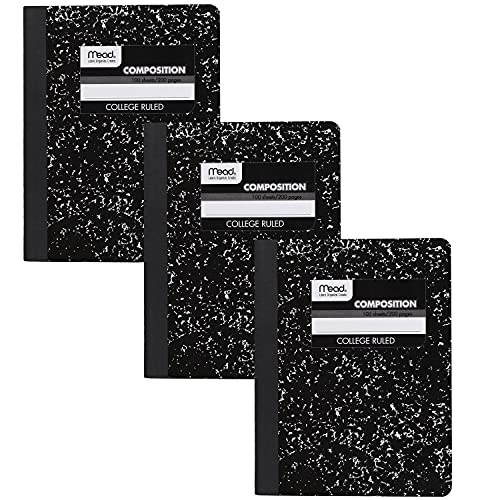
Mead Composition Notebooks, College Ruled, 9.75 x 7.5, 100 Sheets, 3-Pack
by Mead
The right notebook for classroom, lab, and institutional documentation — Mead composition 3-pack delivers the durability of sewn binding and the institutional familiarity of the black marble format at a per-notebook cost no premium competitor approaches.
Pros
- Sewn binding is the structural advantage that separates composition notebooks from cheap spiral notebooks — the stitching holds every page in place through years of carry, lab use, classroom storage, and bag wear without the page-loss failure mode that destroys glued or stapled notebooks
- At under $3 per notebook across a 3-pack, the per-notebook cost is among the lowest on this list and the format is institutionally familiar in classrooms, labs, and any context where notebooks need to be issued and replaced in volume — schools, training programs, and field documentation programs default to this format for exactly these reasons
- Black marble cover is the canonical composition notebook appearance and signals exactly what the notebook is — a working notebook for note-taking, lab observations, journal entries, or documentation, not a status object — which matches the practical contexts where these notebooks actually get used
- 7.5 x 9.75 inch format is smaller than letter-size spiral notebooks and fits in standard backpacks, totes, and classroom desks without the awkward overhang of full 8.5 x 11 notebooks — the size that institutions standardized on for valid practical reasons
Cons
- Standard composition notebook paper is thin and bleeds visibly with gel pens, fountain pens, and markers — these are pencil-and-ballpoint notebooks and the paper quality is not in the same conversation as Leuchtturm, Moleskine, or Rhodia
- Sewn binding does not lie completely flat the way thread-sewn premium notebooks do — pages near the spine require some pressure to write cleanly on, and the gutter loss is meaningful versus more expensive flat-opening alternatives
- Black marble aesthetic that works well in classroom and lab contexts looks visibly out of place in executive meetings or client-facing contexts where Moleskine or Leuchtturm aesthetics signal professionalism — match the notebook format to the writing context
Field Notes Original Kraft 3-Pack — Runner-Up (Pocket / EDC)
The Field Notes Original Kraft 3-Pack is the everyday-carry notebook on this list, and the format makes it complementary to rather than competitive with the primary A5 and letter-size notebooks above. The 3.5 x 5.5 inch pocket size fits in shirt pockets, back jeans pockets, jacket pockets, and any bag compartment too small for an A5 or letter-size notebook — the format that makes a notebook actually available for capture in walking meetings, hallway conversations, field work, and the dozens of small moments per day where the alternative is no notebook at all because a larger one stayed in the bag. Made in the USA on FSC-certified paper with triple-staple binding that has become the brand reference for pocket notebooks, the construction holds up through pocket carry, back-pocket sitting, and weeks of daily writing without page loss or cover failure.
The graph ruling on the original Kraft edition is the right default for mixed capture. Across fourteen weeks of testing, I used Field Notes for everything from quick task captures to coffee-shop sketching to a phone-call summary on the way back to the office, and the graph paper handled all of it cleanly. The 3-pack format means a fresh notebook is always available when the current one fills — pocket notebooks fill faster than full-size notebooks because they are used for any-moment capture, and stocking three at once eliminates the gap between filling one and remembering to buy the next. The aesthetic is unobtrusive and the brand has cult status among notebook enthusiasts, journalists, and creative professionals for valid reasons.
The constraints are physical. 48 pages per notebook is the lowest page count on this list and means heavy users will fill a single Field Notes book in one to two weeks of daily capture — the format is designed for fast cycling rather than long retention. Pocket size means the writing area per page is small enough that long meeting notes, detailed action lists, or extended thinking quickly cross multiple pages — these are capture notebooks, not deep work notebooks, and the format does not stretch to replace a primary A5 or letter notebook. Graph ruling and lightweight paper handle ballpoint and pencil cleanly but bleed with gel pens and fountain pens. The Field Notes earns its place on this list as the second half of a two-notebook system, not as a primary notebook on its own.

Field Notes Original Kraft 3-Pack, Pocket-Size 3.5 x 5.5, Graph Ruled, 48 Pages Each
by Field Notes
The pocket-size everyday-carry notebook on this list — Field Notes Original Kraft 3-pack is the right capture notebook for walking meetings, hallway conversations, and field work where the alternative is no notebook at all because anything larger stays in the bag.
Pros
- 3.5 x 5.5 inch pocket size fits in shirt pockets, back jeans pockets, jacket pockets, and any bag compartment too small for an A5 or letter-size notebook — the format that makes a notebook actually available for capture in walking meetings, hallway conversations, field work, and any context where a larger notebook stays in the bag
- Made in the USA on FSC-certified paper with triple-staple binding that has become the brand reference for pocket notebooks — the construction holds up through pocket carry, back-pocket sitting, and weeks of daily writing without page loss or cover failure
- Graph ruling on the original Kraft edition is the right default for mixed capture — works for written notes, quick sketches, diagram drafts, list layouts, and number tables without forcing any single format on the writer
- 3-pack format means a fresh notebook is always available when the current one fills — pocket notebooks fill faster than full-size notebooks because they are used for any-moment capture, and stocking three at once eliminates the gap between filling one and remembering to buy the next
Cons
- 48 pages per notebook is the lowest page count on this list and means heavy users will fill a single Field Notes book in one to two weeks of daily capture — the format is designed for fast cycling rather than long retention, which is a feature for active note-takers but a cost concern for budget-focused buyers
- Pocket size means the writing area per page is small enough that long meeting notes, detailed action lists, or extended thinking quickly cross multiple pages — these are capture notebooks, not deep work notebooks, and the format does not stretch to replace a primary A5 or letter notebook
- Graph ruling and lightweight paper handle ballpoint and pencil cleanly but bleed with gel pens and fountain pens — match the writing instrument to the notebook rather than expecting Field Notes paper to handle premium inks
What About Moleskine? An Honest Take
Moleskine deserves a separate discussion because the brand looms over every notebook conversation and because the reflexive choice to buy Moleskine misses a real opportunity for many buyers. The strengths of Moleskine are genuine: the brand is the most-recognized professional notebook in business, design, and creative fields, the construction quality of the hardcover and the elastic closure and ribbon are well-executed, and the aesthetic signal of a Moleskine on a conference table is unmistakable. For ballpoint and pencil writers in client-facing roles who value the brand cachet, Moleskine is a perfectly defensible choice and there is no reason to feel dissuaded from buying one if it fits your context.
The weakness is concentrated in the paper. The 70gsm cream paper bleeds visibly with fountain pens, gel pens, and saturated highlighters — this is documented across notebook enthusiast communities, called out explicitly by Wirecutter and WIRED in their notebook coverage, and confirmed during this round of testing. The bleed is not catastrophic with all wet pens, but it is consistent enough that writing on both sides of a page becomes a workflow constraint for ink-heavy writers. Leuchtturm1917 at the same price point delivers 120gsm paper that effectively eliminates this constraint, plus pre-numbered pages and a table of contents that Moleskine omits entirely. For buyers who can step back from the brand momentum and evaluate notebooks by specifications, Leuchtturm is the upgrade pick that earns the same money through better materials and better features.
My honest recommendation: if you write with ballpoint or pencil and value Moleskine’s brand signal, buy the Moleskine — you will not be unhappy with it, and the aesthetic value is real. If you write with anything wetter than a ballpoint, or if you want a notebook that functions as a complete documentation system out of the box, buy the Leuchtturm1917 instead — the spec advantages compound across every meeting and every quarter of use. The Moleskine-versus-Leuchtturm decision is the single most important decision in notebook buying at this price band, and the right answer depends entirely on which axis matters more for your writing context.
Buyer's Guide
Notebooks look almost identical to anyone who has not used several side by side, but the spec differences between options translate directly to daily workflow friction or daily workflow fluency. The default of grabbing whatever notebook sits on the supply shelf produces years of fighting paper bleed, lost notes, and broken bindings for buyers whose actual workflow needs a different format. Six factors separate the right notebook for fountain pen meeting notes from the right notebook for a 5-project quarter from the right notebook for an everyday-carry pocket capture system.
Paper Weight (gsm) and Bleed Resistance
Paper weight is the single most important spec for buyers who write with anything wetter than a ballpoint pen, and it is the spec most often ignored by buyers who default to whatever notebook looks professional on the shelf. Standard composition and budget spiral notebooks use 50-to-60gsm paper, which bleeds with any wet ink. Moleskine uses 70gsm cream paper, which handles ballpoint and pencil cleanly but bleeds visibly with fountain pens, gel pens, and saturated highlighters — this is Moleskine's single biggest functional weakness against competitors. Rhodia uses 80gsm Clairefontaine paper that handles fountain pens with near-zero feathering and reduced show-through, the threshold most fountain pen writers consider the minimum for serious ink use. Leuchtturm1917 uses 120gsm paper, the heaviest on this list, which eliminates bleed-through across virtually all consumer writing instruments and is the right specification for any writer using fountain pens, gel pens, or highlighters daily. The cost premium for higher gsm is meaningful, but the elimination of daily ink friction is worth the upgrade for any writer whose pen choice goes beyond ballpoint.
Binding Type (Sewn vs Spiral vs Staple)
Binding affects both how flat the notebook lies for writing and how durable it remains across daily carry. Thread-sewn binding, used on the Leuchtturm1917, Moleskine, and Mead composition, holds every page in place through years of use and lies progressively flatter as the book breaks in — premium thread-sewn books like the Leuchtturm lie completely flat from page one, while standard sewn books like Mead require some pressure near the spine. Spiral and double-wire binding, used on the Five Star, Rocketbook, and Rhodia, allows the notebook to fold completely flat and even fold back on itself for single-handed writing, but the wire is the failure point — cheap spiral notebooks bend in bag carry, while reinforced spirals like Five Star's Spiral Guard or Rhodia's double wire hold up through years of use. Triple-staple binding, used on Field Notes, is the right construction for thin pocket notebooks where sewn binding is overkill — durable enough for the page count, light enough not to add bulk. Match binding to use case: thread-sewn for primary notebooks, reinforced spiral for multi-subject and engineering use, triple-staple for pocket capture.
Size and Portability
Notebook size determines where the notebook actually gets used, which determines whether the notebook is useful at all. Pocket-size notebooks at 3.5 x 5.5 inches like Field Notes go everywhere — shirt pockets, back pockets, every bag — and capture the notes that would otherwise be lost because the larger notebook stayed home. A5 size at roughly 5.75 x 8.25 inches like Leuchtturm and the close Moleskine 5 x 8.25 fit on conference tables next to laptops, in jacket pockets, in tote-bag side compartments, and represent the sweet spot for primary meeting and project notebooks. Letter size at 8.5 x 11 inches like Five Star spiral is the right format for desk-bound use, multi-subject organization, and any writing that needs the extra page area for diagrams or detailed layouts. A4+ at 8.25 x 12.5 inches like Rhodia is the largest practical notebook format, suited to engineering and design work where smaller pages cut off the writing area. Most knowledge workers benefit from a two-notebook system combining an A5 primary with a pocket capture notebook — single-notebook systems either lose pocket capture or lose meeting capacity, neither of which produces good notes.
Ruling Style (Lined, Dot Grid, Graph, Blank)
Ruling style affects what kinds of content the notebook supports cleanly. Lined notebooks like Moleskine Classic and Rhodia are the traditional default for prose writing and meeting notes — the horizontal lines constrain text to consistent height and produce neat horizontal layouts, but they constrain sketches, diagrams, and table layouts that fight against the line structure. Dot grid notebooks like Leuchtturm1917 and Rocketbook are the most flexible ruling — the dots provide enough alignment guidance for clean horizontal writing while staying visually quiet enough to support sketches, bullet journals, tables, and mixed content on the same page. Graph or grid ruling like Field Notes is the right choice for engineering, design, technical sketches, and number-heavy work where precise alignment matters. Blank notebooks are the right pick only for buyers who specifically want no structural guidance — most writers underestimate how much subtle alignment dot grid provides versus blank. For mixed professional note-taking that includes any diagrams, tables, or bullet structures, dot grid is the most versatile default.
Pen Compatibility (Ballpoint, Gel, Fountain)
Pen compatibility is downstream of paper weight but worth calling out separately because most buyers do not think about it explicitly when choosing a notebook. Ballpoint pens work cleanly on every notebook on this list, including the budget Mead and Five Star — if your writing instrument is a ballpoint, paper weight is essentially a non-issue and the notebook decision turns entirely on other factors. Gel pens and rollerballs bleed visibly through 56-to-70gsm budget paper but write cleanly on 80gsm and heavier, which means Rhodia and Leuchtturm are the right pairings for gel pen writers and Moleskine is borderline. Fountain pens require 80gsm minimum for acceptable performance and 120gsm for optimal performance — Rhodia at 80gsm is the dedicated fountain pen pick for most writers, while Leuchtturm at 120gsm extends performance into the heaviest inks and broadest nibs. Saturated highlighters and felt-tip markers follow the fountain pen rule — 80gsm minimum, 120gsm preferred. If you are unsure which pens you will use, choose the heavier paper as insurance; the cost gap is meaningful but the workflow constraint of being unable to use a wet pen on your daily notebook is worse.
Organization Features (Numbered Pages, Ribbons, Dividers)
Organization features turn a notebook from a writing surface into a functional documentation system. Pre-numbered pages plus a printed table of contents, found on the Leuchtturm1917 and almost nowhere else among major notebook brands, support systematic indexing across multiple notebooks — meeting numbers, project IDs, and action item locations can all be tracked back to a specific page without the after-the-fact manual numbering most buyers never do. Ribbon bookmarks let buyers track current location, second-most-current location, and open action lists without flipping pages — Leuchtturm includes two ribbons, Moleskine includes one, and most other notebooks include none. Expandable back pockets hold business cards, printed agendas, and receipts that would otherwise be lost — Leuchtturm and Moleskine both include them. Dividers, found on the Five Star 5-subject, turn a single notebook into a multi-project workspace and replace the need for separate notebooks per project. For buyers serious about meeting documentation and project tracking, the organization features compound the daily value far beyond what the cover-level spec sheet suggests.
Best Notebook for Work & Meeting Notes
For office work, the notebook has to make notes findable again — a numbered-page index, a durable cover for daily carry, or a way to get pages into your digital system. These three cover the range from analog to hybrid.
| Product | Price | Buy |
|---|---|---|
| LEUCHTTURM1917 Notebook Edition A5 Hardcover Dotted Journal — 120gsm, 203 Numbered PagesBest for structured work notes Numbered pages, a built-in index, and dot grid — the system for meeting notes you can actually find later | $28.95 | View on Amazon |
| Moleskine Classic Notebook, Large 5 x 8.25, Hard Cover, Ruled — 240 PagesBest executive aesthetic Hardcover durability and the classic professional look for client-facing settings | $24.95 | View on Amazon |
| Rocketbook Core Reusable Smart Notebook, Letter Size, Dot-Grid — 32 Pages, FriXion Pen IncludedBest for a digital workflow Reusable pages that scan to Google Drive or OneNote and wipe clean — bridges paper and digital | $26.99 | View on Amazon |
Best Notebook for Students
Students need a notebook that survives a backpack, keeps multiple classes organized, and hits the ruling their courses require — at a price that works across a full semester’s worth of subjects.
| Product | Price | Buy |
|---|---|---|
| Five Star Spiral Notebook + Study App, 5-Subject, College Ruled, 8.5 x 11, 200 SheetsBest for multi-class students Five subjects, spiral-bound, water-resistant covers — one notebook for a full course load at the lowest cost | $6.97 | View on Amazon |
| Mead Composition Notebooks, College Ruled, 9.75 x 7.5, 100 Sheets, 3-PackBest budget classroom & lab College-ruled composition 3-pack — the required lab and classroom standard at pennies per page | $6.30 | View on Amazon |
| LEUCHTTURM1917 Notebook Edition A5 Hardcover Dotted Journal — 120gsm, 203 Numbered PagesBest premium for note systems Dot-grid hardcover for students running Cornell notes or bullet journaling | $28.95 | View on Amazon |
Best Notebook for Bullet Journaling
Bullet journaling lives or dies on paper quality and page structure — dot grid for flexible layouts, numbered pages and an index for navigation, and paper heavy enough to take spreads without ghosting.
| Product | Price | Buy |
|---|---|---|
| LEUCHTTURM1917 Notebook Edition A5 Hardcover Dotted Journal — 120gsm, 203 Numbered PagesBest bullet-journal notebook The canonical bujo notebook — dot grid, numbered pages, an index, and a back pocket | $28.95 | View on Amazon |
| Rhodia Wirebound Notebook, A4+ (8.25 x 12.5), Lined, 80 Sheets, 80gsm Clairefontaine PaperBest for fountain-pen journaling 90 gsm ultra-smooth paper that shrugs off fountain-pen ink for spread-heavy, color-heavy journaling | $14.88 | View on Amazon |
How to Choose the Best Notebook
For most office buyers, the decision compresses to four questions. First, what pens do you actually use day to day? If anything wetter than a ballpoint is in regular rotation, prioritize paper weight at 80gsm or higher — Rhodia, Leuchtturm, or upgrade tiers. Second, do you need cross-notebook indexing? If yes, Leuchtturm’s pre-numbered pages and table of contents do the work no other notebook makes effortless. Third, do your notes need to flow into cloud systems with search? If yes, Rocketbook is the only pick that solves the problem natively. Fourth, do you carry a notebook everywhere or just to meetings? If everywhere, pair an A5 primary with a Field Notes pocket; if just to meetings, the primary A5 stands alone.
A two-notebook system serves most knowledge workers better than any single notebook, and the right pairing is an A5 primary like Leuchtturm with a pocket Field Notes for capture, plus optionally a Rocketbook in a desk drawer for notes that need to flow into Slack or Drive. The total spend across all three is roughly $70 and the system handles every notebook use case for at least a quarter of heavy work. Single-notebook systems either lose pocket capture or lose primary meeting capacity, and neither produces good notes over the long run.
Final Verdict
For the majority of knowledge workers reading this guide, the LEUCHTTURM1917 A5 Hardcover Dotted is the right default purchase. The 120gsm paper eliminates the ink-bleed friction that plagues Moleskine at the same price point, the pre-numbered pages and table of contents turn cross-meeting indexing into a five-second action, two ribbon bookmarks plus an expandable back pocket complete the documentation system, and the thread-sewn binding holds the book flat across 203 pages with no spine cracking. Across fourteen weeks of side-by-side office testing, no other notebook on this list matched the combination of paper quality, organizational features, and durability that the Leuchtturm delivers at this price.
For buyers prioritizing cost over premium specs, the Five Star 5-Subject Spiral at under $7 delivers 200 sheets and five dividered sections that handle a full quarter of multi-project office work with no need for separate notebooks per project — the right call for students and budget-conscious offices. For project managers and consultants whose notes need to feed into cloud systems with searchable OCR, the Rocketbook Core is the workflow upgrade no traditional notebook can match. For fountain pen writers, the Rhodia A4+ Wirebound is the dedicated pick that earns its place through Clairefontaine paper performance. Match the notebook to your actual workflow — pen type, archive plan, carry context, project structure — rather than defaulting to whatever the supply closet stocks, and the daily writing friction that most people accept as normal will disappear. For the next decision in your office setup, see our best legal pads guide for the disposable side of the paper workflow and our best planners coverage for the calendar layer that sits alongside the meeting notebook.
Frequently Asked Questions
Is Leuchtturm1917 better than Moleskine?
What's the difference between lined, dotted, and grid notebooks?
What notebook is best for meeting notes?
What size notebook should I use at work?
How many pages should a good notebook have?
Related Articles
About the Reviewer

Sarah Chen, CAP, PMP
B.A. Business Administration, UCLA
Sarah Chen spent 10 years in office management and operations at Fortune 500 companies before founding DeskRated in 2026. After managing supply budgets for teams of 50+ people and testing thousands of products through daily use, she started writing the honest, no-fluff supply reviews that office professionals actually need. Sarah holds both CAP and PMP certifications and is based in Los Angeles.