How to Make a Study Schedule You'll Actually Keep
Sarah Chen, CAP, PMP, on how to make a study schedule: audit your time, rank subjects, block sessions, space your review, protect sleep, and add buffer.
Updated
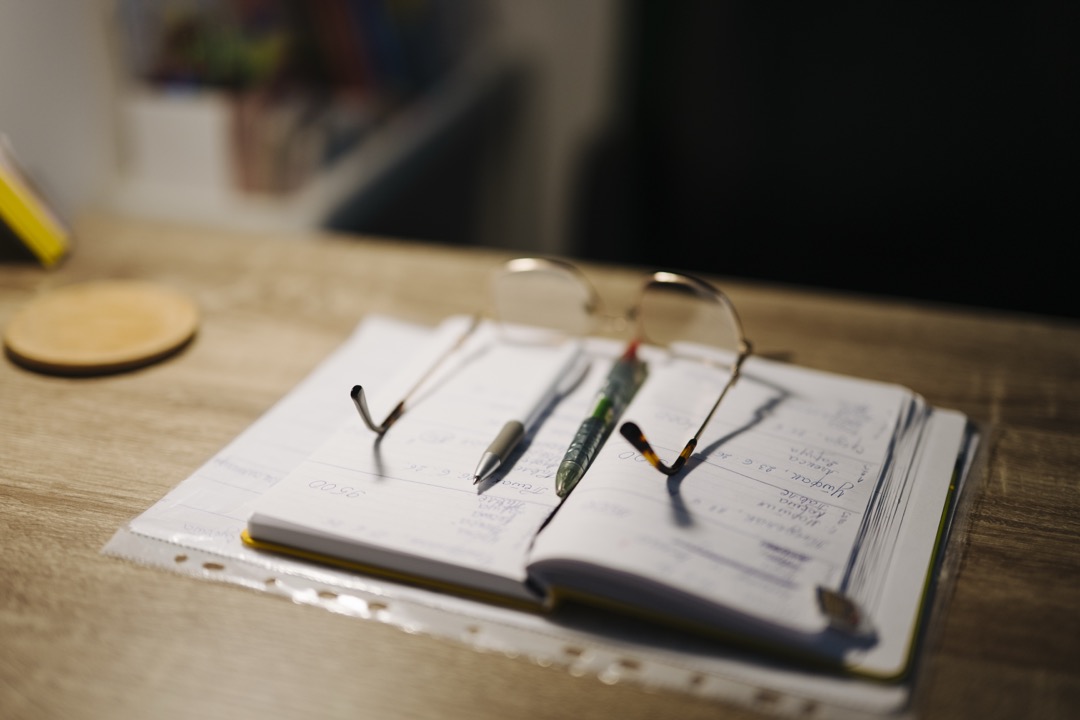
Most study schedules are abandoned within a week of being made. I’ve watched it happen with interns, with colleagues studying for certifications at night, and in my own PMP exam prep. A color-coded grid goes up on Sunday, every evening hour is spoken for, and by Wednesday the grid is fiction. The person gets blamed for a lack of discipline. The real fault is usually the plan, which was written for someone with no commute, no tired nights and perfect time estimates.
I plan projects for a living, and a study schedule is a small project. It has a fixed deadline (the exam), a scope (the material), limited capacity (your hours) and risk (everything that will go wrong). The same habits that keep a work project on track keep a study plan alive: measure capacity before committing to it, put the most important work first, hold back a buffer, and review weekly.
Here’s how to make a study schedule in six steps, what the learning research says about how to fill it, and four sample schedules you can copy. If you want a blank grid to work in while you read, our free daily schedule template prints or saves as a PDF.
Step 1: Audit Your Time Before You Plan It
Every project manager starts with capacity, and most students skip it. Before you schedule a single study block, find out how many hours you actually have.
For one ordinary week, log what you do in 30-minute chunks. Keep a small notebook or your phone’s notes app with you and write it down as you go, because reconstructing a day from memory always flatters it. You’re looking for three things:
- Fixed commitments. Classes, work shifts, commuting, practice, meals, family obligations and sleep. These go on the schedule first and don’t move.
- Leaking time. The 40 minutes between classes, the hour after dinner that disappears into your phone. These are your hidden study slots.
- Peak-focus hours. Note when you felt sharp and when you were reading the same paragraph three times. Most people have one or two good windows a day.
At the end of the week, subtract the fixed commitments from the waking hours and be honest about the leaks. The number left is your real capacity. It’s almost always smaller than you’d guess, and that’s the point: a plan built on real capacity survives contact with Wednesday.
Step 2: Set Goals and Rank Your Subjects
Next, list everything the schedule has to cover. Pull every exam, paper and project date from your syllabi and put them in one place. A desk calendar with the whole month visible is good for this, because you can see deadlines cluster before they arrive.
Then rank each subject on three factors: how soon its next big deadline is, how much that deadline counts toward your grade, and how difficult the material is for you. A simple 1 to 3 score on each works fine.
| Subject | Next deadline | Weight | Difficulty | Total |
|---|---|---|---|---|
| Organic chemistry | Midterm in 12 days (3) | 30% of grade (3) | Hard (3) | 9 |
| Statistics | Problem set in 5 days (3) | 10% of grade (1) | Medium (2) | 6 |
| History | Essay in 3 weeks (1) | 25% of grade (3) | Easy (1) | 5 |
| Spanish | Weekly quiz (2) | 5% each (1) | Medium (2) | 5 |
The totals decide who gets your peak hours and who gets the most blocks. Then turn each subject into a specific goal: “finish chapters 6 to 8 and do every end-of-chapter problem by the 14th” rather than “get better at chemistry.” A goal you can check off is a goal you can schedule.
Step 3: Block the Time
Now place study blocks into the open capacity from Step 1. A few rules make the blocks work.
Keep blocks between 30 and 60 minutes
Go shorter than 30 minutes and you spend the whole session warming up. Go much past an hour and focus drops off for most people. If you struggle to start, try the Pomodoro Technique, developed by Francesco Cirillo in the late 1980s: 25 minutes of work, a 5-minute break, and a longer break of 15 to 30 minutes after four rounds. Two Pomodoros fit neatly into a one-hour block.
Give every block a task, not a subject
“Statistics” is a label. “Statistics: problems 4.1 to 4.12, check answers” is a task you can start without deciding anything. Write the task into the block in your planner the night before.
Put the hardest subject in your peak hours
Your highest-ranked subject from Step 2 gets your best window from Step 1. Lighter work like flashcard review or reformatting notes goes in the tired slots.
Estimate generously
People consistently underestimate how long tasks will take, even tasks they’ve done before. Psychologists call it the planning fallacy, and it’s the reason project managers pad their estimates. If you think a reading will take 45 minutes, schedule an hour.
Set up the page and the desk
Color-coding by subject helps you see balance at a glance. A set of highlighters or gel pens with one color per course takes the guesswork out of the week view. And set up the place where the blocks happen: a clear surface, a decent desk lamp for evening sessions, and a pair of noise-canceling headphones if you share a room or study in a busy house.
Step 4: Build In Spaced Review and Retrieval Practice
This is the step that separates a schedule from a timetable, and it’s where most published advice goes quiet. The learning research is unusually clear about what to put in your blocks.
In 2013, John Dunlosky and colleagues published a large review in Psychological Science in the Public Interest that evaluated ten common study techniques against the evidence. Only two earned their top rating for usefulness: practice testing and distributed practice. Highlighting and rereading, the two things students do most, were rated low. Highlighting is fine for marking what you’ll come back to. It just isn’t studying on its own.
Distributed practice means spreading your reviews out over days instead of cramming them into one sitting. It’s backed by more than a century of work. Hermann Ebbinghaus mapped the forgetting curve on himself in the 1880s, showing that memory drops fast in the first day or two after learning and then levels off. A 2006 meta-analysis by Nicholas Cepeda and colleagues in Psychological Bulletin pooled hundreds of experiments and found spaced study reliably beats massed study. It also found that the longer you need to remember something, the longer the gaps between reviews should be.
Practice testing means pulling information out of your head rather than putting it back in. In a 2006 study in Psychological Science, Henry Roediger and Jeffrey Karpicke had students either reread a passage or take recall tests on it. Rereading looked better on a test five minutes later. A week later, the students who’d tested themselves remembered more. That’s the trap with rereading: it feels productive in the moment and fades.
What this means for your schedule:
- Schedule review blocks for material you’ve already covered. New material and review both need calendar time. I aim to give around a third of my weekly blocks to review.
- Space the reviews. The popular “2-3-5-7” rule (review on days 2, 3, 5 and 7 after first learning something) is an informal student rule of thumb, not a research finding, but it’s a reasonable starting pattern. For exams further out, stretch the later gaps.
- Make every review a test. Close the book and write out everything you remember on a blank page or a whiteboard, then check it against your notes. Dry-erase markers make this quick to repeat. Question-on-the-front sticky notes work as flashcards you can stick on a mirror.
- Mix problem types. Interleaving, which means alternating between related kinds of problems instead of doing twenty of the same kind in a row, forces you to identify which method applies. Dunlosky’s review rated it moderately useful, and it matches what exams actually ask.
Step 5: Protect Sleep and Breaks
The first thing an overloaded schedule steals is sleep, and it’s a bad trade. Cari Gillen-O’Neel, Virginia Huynh and Andrew Fuligni followed high school students with daily diaries and published the results in Child Development in 2012. On days when students gave up sleep to study more than usual, they reported more academic problems the next day, such as trouble understanding material in class and doing poorly on a test or assignment. The extra studying didn’t pay for itself.
So put sleep on the schedule as a fixed commitment in Step 1, with a real bedtime, and let study blocks fit around it. Do the same with breaks. A 5- to 10-minute break between blocks is part of the plan, and so are meals. If a day has no gaps in it, it has no room for the first thing that runs over.
Step 6: Add Buffer and a Weekly Review
Any project plan without contingency is a plan to be late. I leave roughly one block in five unscheduled. It’s my own working figure from years of project plans rather than a research number. When a chapter takes longer than expected or a friend’s birthday lands on a Thursday, the buffer absorbs it and the rest of the week holds. If you end the week with buffer unused, spend it on extra review or take the evening off. Both are fine.
Then hold a weekly review. Twenty or thirty minutes on Sunday is enough:
- Check off what got done and note what slipped.
- Look for patterns. If the same subject overran twice, your estimates for it are wrong. Lengthen its blocks.
- Re-rank using Step 2. Deadlines have moved closer and priorities shift.
- Move unfinished work into next week’s blocks deliberately, and drop anything low-priority on purpose rather than letting it vanish.
- Plan next week’s review blocks from what you learned this week.
The weekly review is what keeps a schedule honest. A plan that never gets corrected drifts away from reality and gets abandoned. One that gets corrected every Sunday gets better.
Sample Study Schedules
These are starting points. Swap in your own fixed commitments and peak hours from Step 1.
High school student, weekday
| Time | Activity |
|---|---|
| 3:30–4:00 p.m. | Snack and break after school |
| 4:00–4:50 p.m. | Hardest subject: new homework (50 minutes) |
| 4:50–5:00 p.m. | Break |
| 5:00–5:40 p.m. | Second subject: homework or reading |
| 5:40–7:00 p.m. | Practice, chores, dinner |
| 7:00–7:30 p.m. | Review: self-quiz on material from 2 and 5 days ago |
| 7:30–7:45 p.m. | Pack bag, check tomorrow’s planner page |
| 10:00 p.m. | Lights out |
Full-time college student, week
| Day | Morning | Afternoon | Evening |
|---|---|---|---|
| Monday | Classes | Chemistry problems (1 hr) | Statistics review (45 min) |
| Tuesday | Chemistry deep block (90 min) | Classes | Spanish flashcards (30 min) |
| Wednesday | Classes | History reading (1 hr) | Chemistry self-test (45 min) |
| Thursday | Statistics problem set (1 hr) | Classes | Buffer |
| Friday | Classes | Chemistry review (1 hr) | Off |
| Saturday | History essay deep block (2 hrs) | Off | Off |
| Sunday | Buffer | Weekly review (30 min) | Spanish and statistics review (1 hr) |
Working adult, evenings and weekends
| Day | Block | Focus |
|---|---|---|
| Monday | 7:30–8:30 p.m. | New material: one chapter or module |
| Tuesday | 7:30–8:00 p.m. | Review and practice questions on Monday’s material |
| Wednesday | Off | Rest |
| Thursday | 7:30–8:30 p.m. | New material |
| Friday | Off | Rest |
| Saturday | 9:00–11:00 a.m. | Long block: practice exam section, then review misses |
| Sunday | 5:00–5:30 p.m. | Weekly review and flashcards, plan the week |
This is roughly the shape I used for a professional certification while working full time. Two nights off is deliberate. A plan that asks for every evening doesn’t last.
Four-week exam countdown
| Week | Main focus | Review pattern |
|---|---|---|
| Week 4 (28 days out) | Cover remaining new material, build a topic checklist | Review each new topic 2 and 5 days later |
| Week 3 | Finish new material, first full practice test at the end | Self-quiz all covered topics once |
| Week 2 | Target weak topics from the practice test | Mixed-topic problem sets, second practice test |
| Week 1 | Short mixed reviews, final practice test mid-week | Light recall only in the last two days, full sleep every night |
Paper or App: Where to Keep the Schedule
Use whichever you’ll look at every day. I lean toward paper for the week view, because a planner open on the desk shows the whole week at once and writing the blocks in makes you commit to them. Apps win on reminders and recurring blocks. Many people use both: exam dates in a calendar app with alerts, and daily blocks on paper. Our comparison of digital vs paper planning goes through the research and the trade-offs in detail.
If you’re on paper, give the schedule a fixed spot where you’ll see it. A bulletin board above the desk works well for the monthly deadline view, and our desk organization ideas cover how to keep study materials within reach without the clutter. For the daily task list that feeds each block, the free to-do list template pairs well with the daily schedule.
The Short Version
Measure your real hours before you plan them. Rank subjects by deadline, weight and difficulty, and give the top one your best hours. Fill blocks with specific tasks, make at least a third of them spaced review, and turn every review into a self-test. Keep sleep fixed, leave one block in five open, and fix the plan every Sunday. None of this takes more willpower than the grid you abandoned last time. It just asks the plan to match the week you actually have.
Frequently Asked Questions
How many hours a day should I study?
What is the 2-3-5-7 study method?
Should I study one subject a day or mix subjects?
Is it better to study in the morning or at night?
What should I do when I fall behind on my study schedule?
Related Articles
7 Best Desk Calendars of 2026
planners-calendars
7 Best Planners of 2026
planners-calendars
Digital vs Paper Planning: Which Is Right for You?
planners-calendars
Desk Organization Ideas That Actually Work
organization-filing
Back to School Supply Checklist: A Grade-by-Grade Guide for Parents
classroom-supplies
About the Reviewer

Sarah Chen, CAP, PMP
B.A. Business Administration, UCLA
Sarah Chen spent 10 years in office management and operations at Fortune 500 companies before founding DeskRated in 2026. After managing supply budgets for teams of 50+ people and testing thousands of products through daily use, she started writing the honest, no-fluff supply reviews that office professionals actually need. Sarah holds both CAP and PMP certifications and is based in Los Angeles.